
Any passerby on Whitehall in London walks in front of three statues representing towering British military figures of World War II. The most iconic one is naturally the one representing Viscount Montgomery, the victor of Alamein. Then there’s one of Viscount Alanbrooke, who headed the British Army during the conflict. The third and last one along the way – if you come from the House of Commons – depicts Viscount Slim, the victor of Burma. While I have devoured countless articles and books about Monty and read many things on Alanbrooke, my knowledge about the last member of the trio is scant at best. Mea culpa.
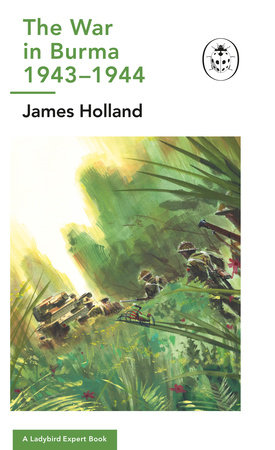
A few weeks ago, The War in Burma 1943-1944 by renowned military historian James Holland came to my attention. I dove right into it with delight. True to his eloquence and unparalleled expertise (I’m a huge fan of his documentaries and I have another book of his on my shelves), this engaging historian broadened my horizons about an aspect and a figure of World War II about which I knew too little.
Published as part of the Ladybird Expert Book collection, the most recent addition to James Holland series is beautifully enhanced by Keith Burns’ stunning and evocative illustrations summarizes the significance of the much too unknown South-East Asian theatre of World War II. Northwest Burma, the prolific historian writes, was “one of the most inhospitable places to fight in the world.” By the end of 1944, the Japanese were on the move to smash British troops on their way to India, hopefully end the British Raj and thwart the delivery of essential supplies to Chiang Kai-shek’s Nationalists in China who were also fighting the Japanese toe and nails. The stakes were unparalleled, and the British couldn’t afford to lose any ground. Outnumbered and demoralized, how could they reverse the tide?
Continue reading “How Bill Slim Turned the Tide”



 BookMarc