The best books, their authors and the great people who inspire these stories / Les meilleurs livres, leurs auteurs et les grand.e.s de l'histoire qui les inspirent.
Historically, the concept of war has followed a familiar script: one victor and one vanquished. However, there exists a scenario that defies this ancient logic — nuclear war. In such a case, writes Annie Jacobsen in Nuclear War: A Scenario (Dutton), “there is no such thing as capitulation. No such thing as surrender.” Only the scorched silence of what once was.
From the very first lines, the reader is drawn into a vortex of dread—a work of speculative fiction so meticulously constructed that it becomes indistinguishable from reality. This is not merely an intellectual exercise; it is a mirror held up to our world, one where the unthinkable remains entirely plausible—and where our ability to avoid catastrophe may depend less on preparedness than on our collective refusal to acknowledge the danger.
The scenario imagined by the author begins with a North Korean nuclear strike on the United States. Confronted with the unthinkable, the President has only six minutes – six excruciating minutes – to respond, as Ronald Reagan warned in his memoirs. From this point of no return, events unfold with brutal logic, and everything collapses.
On June 24, 2023, Yevgeny Prigozhin – the former convict-turned-entrepreneur-turned-warlord, shook the pillars of the Kremlin. The eyes of the world were riveted on the screens while Wagner mercenaries drove to Moscow. The leader had had enough of Russia’s military leadership that was, in his opinion, responsible for the state of things in Ukraine. Could it be the end of the régime? Few could predict what would happen. At the end of the day, Vladimir Putin prevailed, but the mutiny revealed the character of a man who thought bigger of himself than he could deliver.
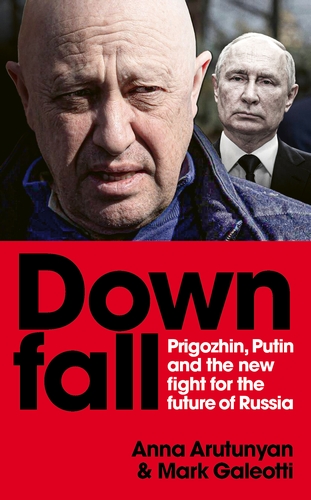
In the recent book Downfall: Prigozhin, Putin and the new fight for the future of Russia(Ebury Press) they co-wrote, journalist Anna Arutunyan and renowned Russia observer Mark Galeotti explain why and how Prigozhin – the servant who forgot his place – embarked on his death knell on what could be described as his highway to hell.
Since Prigozhin intertwined his destiny with Vladimir Putin’s reign, his biography can’t be dissociated from the nature and the functioning of the régime he eagerly served for his good fortune. Comparing the Kremlin to a medieval court where adhocracy prevails, the authors explain that one’s influence and fate are related to its importance to the Tsar.
Russian President Vladimir Putin at the Kremlin on June 26, 2023 (Sputnik / Reuters)
I’m now at the age where I can say that I have observed, from afar, two coups initiated against a Russian ruler. The first one was plotted against Soviet President Mikhail Gorbachev in August 1991. The second one happened just a few days ago. I was glued to my Twitter account and CNN for most of last weekend, trying to keep abreast of developments between Rostov-on-Don and Moscow.
President Vladimir Putin being at the center of the events unfolding in these crucial hours, I believed it would be pertinent to reach out to the author of the best biography written about him to seek some insights. Philip Short, author of the seminal Putin (Holt), a book on which he worked for 8 years. Mr. Short generously agreed to answer a few questions, despite being buried under requests.
Here is the content of our discussion.
_________
Mr. Short, thank you very much for the generosity of your time.
I have a feeling that every time Vladimir Putin is referred to in the Western media, the analysis goes in the direction of his downfall – either by a coup, cancer or slipping on a banana peel. Would you tend to agree that this is wishful thinking disguised as analysis?
President Vladimir Putin’s biographer Philip Short (Macmillan)
I think we must recognize that we are in the middle of an information war that’s running parallel to the war on the ground in Ukraine. So, whether it’s wishful thinking or spin is arguable. Very often there are elements of both – added to which, western (and Russian) pundits have been pontificating very little hard information to go on, so there has been a lot of thumb-sucking of the ‘Putin’s finished’, ‘The end is nigh’, ‘Civil war beckons’, variety.
No one knows even exactly what Prigozhin was promised when he agreed to call off his mutiny. But certainly, the consensus in the Western media that Putin is severely weakened needs to be treated with skepticism. It’s just as plausible to make a case that his grip has in fact been strengthened because he found a way out which avoided the worst-case scenario of bloody fighting, and, to the elite, that is a signal that, even if he misjudged the situation early on, he hasn’t lost his touch, so ‘better to stick with the devil you know’.
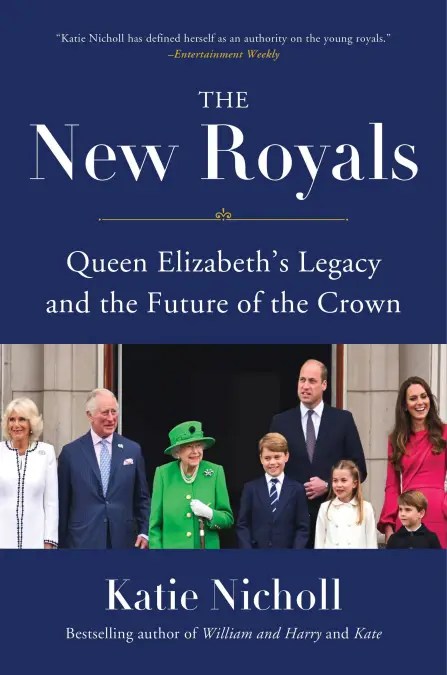
The Crown has visibly not lost its appeal in the UK, but the warning signs in places like Canada, Australia, and New Zealand – just to name these – would be ignored at great peril.
The author, one of the keenest observers of the Crown and a gifted writer who has acquired first-hand knowledge of her subject, exposes the challenges facing the successors of Queen Elizabeth II while brushing the personal traits of the actors who are and will be called upon to meet them.
King Charles III was the longest-serving Prince of Wales, a title created in 1301 after “[…] King Edwards I conquered Wales and gave the title to his son”. With the help of genetics and a life of privilege, his reign might span a few decades, but most consider it transitional.
“To every man there comes in his lifetime that special moment when he is figuratively tapped on the shoulder and offered a chance to do a very special thing, unique to him and fitted to his talents,” declared Winston Churchill. For many, that hour comes early. For some, like the heroic British Prime Minister, it comes later. For others, like US President Joe Biden, it comes even later in life.
As we commemorate today the tragic first anniversary of the murderous onslaught launched by Vladimir Putin against Ukraine, it seems fitting to write about one of the best political biographies I have read in a long time. The Fight of His Life: Inside Joe Biden’s White House (Scribner) is required reading for anyone seeking to understand the character of the 46th President of the United States.
In the summer of 2017, the events surrounding the extreme-right manifestations in the streets of Charlottesville convinced former Vice President Biden that Donald Trump “was giving evil a safe harbour”, thus contributing to the Democratic politician’s decision to run. The combat for 2020 was between good and evil. And no one was better equipped than Joe Biden to lead it.
Last September, I took tremendous pleasure reviewing the insightful book Volodymyr Zelensky in His Own Words(Pegasus Books)by Lisa Rogak and Daisy Gibbons. Despite a hectic schedule, notably due to the deadline of an upcoming book, author Lisa Rogak was generous enough to answer a few questions for this blog. Here is the content of our exchange.
______
Ms. Rogak, where did the idea of your book about Ukrainian President Volodymyr Zelenskyoriginate from?
After the invasion of Ukraine, I started digging into his background. I was curious about this guy who seemed to be a natural-born leader. The more I dug, the more impressed I was. And he was funny! Who knew? I’ve done a slew of these quote books, so I put together a proposal for one on VZ. My agent said I needed a translator to dig for interviews and articles in his native Ukraine. I found Daisy Gibbons, who lives in London, and we quickly found a publisher, Pegasus Books.
Queen Elizabeth II and Russian President Boris Yeltsin (The Telegraph)
I’m watching every episode of The Crown, not only because of my love and appreciation of the monarchy in all its complexity but mainly for its entertainment value. For obvious reasons, I never take the content of the series at face value since there are many aspects which differ from reality.
Nevertheless, episode 6 of The Crown’s Season 5, titled “Ipatiev House”, brought many questions to my mind. For one, Russian President Boris Yeltsin never went to Buckingham Palace to meet Queen Elizabeth II, which makes the whole diatribe in which he insulted the Queen in Russian fictitious and potentially misleading for anyone believing that the series is an accurate portrayal of reality.
I therefore decided to ask Sir Rodric Braithwaite, Her Majesty’s Ambassador in Moscow between 1988 and 1992 and the author of an excellent recent book about the history of Russia, to shed some light on the relationship between the Crown and the two-headed eagle.
Two of the greatest pleasures I have as a blogger is reading the best books and being in touch with their authors. Few things make me happier than when they accept to answer a few questions for an interview.
As a former British Ambassador to Moscow between 1988 and 1992 and a former foreign policy advisor to Prime Minister John Major, he combines the experience of a man who was on the ground when the URSS was on the cusp of exploding and the talent of an inspired historian.
I, therefore, felt extremely privileged when Sir Rodric generously agreed to answer my questions. I trust you will find his answers of tremendous interest.
___________
Sir Rodric, I’m of the school according to which great leaders make history. In that regard, I would be curious to know which Tsar or leader impresses you the most in the history of Russia and why?
The question of whether history is made by great leaders or impersonal forces will never be settled. It is the intellectual underpinning for Tolstoy’s War and Peace. In my view, you need both. Even the greatest leader cannot buck reality: Bismarck is eloquent on that.
Back in March 2014, while I was sojourning in Moscow for the second time, I visited the Museum of the Great Patriotic War, the Borodino Battle Museum, and the Museum of the Patriotic War of 1812. I also took the time to drive to Zhukovo to visit the Museum dedicated to the famous Marshal – Georgy Zhukov – who vanquished the Nazis on the Eastern Front. Any serious student of history couldn’t help but note how attached the Russians are to their military heritage. It was an amazing trip for a military enthusiast like me!
To a degree that might seem astonishing to a Western mind, war occupies a fundamental place in the history of Russia. And it is imperative to fully grasp that reality, if one wants to ascertain what has been happening since February 24 in Ukraine. In that perspective, I was extremely happy to dig into Russia: Myths and Realities(Pegasus Books) by Sir Rodric Braithwaite.
I could detail all the qualities and insights of this book, but its main merit is to brush the portrait of a nation and people forged in war. “More than a thousand years ago a people arose on the territory of today’s Russia whose origins are disputed”, writes the author. “But Kievan Rus was invaded and destroyed in the thirteenth century by the Mongols.” The tone was set and even after the “Mongol yoke” was removed from Russia’s neck, the pugilistic character was well ingrained into the nation’s DNA.
After the publication of my review of his insightful biography of Ukraine’s President Volodymyr Zelensky, author and political analyst Serhii Rudenko generously accepted my invitation to respond to a few questions for this blog.
In the aftermath of the war launched by Vladimir Putin on February 24th, the offices of the television station where he worked became a bomb shelter. He has moved to another region, which suffered the recent Russian onslaught. The coming winter will undoubtedly be extremely difficult for Ukrainians, but Mr. Rudenko’s resilience and determination to pursue his work is immensely commendable.
I consider myself privileged to be in touch with him and to present you with the content of our discussion.
________
Mr. Rudenko, in your book, you depict an administration with a lack of political experience and a very high turnover level. Has the situation stabilized since the beginning of the war?
Yes, it has stabilized. In the conditions of war, Zelensky had to choose the most optimal and effective people. Now we see around the President of Ukraine a team that governs the state in the conditions of war. Hardly anyone in the world has such experience in governing the state. It is not easy.






 BookMarc