The Sinews of Victory, the Seeds of Defeat

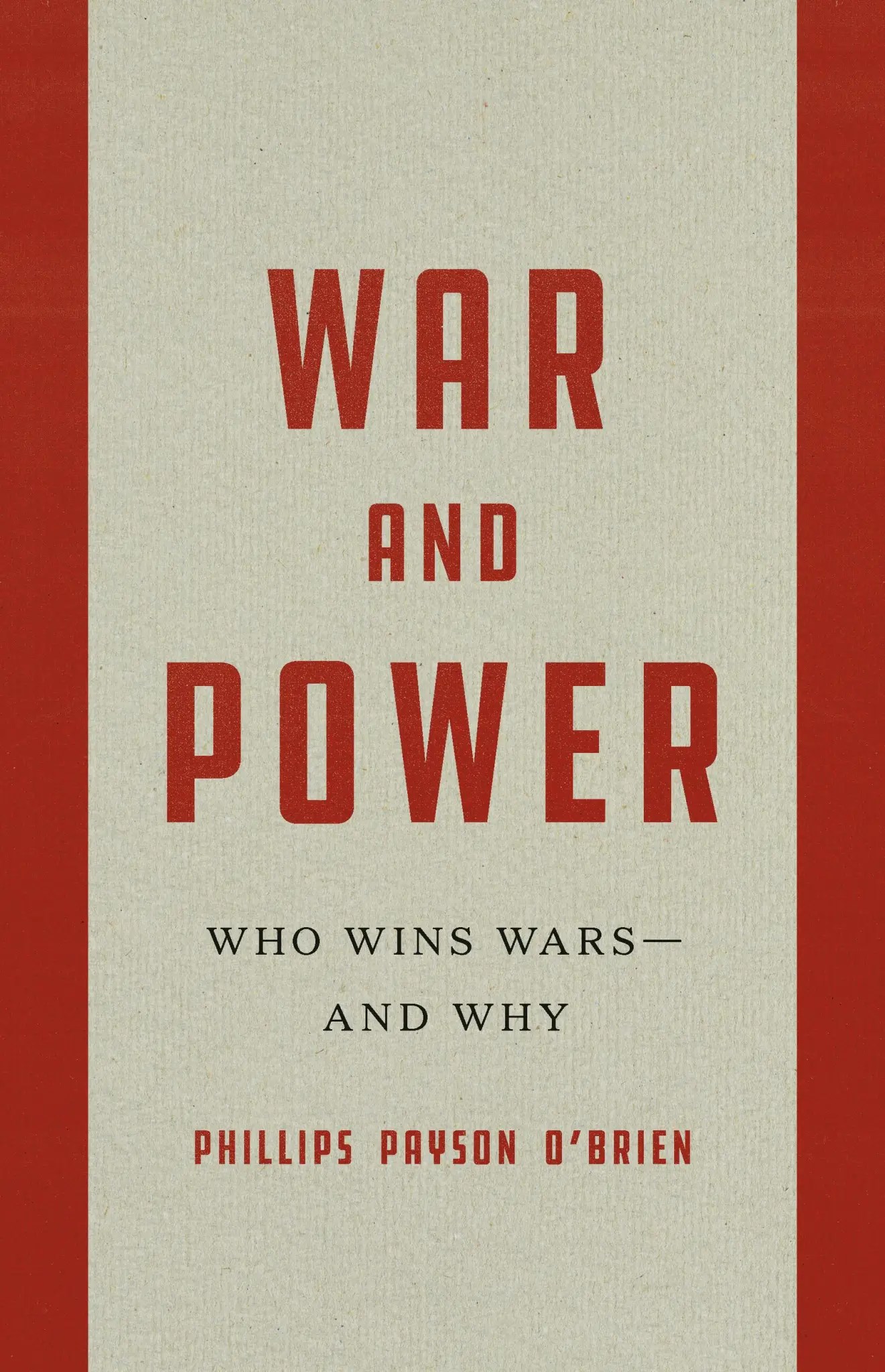
The fate of war is sealed long before the sound of cannons fills the air. That is the conclusion I reached after reading Phillips Payson O’Brien’s latest book, and it recalls Sun Tzu’s teaching that victorious warriors win first and then go to war.

The argument resonates in a particular way when viewed against the backdrop of a news report according to which “the U.S. Army has significantly depleted its stockpile of highly accurate long-range missiles” (The Independent). Not necessarily the strongest posture from which to engage a determined enemy. “Going back to the great invasion of Greece by the Persian emperor Xerxes in 480 BCE (sometimes referred to as his second invasion), it can be seen how the largest and most powerful military forces can be crippled by the lack of supply”, writes the acclaimed historian in War and Power: Who Wins Wars and Why (PublicAffairs).

Before and beyond the clashes of iron and blood, “war is a test of various systems in a multitude of different ways; it is not a test of armies, and certainly not something that is determined by supposedly decisive battles”. Societies must therefore be willing to sustain the financial, industrial, and moral investments required to prevail when called upon. Alas, “instead of investing in their militaries, western European countries [to which we could add other countries, like Canada] have prioritized their vast welfare states”, as observed by former Senior National Security Adviser to the Australian government John Lee in a recent Foreign Affairs article. Such choices carry a cost—not only for national resources, but also for long-term strategic credibility.

Continue reading “The Sinews of Victory, the Seeds of Defeat”
Les risques calculés de Pékin

La Chine dérange. Elle inquiète. Parce qu’on la méconnaît. C’est un réflexe naturel. Sa montée en puissance, notamment sur le plan militaire où elle occupe dorénavant la première place au niveau des forces navales, fait en sorte qu’on lui impute des desseins guerriers en mer de Chine méridionale ou même à Taïwan. Ce discours est notamment alimenté par un discours manichéen omniprésent dans des interventions médiatiques fréquemment réductrices et souvent alimentées par des observateurs nageant dans une superficialité nocive. 

Dans Guerres invisibles, Thomas Gomart écrit, et il vaut la peine de le citer, que « la guerre froide a donné naissance à plusieurs générations de kremlinologues qui cherchèrent à analyser les jeux politiques en URSS et dans le bloc communiste. Rares, très rares, sont aujourd’hui les spécialistes capables de saisir les rapports de force au sein du Parti communiste chinois (PCC). » À mesure que l’Empire du Milieu prend de l’ascendant sur l’échiquier international, force est de reconnaître qu’il importe de prêter l’oreille à ceux et celles qui ont pour vocation professionnelle de bien et mieux connaître ce pays.

poursuivre la lecture

Vladimir Poutine est un pur produit de l’histoire de la Russie

Si je vous demandais de me dire quel dirigeant russe a prononcé les paroles suivantes: « Pour défendre mes frontières, je n’ai d’autre choix que de les étendre », il y a fort à parier que vous penseriez qu’il s’agit de Vladimir Poutine. Après tout, ne lui impute-t-on pas actuellement – et peut-être à bon droit – des desseins guerriers en Ukraine? Mais cette citation provient de Catherine II, dite la Grande (1729-1796), celle-là même qui « […] prit le sud de l’Ukraine et annexa à la Russie la dépendance ottomane de Crimée en 1783, ce qui aura des répercussions historiques jusqu’au XXIe siècle. » Qui a dit que l’histoire ne se répète pas?

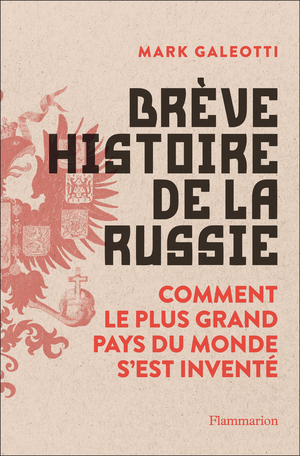
Extraites de la Brève histoire de la Russie : Comment le plus grand pays du monde s’est inventé de l’historien britannique Mark Galeotti, ces citations permettent de comprendre les principaux ressorts de l’histoire politique de ce pays aussi captivant que mystérieux.

poursuivre la lecture

“My subordinates took time to reach out and let me learn how to lead” – Exclusive interview with Vice-Admiral Mark Norman (ret.)

Vice-Admiral Mark Norman (ret.)

A few weeks ago, I was privileged to be in touch with Vice-Admiral (ret.) Mark Norman, former Vice Chief of the Defence Staff of Canada. A man for whom I have tons of respect and admiration. He gladly accepted to respond to a few questions for my blog. To that end, we had an extremely pleasant discussion on the phone. Here is the content of our exchange.

Vice-Admiral Norman, as you can see with the name of my blog, books about history (mainly military) are among my main subjects of interest. Are you an avid reader? If so, what are your favorite subjects?

Compared to others, I am not an avid reader. Surprisingly, I don’t read military history directly. I do however enjoy three broad areas of books. 1) believable fiction – often based in an imaginary world. For example, I was recently absorbed by the Dune trilogy. This is a brilliant story. 2) the pseudo-realist genre, whose stories are based on reality. I’m a big fan of James Bond, the Jason Bourne series, Jack Ryan and Dan Brown for example. And 3) non-fiction. I like more analytical pieces and variations of military history. In that regard, I have recently read Destined for War by Graham Allison, books about leadership by retired generals like Colin Powell and Rick Hillier. I’m a big fan of Malcolm Gladwell. I will occasionally dive into naval history, and I have read different translations of Sun Tzu. This said, I am less active in that last category than I am in the two others.

Continue reading ““My subordinates took time to reach out and let me learn how to lead” – Exclusive interview with Vice-Admiral Mark Norman (ret.)”