Yossi Cohen: From the Shadows to the Hustings

In the new world order that is taking shape, the special relationship between Israel and the United States remains paramount. To paraphrase Sir Winston Churchill’s description of his relationship with President Franklin D. Roosevelt, “No lover ever studied every whim of his mistress” as closely as Benjamin Netanyahu did those of President Donald Trump. It therefore came as no surprise that the Israeli Prime Minister celebrated the arrival of 2026 last week at Mar-a-Lago. No one can dispute that Bibi is unparalleled when it comes to possessing a keen sense of history. But no statesman is eternal, and some actors are already jockeying to succeed him.

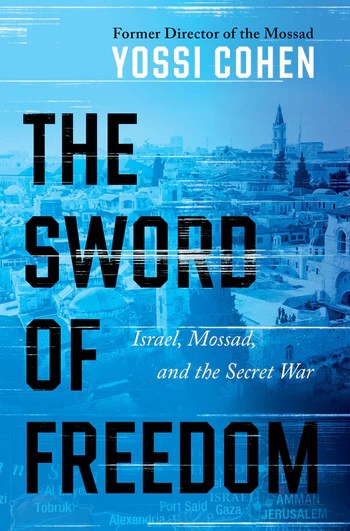
Former Mossad director Yossi Cohen is said to be among them, and the publication of his riveting memoir—The Sword of Freedom: Israel, Mossad, and the Secret War (Broadside Books)—will do little to calm speculation about a potential bid. The narrative spans forty-two years of service to Israel, at the heart of some of its most secret operations, including the iconic 2018 mission in which Mossad operatives seized Iran’s nuclear archives from a clandestine warehouse south of Tehran. Cohen notably served under the legendary Meir Dagan—who took him under his wing and is believed to have later recommended him to Prime Minister Netanyahu as a successor—and his aptitude for human relations, clearly a strength, naturally pointed him toward public life.

Continue reading “Yossi Cohen: From the Shadows to the Hustings”
The kitchens of the Tsar

On June 24, 2023, Yevgeny Prigozhin – the former convict-turned-entrepreneur-turned-warlord, shook the pillars of the Kremlin. The eyes of the world were riveted on the screens while Wagner mercenaries drove to Moscow. The leader had had enough of Russia’s military leadership that was, in his opinion, responsible for the state of things in Ukraine. Could it be the end of the régime? Few could predict what would happen. At the end of the day, Vladimir Putin prevailed, but the mutiny revealed the character of a man who thought bigger of himself than he could deliver.

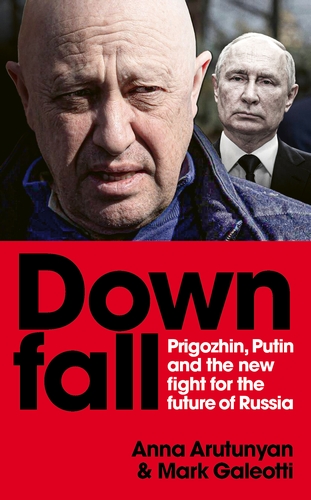
In the recent book Downfall: Prigozhin, Putin and the new fight for the future of Russia (Ebury Press) they co-wrote, journalist Anna Arutunyan and renowned Russia observer Mark Galeotti explain why and how Prigozhin – the servant who forgot his place – embarked on his death knell on what could be described as his highway to hell.

Since Prigozhin intertwined his destiny with Vladimir Putin’s reign, his biography can’t be dissociated from the nature and the functioning of the régime he eagerly served for his good fortune. Comparing the Kremlin to a medieval court where adhocracy prevails, the authors explain that one’s influence and fate are related to its importance to the Tsar.

Continue reading “The kitchens of the Tsar”

Behind the scenes in the Sit Room

From Pearl Harbor to the neutralization of Osama bin Laden, every US President is confronted with crises. Any one of them also needs to manage relations with foreign leaders. Hence, a need for an organized mechanism and apparatus to navigate the traffic and make sure that POTUS can take the pulse of the world at a moment’s notice. This is made possible thanks to a vital institution, whose history is brilliantly recounted by former Clinton administration official and ABC host George Stephanopoulos in The Situation Room: The Inside Story of Presidents in Crisis (Grand Central).

Before its establishment, Presidents monitored world events on an ad hoc basis. For any military history enthusiast, the depiction of Franklin D. Roosevelt’s wheelchair being pushed in a former billiard room to consult maps pinned on the walls to monitor developments unfolding during World War II is captivating. Like so many other things, John F. Kennedy would be an innovator by creating the Situation Room in light of the 1961 Bay of Pigs disaster. Every one of his successors would rely on this evolving institution to accompany the United States’ presence on the world scene.

The most important takeaway from the book relates to the notion of the “three Ps”. The Situation Room is: 1) a place where information is gathered, processed, analyzed and decided upon; 2) it regroups people who serve the Presidency in a selfless and non-partisan way and; 3) a process revealing how every commander in chief manages the affairs of the world.

Continue reading “Behind the scenes in the Sit Room”

Conflict: The study of warfare at its best

I was impatient to dive between the covers of General David Petraeus (retired) and Lord Roberts book, Conflict: The Evolution of Warfare from 1945 to Ukraine and saying I’m happy I did is a euphemism.

The best way for me to review this enthralling book is to get off the beaten path and summarize the 10 main takeaways that strike me the most.

1. Whatever you think of it, “war is still very much worth studying.” That’s the common thread of the book.

2. Totalitarian régimes have an easier time launching, conducting and bearing the brunt of war. The rise of autocracies throughout the world is therefore a challenge for democracies not accustomed with the pugilistic mindset.

3. Don’t cut military spending. “Money saved in piecemeal defense cuts often costs more in the long run.” The authors mention Great Britain’s decision to axe HMS Endurance before the Falklands War as a case in point. They also refer to Israel’s defense cuts after the Six Days War, with the consequences that followed six years later on the fateful morning of Kippur. Deterrence is cheap compared to war’s tribute in blood and treasure.

Continue reading “Conflict: The study of warfare at its best”

Churchill’s Disciple

As far back as reading his incredible columns in the Daily Telegraph, I have been fascinated with Boris Johnson. Throughout his media and political career, the former Prime Minister of the United Kingdom has intrigued and amused me while often making me reflect further on the parallels between the past and the present. In that regard, his riveting and difficult-to-match biography of Winston Churchill underlies how much both statesmen share many similarities, which probably explains why Boris Johnson undertook the process of writing this biography.

That impression was rekindled while I read Sebastian Payne’s absorbing book The Fall of Boris Johnson: The Full Story (Macmillan). Even though the story it recounts was painful at times – yes, I admit, I’m a fan of Boris Johnson and reading about his downfall didn’t make me particularly joyful – it was unquestionably the best political book I have read for years.

Winston Churchill and Boris Johnson will both go down in history as unrivalled communicators of their respective eras. It must have been hard for the latter’s communications shop to provide products that met the criteria of a man who was probably his own best speechwriter.

Continue reading “Churchill’s Disciple”

Prigozhin’s failed putsch was essentially a sideshow

Russian President Vladimir Putin at the Kremlin on June 26, 2023 (Sputnik / Reuters)

I’m now at the age where I can say that I have observed, from afar, two coups initiated against a Russian ruler. The first one was plotted against Soviet President Mikhail Gorbachev in August 1991. The second one happened just a few days ago. I was glued to my Twitter account and CNN for most of last weekend, trying to keep abreast of developments between Rostov-on-Don and Moscow.

President Vladimir Putin being at the center of the events unfolding in these crucial hours, I believed it would be pertinent to reach out to the author of the best biography written about him to seek some insights. Philip Short, author of the seminal Putin (Holt), a book on which he worked for 8 years. Mr. Short generously agreed to answer a few questions, despite being buried under requests.

Here is the content of our discussion.

_________

Mr. Short, thank you very much for the generosity of your time.

I have a feeling that every time Vladimir Putin is referred to in the Western media, the analysis goes in the direction of his downfall – either by a coup, cancer or slipping on a banana peel. Would you tend to agree that this is wishful thinking disguised as analysis?

President Vladimir Putin’s biographer Philip Short (Macmillan)

I think we must recognize that we are in the middle of an information war that’s running parallel to the war on the ground in Ukraine. So, whether it’s wishful thinking or spin is arguable. Very often there are elements of both – added to which, western (and Russian) pundits have been pontificating very little hard information to go on, so there has been a lot of thumb-sucking of the ‘Putin’s finished’, ‘The end is nigh’, ‘Civil war beckons’, variety.

No one knows even exactly what Prigozhin was promised when he agreed to call off his mutiny. But certainly, the consensus in the Western media that Putin is severely weakened needs to be treated with skepticism. It’s just as plausible to make a case that his grip has in fact been strengthened because he found a way out which avoided the worst-case scenario of bloody fighting, and, to the elite, that is a signal that, even if he misjudged the situation early on, he hasn’t lost his touch, so ‘better to stick with the devil you know’.

Continue reading “Prigozhin’s failed putsch was essentially a sideshow”

Joe Biden: Leader of the Free World

“To every man there comes in his lifetime that special moment when he is figuratively tapped on the shoulder and offered a chance to do a very special thing, unique to him and fitted to his talents,” declared Winston Churchill. For many, that hour comes early. For some, like the heroic British Prime Minister, it comes later. For others, like US President Joe Biden, it comes even later in life.

As we commemorate today the tragic first anniversary of the murderous onslaught launched by Vladimir Putin against Ukraine, it seems fitting to write about one of the best political biographies I have read in a long time. The Fight of His Life: Inside Joe Biden’s White House (Scribner) is required reading for anyone seeking to understand the character of the 46th President of the United States.

In the summer of 2017, the events surrounding the extreme-right manifestations in the streets of Charlottesville convinced former Vice President Biden that Donald Trump “was giving evil a safe harbour”, thus contributing to the Democratic politician’s decision to run. The combat for 2020 was between good and evil. And no one was better equipped than Joe Biden to lead it.

Continue reading “Joe Biden: Leader of the Free World”

“Putin’s war has forged Ukraine’s sense of nationhood on the battlefield”

Ukrainian soldiers (McGill University)

Two of the greatest pleasures I have as a blogger is reading the best books and being in touch with their authors. Few things make me happier than when they accept to answer a few questions for an interview.

I have always been a huge fan of Sir Rodric Braithwaite, and I was extremely happy to read and review his recent and captivating book about the history of Russia at a time when this country is at crossroads.

As a former British Ambassador to Moscow between 1988 and 1992 and a former foreign policy advisor to Prime Minister John Major, he combines the experience of a man who was on the ground when the URSS was on the cusp of exploding and the talent of an inspired historian.

I, therefore, felt extremely privileged when Sir Rodric generously agreed to answer my questions. I trust you will find his answers of tremendous interest.

___________

Sir Rodric, I’m of the school according to which great leaders make history. In that regard, I would be curious to know which Tsar or leader impresses you the most in the history of Russia and why?

The question of whether history is made by great leaders or impersonal forces will never be settled. It is the intellectual underpinning for Tolstoy’s War and Peace. In my view, you need both. Even the greatest leader cannot buck reality: Bismarck is eloquent on that.

Continue reading ““Putin’s war has forged Ukraine’s sense of nationhood on the battlefield””

Russian Game of Thrones

Back in March 2014, while I was sojourning in Moscow for the second time, I visited the Museum of the Great Patriotic War, the Borodino Battle Museum, and the Museum of the Patriotic War of 1812. I also took the time to drive to Zhukovo to visit the Museum dedicated to the famous Marshal – Georgy Zhukov – who vanquished the Nazis on the Eastern Front. Any serious student of history couldn’t help but note how attached the Russians are to their military heritage. It was an amazing trip for a military enthusiast like me!

To a degree that might seem astonishing to a Western mind, war occupies a fundamental place in the history of Russia. And it is imperative to fully grasp that reality, if one wants to ascertain what has been happening since February 24 in Ukraine. In that perspective, I was extremely happy to dig into Russia: Myths and Realities (Pegasus Books) by Sir Rodric Braithwaite.

I could detail all the qualities and insights of this book, but its main merit is to brush the portrait of a nation and people forged in war. “More than a thousand years ago a people arose on the territory of today’s Russia whose origins are disputed”, writes the author. “But Kievan Rus was invaded and destroyed in the thirteenth century by the Mongols.” The tone was set and even after the “Mongol yoke” was removed from Russia’s neck, the pugilistic character was well ingrained into the nation’s DNA.

Continue reading “Russian Game of Thrones”

How Putin Saved Zelensky

The world “would hardly have heard about [Volodymyr] Zelensky if he had become an engineer, gone into the military, or became a doctor”, writes political commentator Serhii Rudenko in a recent biography of the Ukrainian President (Polity Books). Thanks to the political reality crafted by Servant of the People in which he played the role of a history teacher elected against the odds to lead the country, fiction turned into reality in 2019. And thanks to Russian President Vladimir Putin’s decision to start a war on Ukraine before sunrise on February 24th, the actor turned President has become an icon of resilience in defense of freedom and democracy.

Serhii Rudenko paints the portrait of a leader who was not on sure footing before the war intervened.

After his election, Zelensky broke his promise to distance himself from the nepotism espoused by his predecessor, Petro Poroshenko. “[…] A year after his election, the Poroshenko family was replaced by the Zelensky family – or, more precisely, by the Kvartal 95 Studio.” In other words, those who accompanied him in his showbusiness career, including in his role as President Vasily Petrovych Goloborodko on television.

Continue reading “How Putin Saved Zelensky”