
 “The bigger the challenge, the better we play.” – Lord Lovat
Late in the summer of 2014, life blessed me with the opportunity to visit Juno Beach, the hallowed ground where Canadian troops landed on June 6th, 1944.
While I visited the German bunker, carrying my son in a sling, I kept meditating about the kind of men that landed on that fateful day.
Men who could cope with gigantic – and potentially lethal – problems such as a landing craft drifting away from the planned landing side, German guns that were supposed to have been silenced through bombings, lack of ammunition or food, the psychological tool of being sleep-deprived and surrounded by enemies who only waited for the right moment to assault and kill you.
These were not the type of men we encounter every day, I told myself. But maybe they were, in the sense that they were all different and they were all human, made of flesh and blood. Just like you and me.
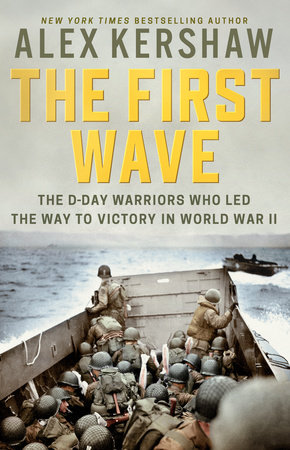
A few weeks ago, I received a copy of the magnificent book The First Wave by military historian Alex Kershaw by the fantastic people at Penguin Random House Canada.
What a treat it was for the military history enthusiast in me.
The key to responding to the question I kept asking myself on the beach lies on page 312, when the author writes that a Veteran US Ranger “[…] stressed that during the most critical combat of modern times it was the “heart and mind” that had mattered most.”
Witness to that, “[…] an advance party had cut through a barbed-wire perimeter [protecting a gun battery] and crawled across the hundred-yard-wide minefield, disarming mines with their bare fingers in the dark.” (page 87). Talk about heart and mind!
But the men who fought their way on and through the beaches were also led by exceptionally inspiring figures.
Let me just quote two, among all those evoked by Alex Kershaw. Brigadier General Theodore Roosevelt (son of the 26th President of the United States) and Lord Lovat (Simon J. Fraser), 24th chieftain of Clan Fraser.
General Roosevelt insisted on landing with his troops walking with his cane (he was suffering from arthritis) “[…] wearing a knit watch cap, not the regulation helmet […]”, insisting to board his landing craft unaided.
As for Lord Lovat, the inspiring Scottish commando leader certainly must have looked like an eccentric for his German enemies, for he “[…] was armed with a hunting rifle, dressed for a good day’s walk on the moors: a white turtleneck sweater, suede vest, khaki corduroy pants, and a duffle coat, which he would leave behind when he went ashore.”
The ordinary men from Canada, Great Britain and the United States who successfully assaulted the Nazi fortress on that historic day became extraordinary through their endurance, sacrifice and determination. And they were inspired by men who rejected the blandness of conformity by showing themselves for what they were, whether it was being afflicted by illness or expressing pride in their ancestry.
Alex Kershaw is probably the best book I have read so far about D-Day and the importance of supreme courage when the going gets tough (I’m referring here to Lieutenant Colonel James Rudder’s men who were besieged in a cramped command post without food, water, ammunition and sleep (page 243)).
Beautifully written (I love Kershaw’s style) and engaging, The First Wave should be the first companion you think of bringing on the roads of summer vacations or on a beach where you will be able to enjoy what these guys fought for – freedom.
 Ouch!!!!
 According to some news reports,
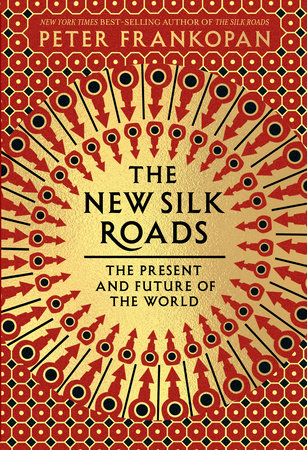
  The new Silk Roads along which Beijing seeks to play an always greater role not only spans a determinant geographical area between China and the Eastern Mediterranean, but also encompasses 63% of the world’s population. Peter Frankopan nevertheless goes on to observe that “[…] it is striking then to see how few friends the US and the West have along the Silk Roads.”
 En parcourant les données partagées par le Stockholm International Peace Research Institute, je me suis particulièrement intéressé aux données
  Je lisais cette semaine dans
 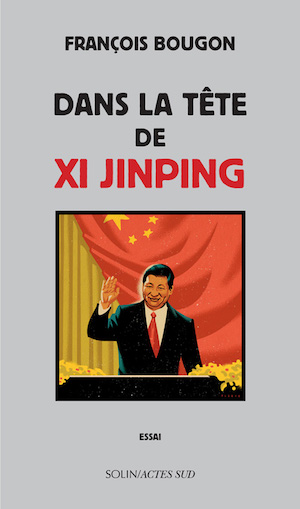 Il y a quelques années, je me souviens avoir vu une photo du Premier ministre israélien Benjamin Netanyahu, prise dans l’avion alors qu’il se rendait en Chine. Sur sa table se trouvait le livre d’Henry Kissinger On China. J’avais alors été impressionné par la hauteur de vue du dirigeant israélien, boulimique de lecture et avide de connaissances à propos de cet Empire du Milieu avec lequel il souhaitait resserrer les liens.
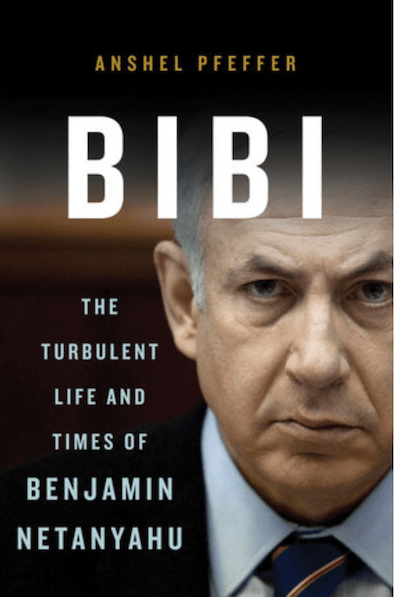 In May 2007, I had the privilege of meeting with former Israeli Prime Minister Benjamin Netanyahu, who was then leader of the opposition in the Knesset.
 J’ai toujours été fasciné par l’histoire du Mossad. Durant mes années universitaires, je parcourais jusqu’aux petites heures du matin les ouvrages relatant les exploits des hommes et femmes qui ont écrit les grandes pages de cette institution légendaire
 En février dernier, j’annonçais en primeur sur ce blogue la parution d’une biographie du maréchal Rommel – “le renard du désert” – sous la plume de nul autre que Benoit Rondeau aux éditions Perrin d’ici la fin de l’année.
 BookMarc