The kitchens of the Tsar

On June 24, 2023, Yevgeny Prigozhin – the former convict-turned-entrepreneur-turned-warlord, shook the pillars of the Kremlin. The eyes of the world were riveted on the screens while Wagner mercenaries drove to Moscow. The leader had had enough of Russia’s military leadership that was, in his opinion, responsible for the state of things in Ukraine. Could it be the end of the régime? Few could predict what would happen. At the end of the day, Vladimir Putin prevailed, but the mutiny revealed the character of a man who thought bigger of himself than he could deliver.

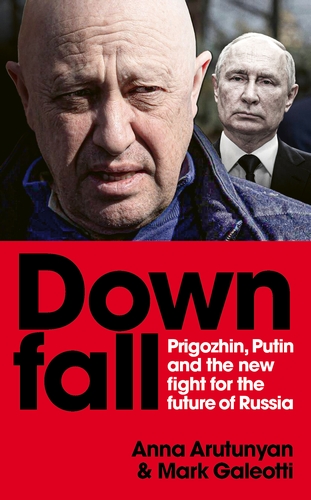
In the recent book Downfall: Prigozhin, Putin and the new fight for the future of Russia (Ebury Press) they co-wrote, journalist Anna Arutunyan and renowned Russia observer Mark Galeotti explain why and how Prigozhin – the servant who forgot his place – embarked on his death knell on what could be described as his highway to hell.

Since Prigozhin intertwined his destiny with Vladimir Putin’s reign, his biography can’t be dissociated from the nature and the functioning of the régime he eagerly served for his good fortune. Comparing the Kremlin to a medieval court where adhocracy prevails, the authors explain that one’s influence and fate are related to its importance to the Tsar.

Continue reading “The kitchens of the Tsar”

Conflict: The study of warfare at its best

I was impatient to dive between the covers of General David Petraeus (retired) and Lord Roberts book, Conflict: The Evolution of Warfare from 1945 to Ukraine and saying I’m happy I did is a euphemism.

The best way for me to review this enthralling book is to get off the beaten path and summarize the 10 main takeaways that strike me the most.

1. Whatever you think of it, “war is still very much worth studying.” That’s the common thread of the book.

2. Totalitarian régimes have an easier time launching, conducting and bearing the brunt of war. The rise of autocracies throughout the world is therefore a challenge for democracies not accustomed with the pugilistic mindset.

3. Don’t cut military spending. “Money saved in piecemeal defense cuts often costs more in the long run.” The authors mention Great Britain’s decision to axe HMS Endurance before the Falklands War as a case in point. They also refer to Israel’s defense cuts after the Six Days War, with the consequences that followed six years later on the fateful morning of Kippur. Deterrence is cheap compared to war’s tribute in blood and treasure.

Continue reading “Conflict: The study of warfare at its best”

Churchill’s Disciple

As far back as reading his incredible columns in the Daily Telegraph, I have been fascinated with Boris Johnson. Throughout his media and political career, the former Prime Minister of the United Kingdom has intrigued and amused me while often making me reflect further on the parallels between the past and the present. In that regard, his riveting and difficult-to-match biography of Winston Churchill underlies how much both statesmen share many similarities, which probably explains why Boris Johnson undertook the process of writing this biography.

That impression was rekindled while I read Sebastian Payne’s absorbing book The Fall of Boris Johnson: The Full Story (Macmillan). Even though the story it recounts was painful at times – yes, I admit, I’m a fan of Boris Johnson and reading about his downfall didn’t make me particularly joyful – it was unquestionably the best political book I have read for years.

Winston Churchill and Boris Johnson will both go down in history as unrivalled communicators of their respective eras. It must have been hard for the latter’s communications shop to provide products that met the criteria of a man who was probably his own best speechwriter.

Continue reading “Churchill’s Disciple”

The Devil’s Servants

The SS are still claiming victims to this day. Not on the battlefield, of course, but because of their nefarious legacy. Their ghosts have been sighted last week in the Canadian parliament when a former member of the Waffen-SS 14th (Galician) Division was hailed as a hero. The Speaker of the House of Commons, Anthony Rota, had no choice but to resign because of the storm his praise about 98 years old Ukrainian SS veteran Yaroslav Hunka generated. Truth be told, all those applauding were most certainly unaware of his past military service in Hitler’s elite troops.

Which brings back the crucial notion of education and awareness.

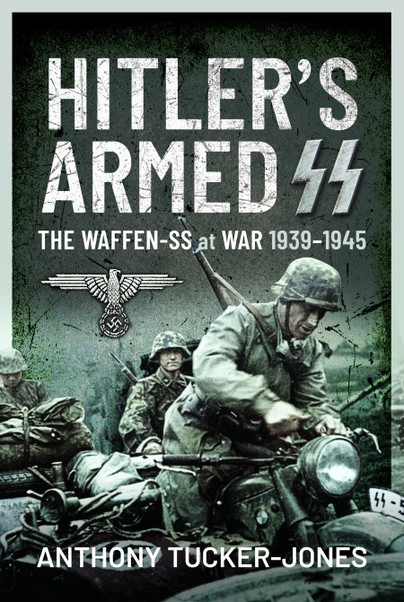
The events in Canada’s Nation Capital and the storm it legitimately generated occurred as I was completing my reading of Anthony Tucker-Jones’ book Hitler’s Armed SS: The Waffen-SS at War 1939-1945 (Pen & Sword Military).

One of Hitler’s main traits was that he fostered rivalry around himself. Loathsome of the military establishment, notably because it regrouped several characters born into the German aristocracy, the founder of the Third Reich created the Schutzstaffel as a counterweight. His investment would prove worthy. The members of the SS – who fought even after the Führer rendered his last breath after committing suicide in his bunker – had been his most committed and fanatical fighters.

Continue reading “The Devil’s Servants”

La grammaire de Vladimir Poutine

Le jour où le président russe Vladimir Poutine lança ses troupes à l’assaut de l’Ukraine, le 24 février 2022, un oligarque questionna le ministre des Affaires étrangères Sergueï Lavrov sur la manière dont fut planifiée cette intervention armée. « Il [le président] a trois conseillers. Ivan le Terrible, Pierre le Grand et Catherine la Grande », répondit le ministre. L’anecdote est révélatrice, puisque les trois personnages ont laissé leur empreinte en gouvernant par la puissance dure, ne rechignant pas à faire sonner la charge lorsque nécessaire.

Pour bien saisir la pensée et les actions posées par celui qui préside aux destinées de la Russie, il faut d’abord maîtriser sa grammaire. L’un des exposés les plus éclairants à ce sujet nous est offert par Pierre Servent dans Le monde de demain : Comprendre les conséquences planétaires de l’onde de choc ukrainienne (Robert Laffont). Fort de son expérience militaire et académique, mais aussi politique – le dernier élément se lit entre les lignes – l’auteur nous donne des clés essentielles pour comprendre Vladimir Poutine.

Parce que le personnage est tout sauf un accident de l’histoire. Ses actions reposent « […] sur une idéologie, sur une lecture du passé et des rapports de force dans le monde. L’homme du Kremlin est convaincu depuis longtemps que les temps nouveaux seront forgés par des hommes dotés de la capacité de recomposition des espaces de puissance. » Ces leaders ont le beau jeu présentement, puisqu’« […] il y a dans le monde un besoin frénétique de réassurance autocratique. » Cette vision du monde, est-il besoin de le souligner, est antinomique avec les valeurs démocratiques.

poursuivre la lecture

La guerre sainte de Poutine

« Il faut se rendre à l’évidence que cette guerre ne répond pas aux équations habituelles des relations internationales », d’analyser Sébastien Boussois et Noé Morin dans leur récent livre La guerre sainte de Poutine (Passés / Composés). « Il faut plonger dans les ressorts intellectuels et spirituels du poutinisme pour comprendre comment la guerre en Ukraine et le basculement de la Russie furent rendus possibles. » Même si la religion ne fait plus partie de la matrice géopolitique de l’Occident déchristianisé, cette lecture apporte de l’eau au moulin de cette guerre qui sévit depuis le 24 février 2022.

Depuis l’entrée en scène de Vladimir Poutine, l’orthodoxie russe a retrouvé ses lettres de noblesse et le patriarche Kirill joue un rôle de premier plan dans la vie nationale et au-delà. On souligne au passage que les Russes sont majoritairement croyants (80%). Les hommes d’Église, nous disent les auteurs, sont le lien entre Vladimir Poutine et le peuple. Pas étonnant que l’odeur de l’encens ait entouré son ascension à la tête du pays.

Les Russes sont plus attachés à la religion que les Occidentaux et nous avons trop tendance à gommer cette réalité. À l’occasion d’une visite à Moscou, j’avais été frappé par l’achalandage à la cathédrale du Christ-Sauveur, laquelle fut rasée par Staline en 1931 et dont la reconstruction a été décrétée par le président Boris Eltsine en 1994.

poursuivre la lecture

La ruse, cette égalisatrice de puissance

La série télévisée Valley of Tears (La vallée des larmes) diffusée sur HBO Max relate le début de la guerre du Kippour – jour le plus sacré du calendrier juif – qui a été initiée par la Syrie et l’Égypte le 6 octobre 1973. Dans cette série, un jeune officier du renseignement, Avinoam, s’évertue sans succès à prévenir ses supérieurs du danger qui guette Israël par les informations qu’il est parvenu à glaner en espionnant des conversations téléphoniques syriennes. Jérusalem sortira vainqueure du conflit 19 jours plus tard, mais la conscience nationale restera traumatisée par cet épisode.

« La surprise est bien plus que la moitié de la bataille », comme l’évoque Rémy Hémez dans son livre Les Opérations de déception : Ruses et stratagèmes de guerre (Perrin). En octobre 1973, nous dit-il dans son exposé enlevant, « deux mythes de la société israélienne se sont effondrés : l’invincibilité de l’armée et l’infaillibilité des services de renseignements. » Les Israéliens étaient pourtant bien avisés, mais ils ont été bernés par ce que le militaire-chercheur désigne comme étant le « biais de confirmation », cette « […] tendance à ne rechercher, et à ne trouver pertinentes, que les informations qui confirment nos préconceptions. » Au lieu de focaliser sur les intentions de l’adversaire, l’attention a été portée sur les capacités, ce qui a eu pour effet de bercer Israël d’un faux sentiment de sécurité en raison de la supériorité de ses forces militaires.

poursuivre la lecture

Churchill was better at strategy than politics

Professor Simon J. Ball (University of Leeds)

I recently reviewed Professor Simon J. Ball’s revealing book about the battle of Alamein (The Folio Society). He generously accepted to answer few questions for this blog, and I take immense pleasure in sharing the content of our exchange with you today. I trust you will enjoy reading it.

_________

Professor Ball, I might be wrong, but I have a feeling that the Mediterranean theater during World War II has been overlooked. Why is it important to pay more attention to it? How crucial was it in the big picture of the conflict? 

SJB: The war in the Mediterranean was of central importance. It blew apart the idea of the Mediterranean as a unified zone, although all the major powers tried to engineer integration at some points. Oddly the idea of the Mediterranean as an integrated politico-economic-cultural area, “breathing with the same rhythms”, was popularized by Fernand Braudel in the late 1940s.

Continue reading “Churchill was better at strategy than politics”

Joe Biden: Leader of the Free World

“To every man there comes in his lifetime that special moment when he is figuratively tapped on the shoulder and offered a chance to do a very special thing, unique to him and fitted to his talents,” declared Winston Churchill. For many, that hour comes early. For some, like the heroic British Prime Minister, it comes later. For others, like US President Joe Biden, it comes even later in life.

As we commemorate today the tragic first anniversary of the murderous onslaught launched by Vladimir Putin against Ukraine, it seems fitting to write about one of the best political biographies I have read in a long time. The Fight of His Life: Inside Joe Biden’s White House (Scribner) is required reading for anyone seeking to understand the character of the 46th President of the United States.

In the summer of 2017, the events surrounding the extreme-right manifestations in the streets of Charlottesville convinced former Vice President Biden that Donald Trump “was giving evil a safe harbour”, thus contributing to the Democratic politician’s decision to run. The combat for 2020 was between good and evil. And no one was better equipped than Joe Biden to lead it.

Continue reading “Joe Biden: Leader of the Free World”

Sauvez Zelensky!

« Volodymyr n’a pas peur de mourir. Je le sais. Il est habité par autre chose. Il est déjà ailleurs », déclare le président de la République française au colonel Coralie Desnoyers, chef du Service Action – bras armé de la Direction générale de la Sécurité extérieure (DGSE) dans les premières heures de la guerre lancée contre l’Ukraine par Moscou.

Dès les premières heures de l’invasion de l’Ukraine par les troupes russes à l’aube du 24 février 2022, le président ukrainien Volodymyr Zelensky s’élève immédiatement au-dessus de la mêlée des chefs ordinaires. Sa réaction, ses interventions, son courage attachant, le distinguent des dirigeants que l’on sait habituellement allergiques aux risques. La politique n’est-elle pas l’art de survivre? Ce logiciel est étranger au héros ukrainien.

Il refuse obstinément de quitter Kyiv, demandant des munitions au lieu d’un taxi. Dans un scénario fiction, le président français s’engage à assurer sa sécurité, notamment face à un commando du groupe Wagner (ainsi nommé « en raison de la fascination de son chef et créateur, Dmitri Outkine, néonazi russe, pour Adolf Hitler. Ce même Outkine décoré par Vladimir Poutine dans l’ordre du Courage au Kremlin ») ayant pour mission de lui offrir un billet pour l’éternité. Cette tâche échoit aux hommes et aux femmes du Service Action – des personnages qui n’ont rien à envier à James Bond.

Continue reading “Sauvez Zelensky!”