How Yeltsin Paved Putin’s Way

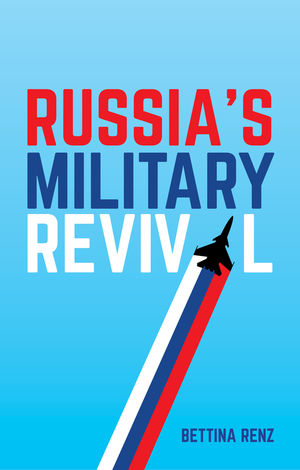
The Russian army and soldiers are all over the news since the invasion of Ukraine on February 24. It is therefore crucial to understand the military machine that is supposed to serve Vladimir Putin’s foreign policy. In her insightful book, Russia’s Military Revival (Polity), University of Nottingham Professor Bettina Renz quotes a fellow academic who observed that “by the end of the 1990s, Russia had largely been written off as a global military force as it was generally assumed that its armed forces stood ‘perilously close to ruin.’” While Putin’s 2008 modernization program proved instrumental in giving the Russian army its pride and means, the main argument of the author is that this development “did not occur in a vacuum.”

Since the reigns of the Tsars, “[…] having a strong military has always been important to Russia”, mainly to ensure régime stability, its presence in the world as a great power and the necessity – in the Kremlin’s perspective – of keeping a buffer zone against real or imagined potential invasion. Continuity is the main theme developed by Bettina Renz in her book.

Continue reading “How Yeltsin Paved Putin’s Way”
Turkish Drones Over Ukraine

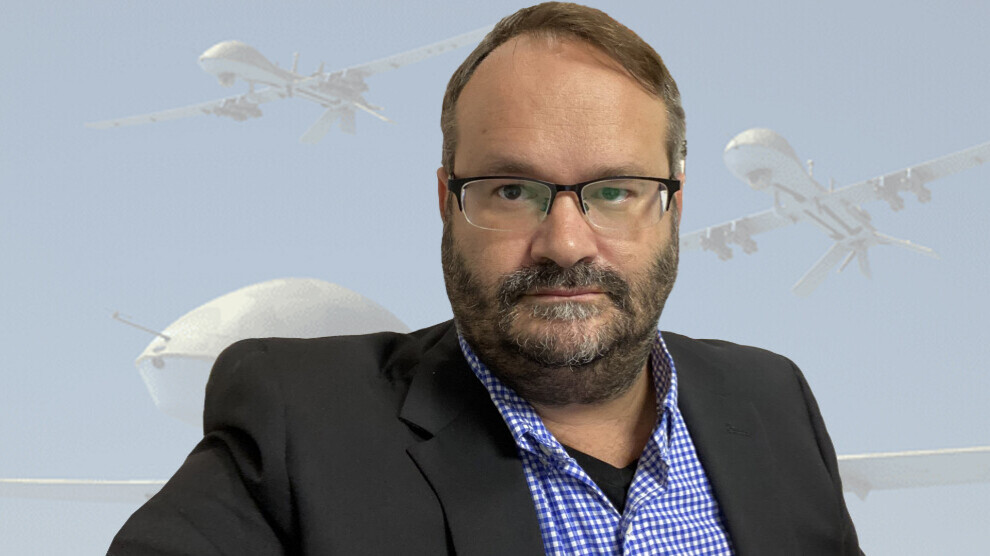
Seth J. Frantzman (source ANF News)

Seth J. Frantzman is a senior correspondent and analyst at The Jerusalem Post, one of the world’s leading newspapers. He’s also a defence expert on anything related to drones in warfare. He recently published an insightful book on the subject, Drones Wars. Since the beginning of the invasion of Ukraine by Russians forces on 24 February, drones have played a role on the frontline as videos have circulated about their performance or the devastation and atrocities they permit to observe first-hand. Despite a grueling schedule, Mr. Frantzman, whose book I will review here soon, has kindly accepted to answer a few questions for me. I am sincerely grateful for that.

Here is the content of our exchange.

It does not seem the drones are playing a major role, but if they can show that Ukraine can still operate in their airspace, even when contested by Russian air defense and Russian warplanes, it will be an important accomplishment for armed drones.

Mr. Frantzman, I have watched with amazement the images of the Turkish-made drone attacking the Russian military in Ukraine. What place are the drones occupying in this conflict? 

There is a lot we don’t know about how Ukraine is using the Bayraktar drones it has acquired from Turkey. Basic information about how many are still flying and where they are operating appears to be lacking from most reports. Nevertheless, there have been several videos claiming to show the UAVs targeting the Russian military. It does not seem the drones are playing a major role, but if they can show that Ukraine can still operate in their airspace, even when contested by Russian air defense and Russian warplanes, it will be an important accomplishment for armed drones. 

Continue reading “Turkish Drones Over Ukraine”

Putin’s Soviet Playbook

As I grow older, I realize that history is one of the surest guides to navigate the present. While many adhered to Francis Fukuyama’s theory that the demise of Soviet Union on December 26, 1991, represented the end of history, others lamented what they perceived as “the greatest geopolitical catastrophe of the century”.

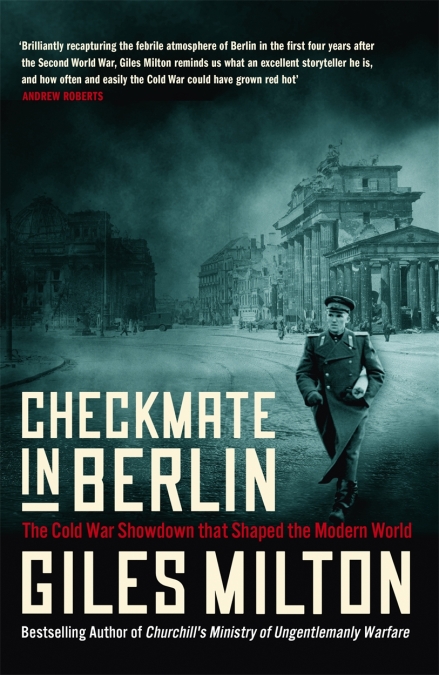
Old habits die hard and Giles Milton’s Checkmate in Berlin: The Cold War Showdown That Shaped the Modern World is an excellent representation of that idiom. “”America is now the primary enemy,” said one of Marshal’s Zhukov’s general at the time of the capture of Berlin. “We have destroyed the base of Fascism. Now we must destroy the base of Capitalism – America.”” Things haven’t changed much in the last 77 years.

Continue reading “Putin’s Soviet Playbook”

Zelensky shows us what’s worth defending

Author and historian Roger Moorhouse (source: Culture.pl)

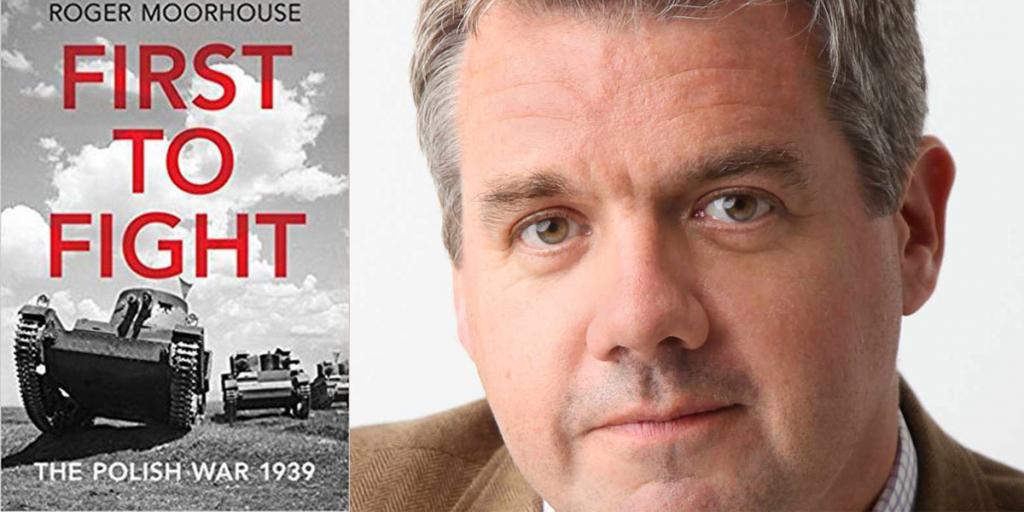
Acclaimed author and historian Roger Moorhouse, whose Poland 1939 I had the pleasure of reviewing on this blog last weekend, accepted to answer my questions about Polish military history, the war of aggression against Ukraine and the leadership of President Volodymyr Zelensky. Below is the content of our exchange.

Mr. Moorhouse, thank you very much for taking the time to answer my questions, despite your busy schedule. While reading Poland 1939, I kept wondering if and what Western countries did to help the government of Warsaw in the crucial weeks and months leading to World War 2. Could you tell us more about that?

Not enough, is the short answer. There were military alliances signed with both the British and the French – the French one in May 1939, and commitments were made – specific in the French case, more vague in the British – to assist in the event of an invasion. The French committed to send “the bulk” of their forces across the Rhine on Day 15 of mobilization, and the British talked vaguely about sending RAF squadrons to Poland. Little of it, of course, came to pass once Germany actually invaded. The French made a half-hearted advance across the Rhine, and the RAF dropped leaflets over Germany politely asking that the Germans cease and desist. They then shifted the narrative from one of defending Poland to one of promising to restore an independent Poland at some time in the future. It was driven by circumstances, of course, but it was also morally rather cowardly.

Continue reading “Zelensky shows us what’s worth defending”

Putin is following Hitler’s blueprint

I started reading Poland 1939: The Outbreak of World War II by historian Roger Moorhouse last summer, with the intention of reviewing it on the 82nd anniversary of the tragic events that unfolded in September of that fateful year. But life caught up with me and the book remained unfinished on my desk for several months. That was until Vladimir Putin decided to invade Ukraine.

Let me start with an observation. Not much – not enough I should say – is written in English about Polish military history. I remember reading Adam Zamoyski’s Warsaw 1920 in 2012, when I first visited Poland. During that trip, I also visited the Field Cathedral of the Polish Army and the Warsaw Uprising Museum, both located in the capital city. Notwithstanding these contacts with Polish military history, I always have the image of Polish lancers attacking the mighty Wehrmacht in a useless charge.

Continue reading “Putin is following Hitler’s blueprint”

Zelensky is living up to what Churchill called “the level of events”

Source: Michael de Adder (@deAdder) / Twitter

Andrew Roberts is the contemporary authority on Winston Churchill. He gave an interview yesterday to Michael Crick for the Mail Online about the similarities between the Greatest Briton and Ukrainian President Volodymyr Zelensky, his contemporary disciple.

Here are a few lines from this insightful article:

“Not only has Zelenskyy stayed in Kyiv, as Churchill did in wartime London, but he is seen on the streets, rallying his people with speeches, and recognizes all the perils and risks.

‘It’s straight out of the Churchill playbook,’ Roberts tells Mail+. And Zelenskyy is showing extraordinary bravery when a team of Russian assassins dressed in Ukrainian army uniforms is said to be out to kill him. That’s not a hazard Churchill faced.”

Continue reading “Zelensky is living up to what Churchill called “the level of events””

« Nous avons été trop mous avec Poutine »

Le président ukrainien Volodymyr Zelensky (source: New York Post)

Les événements tragiques qui se déroulent en Ukraine depuis jeudi dernier me ramènent à la lecture du livre La honte de l’Occident, à l’intérieur duquel le journaliste Antoine Mariotti relate les tribulations diplomatico-militaires par lesquelles l’Occident a littéralement laissé le champ libre à Vladimir Poutine en Syrie. C’était il y a moins de 10 ans. Je ne peux m’empêcher d’identifier dans cet ouvrage la matrice du mode opératoire du Kremlin lorsqu’il décide que le temps est venu de faire déferler sa force militaire sur un sol étranger.

Je me suis donc entretenu avec M. Mariotti et j’ai recueilli ses observations relativement à la situation actuelle dans ce pays où Moscou veut imposer par les armes un second Holodomor (terme désignant la grande famine causée en Ukraine en 1932-1933 par Staline).

Voici le contenu de notre échange.

M. Mariotti, avez-vous été étonné de l’invasion de l’Ukraine par la Russie?

Pour être honnête, oui parce que j’avais « parié » qu’il n’irait pas. Je pensais que Poutine pousserait le bouchon aussi loin que possible pour mettre une pression diplomatique, politique et même militaire… mais je ne pensais pas qu’il s’engagerait dans une offensive si massive en Ukraine, pas en dehors du Donbass. Ce n’est toutefois pas une surprise et ce n’était pas impensable, comme ont pu le titrer certains médias, parce que cela fait des mois que l’on sait que le risque existe et plusieurs semaines que les États-Unis avertissaient qu’il allait envahir. Mais je pensais qu’avec cette pression, il ne lancerait pas une telle offensive.

poursuivre la lecture

Will Kyiv be another Stalingrad?

Adam Zamoyski (source: History Extra)

Few years ago, around the time I visited Poland for the first time, I devoured the insightful book Warsaw 1920 by acclaimed biographer and historian Adam Zamoyski. He is also the author of a masterful book about Napoleon’s invasion of Russia in 1812. I therefore reached out to him, asking if he saw any parallel between history and the current invasion of Ukraine by Russian troops. He generously accepted to share some thoughts with me and I’m extremely grateful for that.

Here is what the acclaimed biographer of Napoleon generously shared with me:  

The parallel that struck me, weeks ago, is that with 1811-1812, when Tsar Alexander I set as his condition for maintaining his alliance with Napoleon that the French Emperor issue a formal public declaration that he would never allow the re-creation of a Polish state. This was something that Napoleon would and could not do (any more than NATO could bind itself to refusing Ukraine membership if that country wished to join).

Continue reading “Will Kyiv be another Stalingrad?”

Vladimir Poutine est un pur produit de l’histoire de la Russie

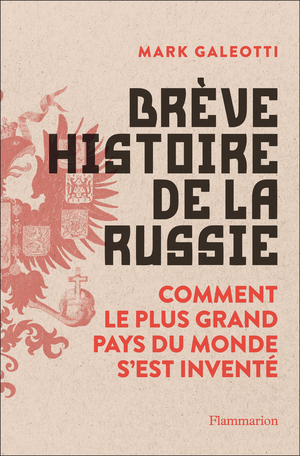
Si je vous demandais de me dire quel dirigeant russe a prononcé les paroles suivantes: « Pour défendre mes frontières, je n’ai d’autre choix que de les étendre », il y a fort à parier que vous penseriez qu’il s’agit de Vladimir Poutine. Après tout, ne lui impute-t-on pas actuellement – et peut-être à bon droit – des desseins guerriers en Ukraine? Mais cette citation provient de Catherine II, dite la Grande (1729-1796), celle-là même qui « […] prit le sud de l’Ukraine et annexa à la Russie la dépendance ottomane de Crimée en 1783, ce qui aura des répercussions historiques jusqu’au XXIe siècle. » Qui a dit que l’histoire ne se répète pas?

Extraites de la Brève histoire de la Russie : Comment le plus grand pays du monde s’est inventé de l’historien britannique Mark Galeotti, ces citations permettent de comprendre les principaux ressorts de l’histoire politique de ce pays aussi captivant que mystérieux.

poursuivre la lecture

“Good strategy might just be staying out of trouble” – Exclusive interview with Sir Lawrence Freedman

Sir Lawrence Freedman (credit: Boston Consulting Group)

Sir Lawrence Freedman is not only an internationally acclaimed author, but he is also the dean of British strategic studies and Emeritus Professor of War Studies at King’s College London. I have a boundless admiration for this institution and I hope to enlist in the near future to the online Master’s Degree in War Studies it offers.

Sir Lawrence generously accepted to answer a few questions for this blog and I am extremely grateful for that. Here is the content of our exchange.

Russia is a constant challenge because it feels itself at threat from the West and has taken a tough stance that creates an edginess.

My point was then that the withdrawal from Afghanistan, chaotic though it was, was unfortunately expected and the lesson (not to put substantial ground forces into a civil war) had been learned a decade earlier. Russia is a constant challenge because it feels itself at threat from the West and has taken a tough stance that creates an edginess, especially as it plays a disruptive role in European affairs. It poses a challenge that is serious but should be manageable as its underlying position if weak. China has been getting stronger for the past three decades year on year, although that growth may be stuttering now. It has turned itself into a great power, militarily as well as economically, and under Xi has taken a much more assertive stance on a whole range of issues. I believe this stance will turn out to be counter-productive, but it creates a risky and dynamic situation which could spark a wider confrontation (see answer to next question).

Continue reading ““Good strategy might just be staying out of trouble” – Exclusive interview with Sir Lawrence Freedman”