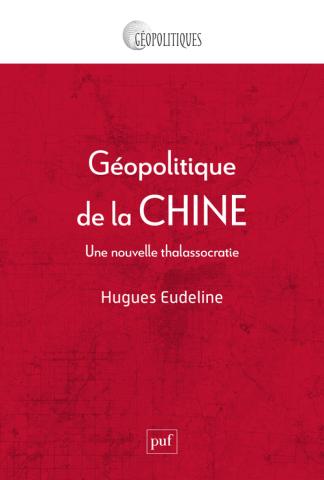
La Chine, cette nouvelle thalassocratie

Sillonnant les points chauds de la planète et déjouant les complots ourdis par des puissances maléfiques jusque dans l’espace, Tintin est sans doute le plus illustre géopoliticien du XXᵉ siècle — et sa légende n’est pas près de s’estomper. Les circonstances actuelles aidant, sa pertinence ne fait que se confirmer. Prenons simplement Le Lotus bleu. Le jeune reporter y suit la trace d’un réseau international de trafiquants d’armes et d’opium déjà mis au jour dans Les Cigares du Pharaon. Le cinquième album d’Hergé se déroule ainsi dans une Chine écartelée entre les grandes puissances de l’époque — la Grande-Bretagne, la France, les États-Unis et le Japon — qui imposent au pays une diplomatie de la canonnière destinée à asseoir leurs intérêts économiques et politiques.

Dans son brillant ouvrage Géopolitique de la Chine : Une nouvelle thalassocratie (PUF), le spécialiste de géopolitique maritime et militaire Hugues Eudeline rappelle que « faute d’avoir pu disposer d’une force militaire et navale moderne, l’empire du Milieu a été contraint de faire des concessions et a subi une humiliation dont la mémoire se transmet de génération en génération. » L’auteur détaille comment la Chine a navigué « pas à pas » vers son positionnement actuel de compétitrice à la domination des États-Unis, ces « héritiers historiques de la Grande-Bretagne », en tant que puissance maritime.

poursuivre la lecture
Okinawa: pivot stratégique du Pacifique

Fasciné par l’histoire militaire depuis mon plus jeune âge, mon imaginaire a été nourri des récits du débarquement en Normandie, de la bataille d’Arnhem – cet objectif trop ambitieux qui valut tant de reproches à Montgomery – ou encore de la légendaire bataille d’Angleterre, aux premières heures du conflit. Comme beaucoup sans doute, la guerre du Pacifique n’évoquait pour moi que le lointain écho d’un sacrifice immense, porté avant tout par les troupes américaines. Pour dire vrai, je méconnaissais largement ce théâtre, encadré qu’il était par les parenthèses marquantes de l’attaque de Pearl Harbor et de la capitulation du Japon après les bombardements d’Hiroshima et de Nagasaki.

Comment oublier les bons moments passés à regarder les épisodes de la série télévisée Les Têtes brûlées, avec le légendaire « Pappy » Boyington, que je suivais religieusement, l’étonnement teinté d’émotion lors d’une visite au monument d’Iwo Jima à Washington, D.C., ou encore l’admiration profonde que m’inspirait le caporal Desmond T. Doss dans Hacksaw Ridge ? Pourtant, une sérieuse lacune demeurait, à laquelle il me fallait remédier. L’historien militaire Ivan Cadeau y apporte une contribution précieuse dans son ouvrage Okinawa 1945 (Éditions Perrin).

poursuivre la lecture

True heroism can’t be found in the absence of risk

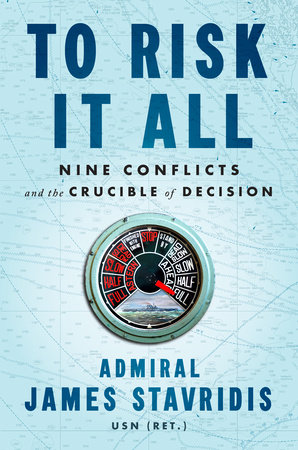
I discovered Admiral (US Navy – retired) James Stavridis as an author at the beginning of the pandemic two years ago. This warrior-intellectual always amazes me by the depth of his thought and the finesse of his writing style. His last book, To Risk It All: Nine Conflicts and the Crucible of Decision (Penguin Press) depicts nine characters – 8 men and 1 woman – who left their mark on US military history.

You can almost hear the lyrics of the US Marines hymn and its reference to the shores of Tripoli when you read about Lieutenant Stephen Decatur’s expedition in North Africa to save US Navy comrades detained by pirates and you want to watch Captain Philips with Tom Hanks another time after completing the chapter devoted to Rear Admiral Michelle Howard who was in command of the successful rescue operation in the Gulf of Aden.

But my favorite – by far – was Cook Third Class Doris “Dorie” Miller. If there is one chapter I would love to see the author expand in a whole book, the life and lessons of that exceptional warrior would be my choice. Think about it for a moment. You’re an African-American and you enlist in the US Navy to better support your family, seeking advancement out of the segregationist South. But you must still endure sanctioned racism. Admiral Stavridis reminds the reader that “the high-tech specialties of communication, gunnery, navigation, and engineering were closed to African Americans; in fact, the only jobs they were permitted to do were cooking, cleaning, and serving as valets for the senior officers in the ships.”

Continue reading “True heroism can’t be found in the absence of risk”

Top Gun Maverick and the Taiwanese flag – Exclusive interview with Chris Fenton

Chris Fenton (source: Variety.com)

With the release of Top Gun Maverick and all the buzz surrounding the issue of the Taiwan flag on Maverick’s leather jacket, Hollywood former movie executive and author Chris Fenton kindly accepted to answer a few questions for this blog. Needless to say, I was extremely happy to be exchanging with the producer of one of my favorite movies, Iron Man 3.

Here is the content of our exchange.

Mr. Fenton, the last couple of years have been difficult for the United States on the world scene and many observers are pontificating about its supposed loss of power. Do you think Top Gun Maverick is a good shot in the arm of American patriotism?

100% yes. Hollywood content can be an extremely effective tool for soft power. Top Gun is the best example of that.

What is the recipe for the success of that iconic movie?

The star power of Tom Cruise and the brand awareness among global consumers of the original Top Gun film.

The Taiwan flag was not supposed to appear on Maverick’s jacket – from what I remember of the 2019 trailer. Could you tell us why the situation has changed?

Continue reading “Top Gun Maverick and the Taiwanese flag – Exclusive interview with Chris Fenton”

L’histoire comme arme géopolitique

Lors d’une récente discussion, un ancien haut-gradé des Forces armées canadiennes me faisait prendre conscience à quel point la géopolitique nous affecte. Quotidiennement. Par exemple, au niveau des chaînes d’approvisionnement, lesquelles dépendent largement du transport maritime. Quand on sait que la principale route commerciale est celle qui relie la Chine à l’Europe par le canal de Suez, il y a tout lieu de s’intéresser de beaucoup plus près à ce qui se passe en mer de Chine. Mais comme c’est moins visible et criant que le bruit de bottes qui se font entendre actuellement aux frontières de l’Ukraine ou de l’exaspération découlant des négociations corsées avec l’Iran, on y prête moins attention.

C’est justement cet aspect inaudible des relations internationales que l’historien et spécialiste en géopolitique Thomas Gomart s’emploie à illustrer dans son dernier livre, Guerres invisibles : Nos prochains défis géopolitiques (Tallandier) dont je viens de terminer la passionnante lecture.

Poursuivre la lecture

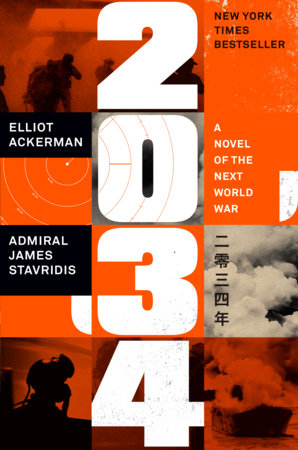
2034: The War With China?

I am not a person who enjoys novels. My youngest daughter was therefore astonished when she saw me reading 2034: A Novel of the Next World War. “Yes, but it’s about a potential war between the United States and China. Plus, it’s written by an author I really like and admire, Admiral Stavridis [and Elliot Ackerman]”, I said. I admit that this was an exceptional experience and not only because of the genre, but mainly because this is one of the most thoughtful books anyone interested in geopolitics and the fate of the world should read now.

2034. About 12 years from now. Might as well say tomorrow. Russian President Vladimir Putin still occupies the highest office in the Kremlin – a scenario that made me smile – and the Israelis have lost the Golan after a military confrontation with Syria – an outcome that makes me cringe, since I have seen with my own eyes how vital this territory is to Israel’s security. The Chinese are still vying for “[…] uncontested control of the South China Sea.” Equipped with superior cyber capabilities, the Chinese People’s Liberation Army neutralizes the weapons and communications system of a flotilla of three American warships. Only one of them will remain afloat at the end of the confrontation. A military operation that was supposed to serve as a message turned into a World War.

Continue reading “2034: The War With China?”

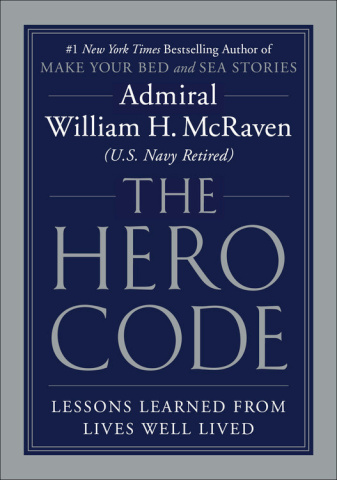
The Hero Code: “Find what you’re good at and give it to others”

Ever since I watched his famous speech “Make Your Bed”, I have been captivated by the career and thought of retired Admiral William H. McRaven, the former commander of the Navy SEALs. I was therefore excited to receive a copy of his most recent book The Hero Code: Lessons Learned from Lives Well Lived (Grand Central Publishing).

While I was reading it, an article from the Journal of Strategic Studies caught my attention. Written by National Security Affairs Professor James J. Wirtz, “The Abbottabad raid [during which Osama bin Laden was permanently neutralized by Navy SEALs] and the theory of special operations” elaborates about the theory of special operations, whose father was none other than Admiral McRaven. He theorized it in his master’s degree thesis in a period when, in the immediate aftermath of the Cold War, we lived in a “[…] new, unipolar world, [where] U.S. special forces would be relegated to tertiary missions within a Cold-War force structure that appeared bloated, obsolete and ripe for significant reductions.”

McRaven’s work sought “[…] to demonstrate that a tactic and unit deemed largely irrelevant by conventionally-minded officers and civilian strategists could actually achieve strategically and politically important effects, but only if planned and executed by special operators themselves against significant targets in proper ways.” And you can figure that the devil was – and still is – in the details.

Continue reading “The Hero Code: “Find what you’re good at and give it to others””

A new Cold War with China seems inevitable

AdmiralJamesStavridis_UNDispatch
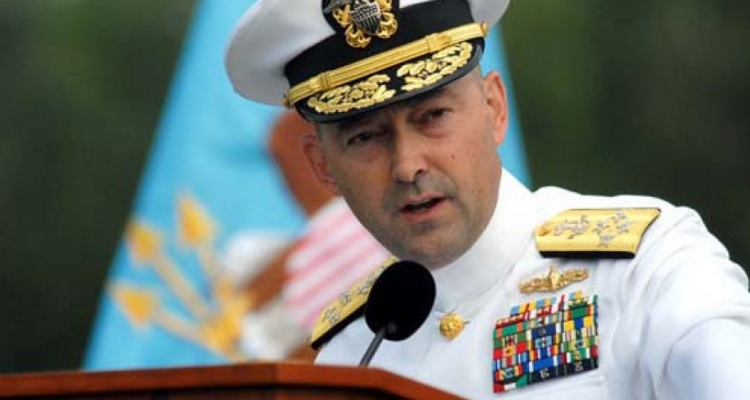
Retired four-star Navy Admiral and acclaimed author James Stavridis (Source: UN Dispatch)

(version française)

Retired Four-Star Admiral James Stavridis served as the 16th NATO Supreme Allied Commander – a function once occupied by the legendary General Dwight D. Eisenhower. In 2016, it was reported that he was vetted as a potential running mate for Democratic presidential candidate Hillary Clinton. He recently published an excellent book Sailing True North: Ten Admirals and the Voyage of Character which I recently had the privilege – and tremendous pleasure – to review here on this blog.

Having always been attached to the Fourth of July celebrations because of my deep admiration for the United States, it was my intention of publishing a special interview for the occasion. Admiral Stavridis generously accepted to answer my questions and I’m profoundly grateful.

There is absolutely no doubt in my mind that this book would be an excellent holiday read. Happy Fourth of July to all my American friends!

Here is the content of this insightful interview.

We are headed into a new Cold War with China. That seems inevitable now, but we need a strategy to avoid it turning into a shooting war. 

SailingTrueNorthIn Sailing True North, one of my favorite chapter (with the one devoted to Nelson) is the one about Zheng He. What do you think of the current tense situation with China and how do you think we should deal with that?
We are headed into a new Cold War with China. That seems inevitable now, but we need a strategy to avoid it turning into a shooting war. That will require a mix of diplomacy, military deterrence, tech savvy, economic tools (both in competition with China and in encouraging other nations to avoid Chinese “debt traps”). In essence, we should confront China where we must (cyber, trade, tariffs, their claims of “owning” the South China Sea) but cooperate where we can (environment, pandemics, arctic trade routes).  It will be a difficult and at times a dangerous passage. My next book, In Face, out in March 2021, is a novel about … a war with China! It is a cautionary tale, and let’s hope we don’t find it turning from fiction to fact before our eyes. Here’s a link to the Amazon page.

In the book, there are several references to religion, one to the Conclave, the other to John XXIII and Thomas Aquinas. I might be wrong, but I assume you are a Catholic and that faith seems to have had a significant impact on your journey. Am I wrong? Would you say that faith might also be an important buoy on the voyage of character?

I’m Greek Orthodox, and yes faith is vital for me personally – and for many others. Continue reading “A new Cold War with China seems inevitable”

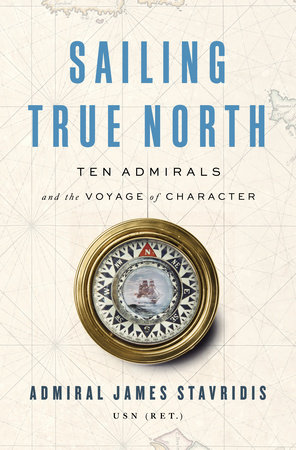
Sailing True North: A character-building guide in these troubled times

SailingTrueNorthSea Power has always fascinated me. I will forever cherish the memories of walking in the footsteps of Admiral Chester Nimitz in Pearl Harbor and Admiral Horatio Nelson at Gibraltar. Back in 2011, I spent a night on the Rock and had trouble sleeping. Heat certainly had something to do with it, but I was also pondering how the British legend spent his days here, defending the interests of King and Country at the entrance of the Mediterranean Sea. I like to think that I might have crossed his spirit while walking in the beautiful streets of this British Overseas Territory.

These men and women who ruled the waves were gifted with exceptional and inspirational values. And I’m very grateful to retired Admiral James Stavridis for writing Sailing True North: Ten Admirals and the Voyage of Character, where he details how these larger than life figures not only mastered what are certainly some of the most demanding jobs in the world, but also their character in front of adversity, whether it is the threat of invasion, war, bureaucracy, sexism or racism just to quote these examples. The best lessons are seldom learnt in easy circumstances.

Naturally, I will not talk about each of the fascinating personas that are presented between the covers, but I will write a few words about my Top 3.

Continue reading “Sailing True North: A character-building guide in these troubled times”

The art of making friends

AdmiralMcRaven_TaskAndPurpose
Admiral William H. McRaven (U.S. Navy Retired) (Source: Task & Purpose)

“Help as many people as you can. Make as many friends as you can. Work as hard as you can. And, no matter what happens, never quit!”

These are not the usual words or piece of advice you generally expect from a military figure like the retired commander of American Special Forces. But that’s the philosophy of Retired Admiral William M. McRaven, distilled in his most recent book Sea Stories: My Life of Special Operations.

Let me say it from the get-go. The book is pure joy to read. Not only because Admiral McRaven details his life as a Navy SEAL and the main operations in which he took part – like finding a crashed Navy airplane in the mountains of British Columbia (hey, I’m proud when a great author writes about my country), the capture of Saddam Hussein or the find and seek operation to neutralize Osama bin Laden (“the most successful special operation since World War II”). For a military enthusiast, those are great pages to read and the author has a gift for expressing himself eloquently and precisely. No word is superfluous.

But what amazed me the most is the mindset of that great military figure. If you haven’t yet, I invite you to watch the video of his speech inviting you to make your bed first thing in the morning then going about to change the worldMake your bed is also the title of a previous book by the famous Navy SEAL.

SeaStoriesImageAn outspoken believer in God and family man, Admiral McRaven also refers often to stoicism in his book – a predisposition also shared by none other than Former Defense Secretary and retired US Marines General James Mattis. Comfortable and at ease with his beliefs and values, he also finds no qualms in bringing terrorists to justice.

But what impressed me the most is what I learnt about the elected officials Admiral McRaven worked with and for. To that end, the following excerpt about his interaction with President George W. Bush regarding the neutralization of terrorist Abu Ghadiya (“the most wanted man outside Iraq”) in 2008 is worth quoting at length:

“At one point in the brief the President stopped me and asked, “Why are we sending the SOF guys in? Can’t we just drop a GBU‐31 on this guy?”

Continue reading “The art of making friends”