The Presidential Satchel

Historically, the concept of war has followed a familiar script: one victor and one vanquished. However, there exists a scenario that defies this ancient logic — nuclear war. In such a case, writes Annie Jacobsen in Nuclear War: A Scenario (Dutton), “there is no such thing as capitulation. No such thing as surrender.” Only the scorched silence of what once was.

From the very first lines, the reader is drawn into a vortex of dread—a work of speculative fiction so meticulously constructed that it becomes indistinguishable from reality. This is not merely an intellectual exercise; it is a mirror held up to our world, one where the unthinkable remains entirely plausible—and where our ability to avoid catastrophe may depend less on preparedness than on our collective refusal to acknowledge the danger.

The scenario imagined by the author begins with a North Korean nuclear strike on the United States. Confronted with the unthinkable, the President has only six minutes –  six excruciating minutes – to respond, as Ronald Reagan warned in his memoirs. From this point of no return, events unfold with brutal logic, and everything collapses.

Continue reading “The Presidential Satchel”

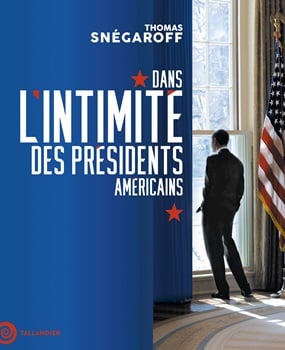
Dans l’intimité des présidents américains

La présidence des États-Unis se prévaut d’une influence inégalée dans le monde. Pas une journée ne s’écoule sans que les plateformes d’informations ou de médias sociaux n’y fassent référence. Parfois, elle agace en raison de la perception véhiculée à propos de celui qui est appelé à travailler dans le Bureau Ovale. Acteur de série B, Ronald Reagan était vilipendé pour son prétendu déficit d’intellect. Idem pour George W. Bush. Mais jamais elle ne cesse de captiver. Et c’est redevable à la personnalité de ces grandes pointures qui sont parvenues à succéder aux immortels que sont devenus George Washington, Thomas Jefferson ou Abraham Lincoln.

C’est justement avec ce dernier que Thomas Snégaroff débute son fascinant ouvrage Dans l’intimité des présidents américains (Tallandier). En le choisissant pour présider aux destinées de la nation, « les Américains veulent élire un homme qui leur ressemble, et surtout qui met en musique le mythe d’une Amérique des possibles. » Au-delà des prises de position et des événements cruciaux qui jalonnent l’histoire des États-Unis, l’auteur s’emploie à éclairer un aspect fondamental de chacune des personnalités alimentant les portraits esquissés, c’est-à-dire son inimité, parce qu’ « elle donne à voir, derrière les grands discours et les beaux costumes, la vérité d’un homme. »

poursuivre la lecture

The Making of Trump 2.0

Historically, the main task of any President-elect in the United States is to form a cabinet. In the last weeks, we have seen a cascade of announcements that have raised some eyebrows. Donald Trump’s picks for key positions in his second administration might seem odd to many.

Not so much if you grab a copy of retired Lieutenant General H. R. McMaster’s insightful book At War with Ourselves: My Tour of Duty in the Trump White House (Harper).

Upon his selection as National Security Advisor by the 45th President, the military general wanted to give his boss the best of his expertise. After consulting with one of his notorious predecessors, Lieutenant General Brent Scowcroft, who masterfully seconded President George H. W. Bush, McMaster understood his role as “making the policy process work and developing options for the president; and second, advising the president with views unalloyed by the departments and their bureaucracies.” The only person that mattered to him was the President, whose foreign policy should be well served. He also perceived his role as being above partisanship. His goodwill would be rewarded with disappointment.

Continue reading “The Making of Trump 2.0”

Joe Biden: Leader of the Free World

“To every man there comes in his lifetime that special moment when he is figuratively tapped on the shoulder and offered a chance to do a very special thing, unique to him and fitted to his talents,” declared Winston Churchill. For many, that hour comes early. For some, like the heroic British Prime Minister, it comes later. For others, like US President Joe Biden, it comes even later in life.

As we commemorate today the tragic first anniversary of the murderous onslaught launched by Vladimir Putin against Ukraine, it seems fitting to write about one of the best political biographies I have read in a long time. The Fight of His Life: Inside Joe Biden’s White House (Scribner) is required reading for anyone seeking to understand the character of the 46th President of the United States.

In the summer of 2017, the events surrounding the extreme-right manifestations in the streets of Charlottesville convinced former Vice President Biden that Donald Trump “was giving evil a safe harbour”, thus contributing to the Democratic politician’s decision to run. The combat for 2020 was between good and evil. And no one was better equipped than Joe Biden to lead it.

Continue reading “Joe Biden: Leader of the Free World”

Vladimir Putin, campaign manager

A few years ago, I was captivated by Peter Schweizer’s book Reagan’s War: The Epic Story of His Forty-Year Struggle and Final Triumph Over Communism. That fascinating book detailed how the 40th President of the United States used the economic weaknesses of the USSR to bring it on its knees, notably with the help of the Saudis regarding the oil price and the military build-up with which Moscow could not compete with Washington.

Turns out that, while the USSR crumbled, a young KGB lieutenant colonel named Vladimir Putin took good note.  In a recent interview with a former Soviet official, my interlocutor spoke to me about the Russian President’s love of judo – his favorite sport – and the transposition of its techniques in politics. The master of the Kremlin’s dealings in world affairs is a good illustration of his abilities to take advantage of his opponents’ weight to knock them down.

Nowhere is this ability more evident than in the pages of British journalist Luke Harding’s book Shadow State: Murder, Mayhem, and Russia’s Remaking of the West (Harper). In a real page-turner, the author details how the Russian government and its entities are influencing the West’s political life. For example, using Novichok as a calling card in attempting to neutralize Sergei Skripal, a former Russian intelligence officer who betrayed the GRU (The Main Directorate of the General Staff of the Armed Forces of the Russian Federation). Or shabby dealings using banks allegedly to bail out influential people – allegedly like former US President Donald Trump. Moscow is determined to go to any lengths “[…] to return to a nineteenth-century model of great-power politics and to disrupt the ideals-based international order established after the Second World War […].”

Continue reading “Vladimir Putin, campaign manager”

“The epicenter of the Cold War”

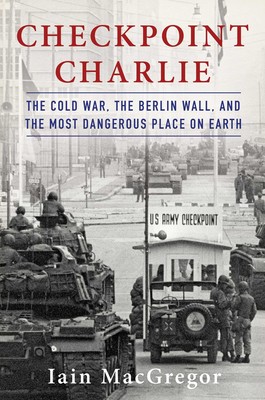
In June 1987, just shy of my 13th birthday, international affairs were already part of my daily interests. I would clip newspaper articles about the Cold War from our local paper before my parents even had the chance of reading it, much to their despair. During that month, on the 12th to be more precise, US President Ronald Reagan stood in front of the Brandenburg Gate in Berlin and pronounced a major speech calling for Soviet leader Mikhail Gorbachev to tear down the wall. “He’ll never do that”, my father replied to me. Retrospectively, anything is possible of course. But few people could imagine back then what would happen only two years later when the Wall crumbled without a single shot being fired.

Fast-forward to 2015. After 9 grueling months stranded as administrative prisoners in Poland due to lack of efficient bureaucracy (to put it mildly), we finally received our coveted residency cards. First order of business was to plan a serious change of scenery for everyone. I could finally take a few days off. Berlin was just a couple hours away by train and I knew this was an opportunity not to be missed.

Continue reading ““The epicenter of the Cold War””