Joe Biden: Leader of the Free World

“To every man there comes in his lifetime that special moment when he is figuratively tapped on the shoulder and offered a chance to do a very special thing, unique to him and fitted to his talents,” declared Winston Churchill. For many, that hour comes early. For some, like the heroic British Prime Minister, it comes later. For others, like US President Joe Biden, it comes even later in life.

As we commemorate today the tragic first anniversary of the murderous onslaught launched by Vladimir Putin against Ukraine, it seems fitting to write about one of the best political biographies I have read in a long time. The Fight of His Life: Inside Joe Biden’s White House (Scribner) is required reading for anyone seeking to understand the character of the 46th President of the United States.

In the summer of 2017, the events surrounding the extreme-right manifestations in the streets of Charlottesville convinced former Vice President Biden that Donald Trump “was giving evil a safe harbour”, thus contributing to the Democratic politician’s decision to run. The combat for 2020 was between good and evil. And no one was better equipped than Joe Biden to lead it.

Continue reading “Joe Biden: Leader of the Free World”

L’espoir renaît en 1942

Les auteurs Julien Peltier et Cyril Azouvi (YouTube)

Dans la foulée de ma recension de leur formidable livre 1942 – la « bissectrice de la guerre » – les coauteurs Cyril Azouvi et Julien Peltier ont aimablement accepté de répondre à quelques questions pour ce blogue. Je suis très heureux de livrer ici le contenu de notre échange.

D’entrée de jeu, avez-vous fait des découvertes qui ont suscité votre étonnement dans la rédaction de 1942?

Cyril Azouvi : Aucune « découverte » à proprement parler : l’importance de cette année charnière est connue de tous les historiens de la Seconde Guerre mondiale. Il est de notoriété publique que l’histoire a basculé en 1942 sur tous les fronts (Pacifique, Afrique du Nord, Russie), mais aussi dans bien d’autres domaines (la course à la bombe atomique, la constitution des Nations unies, la Résistance, la Shoah, etc). S’il y a eu découverte, elle a été d’ordre plus personnel : je me croyais savant que cette période, sur cette année et sur ces sujets. J’ai découvert, en plongeant dans le détail, que mes connaissances étaient somme toute assez floues et lacunaires. Ça a été une leçon de modestie! Et, du coup, un travail passionnant.

Continue reading “L’espoir renaît en 1942”

The distorted memory of Alamein

British soldiers during the second battle of Alamein (The Times of Israel)

“History will be kind to me for I intend to write it”, declared Winston Churchill. That quote might reveal why the second battle of Alamein seems only to reach a limited audience of military history specialists and enthusiasts. In terms of visibility and shelf space, Alamein doesn’t rank with D-Day, Stalingrad, or Bastogne.

Knowing that the battle stopped Field Marshal Erwin Rommel’s advance on Egypt during the turning point year of 1942, one can reasonably wonder why that is so. In a nutshell, “the absence of the victors left plenty of room for the ‘losers’ to have their say. […] the British state’s insistence on not telling a national narrative over-represented the voices of its enemies”, explains historian Simon Ball in The Folio Society edition of his insightful history of the battle fought in the sands of North Africa in October and November 1942.

Material rather than manpower would have been the drivers of the Allied victory. In sum, “the Axis had lost the battle for four reasons: enemy air superiority; the poor performance of the Italian troops; the Eighth Army’s superiority in modern weapons; and their own lack of fuel.” Rommel became an icon – a phenomenon I observed on numerous occasions while visiting military museums in the United Kingdom – and his opponent, Field Marshall Bernard Montgomery drew flak from “old régime” figures who could not stomach the methods of this iconoclast figure who privileged meritocracy. The tenants of that school preferred to give way to Rommel rather than applaud the success and qualities of Montgomery. That phenomenon is regrettably still observable to this day.

Continue reading “The distorted memory of Alamein”

Sauvez Zelensky!

« Volodymyr n’a pas peur de mourir. Je le sais. Il est habité par autre chose. Il est déjà ailleurs », déclare le président de la République française au colonel Coralie Desnoyers, chef du Service Action – bras armé de la Direction générale de la Sécurité extérieure (DGSE) dans les premières heures de la guerre lancée contre l’Ukraine par Moscou.

Dès les premières heures de l’invasion de l’Ukraine par les troupes russes à l’aube du 24 février 2022, le président ukrainien Volodymyr Zelensky s’élève immédiatement au-dessus de la mêlée des chefs ordinaires. Sa réaction, ses interventions, son courage attachant, le distinguent des dirigeants que l’on sait habituellement allergiques aux risques. La politique n’est-elle pas l’art de survivre? Ce logiciel est étranger au héros ukrainien.

Il refuse obstinément de quitter Kyiv, demandant des munitions au lieu d’un taxi. Dans un scénario fiction, le président français s’engage à assurer sa sécurité, notamment face à un commando du groupe Wagner (ainsi nommé « en raison de la fascination de son chef et créateur, Dmitri Outkine, néonazi russe, pour Adolf Hitler. Ce même Outkine décoré par Vladimir Poutine dans l’ordre du Courage au Kremlin ») ayant pour mission de lui offrir un billet pour l’éternité. Cette tâche échoit aux hommes et aux femmes du Service Action – des personnages qui n’ont rien à envier à James Bond.

Continue reading “Sauvez Zelensky!”

Pie VII: Victime et vainqueur de Napoléon

Pendant son règne Napoléon a affronté des généraux et des hommes d’État dont les noms remplissent les pages de l’histoire. On peut notamment penser au duc de Wellington, au tsar Alexandre 1er ou à l’empereur François 1er d’Autriche. C’est principalement par la force des armes que l’empereur des Français est parvenu à bâtir son empire et sa réputation. Le militaire et théoricien prussien Carl von Clausewitz ne le considérait-il pas comme étant un dieu de la guerre?

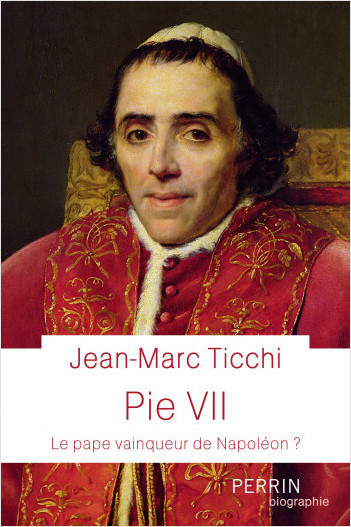
Il est cependant une autre figure directement liée avec le ciel face à laquelle Napoléon n’est jamais parvenu à avoir le dessus. Je parle ici du pape Pie VII. Je n’évoque pratiquement jamais les figures ou les sujets d’ordre religieux sur ce blogue. Pourquoi faire exception aujourd’hui? Tout d’abord parce que Barnaba Chiaramonti était un moine bénédictin – un ordre pour lequel j’ai toujours nourri une profonde admiration. Il y a aussi le fait que je me suis toujours beaucoup intéressé aux figures qui se sont élevées, d’une manière ou d’une autre, contre Napoléon.

J’étais donc impatient de plonger dans la biographie que lui consacre l’historien Jean-Marc Ticchi et que les Éditions Perrin ont récemment publiée. Quel ne fut pas mon plaisir de découvrir un personnage aux antipodes des caricatures sur lesquelles reposait jusqu’alors mon appréciation de Pie VII. Personnage « qui s’est montré un ami véritable de dame Pauvreté » et très généreux, celui qui a pris le nom de dom Gregorio en entrant au monastère « […] est traité sans guère d’égards par des confrères qui le logent à côté d’un fourneau rendant sa cellule invivable en été… » Ce détachement des biens et du confort terrestres lui seront plus qu’utiles dans la passe d’armes qui l’opposera à Napoléon quelques années plus tard.

poursuivre la lecture

Ils ont fait tomber Mussolini

Il y a quelques années, durant un séjour à Rome, j’avais demandé à une guide de me faire visiter les principaux lieux d’intérêt reliés au dictateur Benito Mussolini. Parmi ceux-ci se trouvaient les Fosses adréatines, le Musée de la libération de Rome (lequel abritait le QG de la Gestapo à Rome vers la fin du conflit) et le Palais de Venise sur le balcon duquel le Duce annonça l’entrée en guerre de l’Italie le 10 juin 1940. Durant toute la journée, la guide ne cessa de me répéter que les Italiens n’étaient pas entichés des Nazis et qu’il fallait faire la distinction entre les deux.

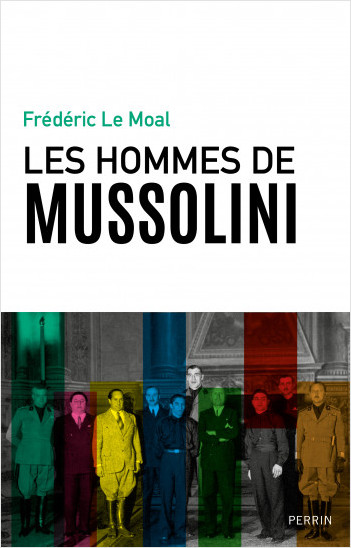
Les séides de Mussolini affichaient manifestement des différences frappantes avec la horde brune qui gravitait autour d’Hitler à Berlin. Le dernier livre de l’historien Frédéric Le Moal Les hommes de Mussolini (Perrin) offre aux lecteurs la possibilité de découvrir ou mieux connaître ces hommes (il n’y avait aucune femme dans le groupe) qui ont accompagné Mussolini sur son parcours.

Continue reading “Ils ont fait tomber Mussolini”

Volodymyr Zelensky is in a league of his own

Author Lisa Rogak (HarperCollins India)

Last September, I took tremendous pleasure reviewing the insightful book Volodymyr Zelensky in His Own Words (Pegasus Books)by Lisa Rogak and Daisy Gibbons. Despite a hectic schedule, notably due to the deadline of an upcoming book, author Lisa Rogak was generous enough to answer a few questions for this blog. Here is the content of our exchange.

______

Ms. Rogak, where did the idea of your book about Ukrainian President Volodymyr Zelenskyoriginate from?

After the invasion of Ukraine, I started digging into his background. I was curious about this guy who seemed to be a natural-born leader. The more I dug, the more impressed I was. And he was funny! Who knew? I’ve done a slew of these quote books, so I put together a proposal for one on VZ. My agent said I needed a translator to dig for interviews and articles in his native Ukraine. I found Daisy Gibbons, who lives in London, and we quickly found a publisher, Pegasus Books.

Continue reading “Volodymyr Zelensky is in a league of his own”

The Indomitable Prisoners of Colditz

Since I was a kid, The Great Escape featuring Steve McQueen, James Garner, Charles Bronson, and Richard Attenborough (in the role of the legendary Roger Bartlett – the legendary Roger Bushell in real life) has been one of my favorite movies. In 2015, when I lived in Poland, I visited the Stalag Luft III Prisoner Camp Museum in Zagan – 5 hours west of Warsaw. That memorable visit was a real pilgrimage in the footsteps of those gallant men who refused to remain behind German barbed wired.

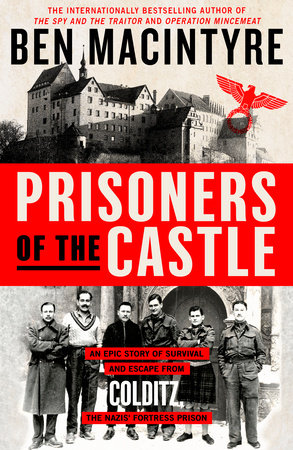
I was therefore overjoyed to read bestselling author Ben Macintyre’s book Prisoners of the Castle: An Epic Story of Survival and Escape from Colditz, the Nazis’ Fortress Prison (Signal).

I often say that Ben Macintyre would find a way of making the history of the can of Coke enthralling. His book Rogue Heroes features among my very favorites. I, therefore, did not doubt that I was in for quite a treat when I opened Prisoners of the Castle. Even those high expectations were surpassed because the author brings the reader to a new understanding of the war experience.

Continue reading “The Indomitable Prisoners of Colditz”

Harry et Meghan sont lassants

Le prince Harry et le journaliste Anderson Cooper pour l’émission 60 Minutes (The Telegraph)

Le comte Jean des Cars est un historien et auteur réputé qui a consacré plusieurs ouvrages au sujet de la monarchie britannique. En 2022, j’ai eu le privilège de recenser son Pour la reine : Hommage à Elizabeth II ainsi que la réédition de la biographie Elizabeth II naturellement consacré à la souveraine. Les deux livres sont publiés chez Perrin.

Dans la foulée de ces recensions, M. des Cars a aimablement accepté de répondre à mes questions pour une première entrevue qui fut publiée sur ce blogue à la fin du mois de septembre dernier. J’ai de nouveau échangé avec cet auteur – qui est l’un des meilleurs spécialistes francophones des têtes couronnées – et qui fut le premier journaliste français reçu à Buckingham Palace par celui qui était à l’époque connu comme étant l’héritier de la Couronne, et ce, avant même son mariage avec Diana.

Tradition et innovation: Elizabeth II a réussi ce mariage fascinant!

Selon lui, « le décès d’Elizabeth II a été l’évènement le plus considérable de l’année 2022, notamment pour une raison que le public ignore souvent: elle fut le seul chef d’État en fonctions (de 1953 à 2022), qui avait vécu la Deuxième Guerre Mondiale. En 1939, elle avait…13 ans! Quand elle devient reine, Staline est toujours [au pouvoir] à Moscou! La longévité de la reine est extraordinaire. Nous ne reverrons jamais un tel « spectacle », notamment parce que la jeune souveraine avait compris, bien avant Churchill, le futur pouvoir de la télévision. Elle fut, dans bien des domaines, une pionnière. Tradition et innovation: elle a réussi ce mariage fascinant! »

Le décès de la bien-aimée souveraine, survenu le 8 septembre dernier, est naturellement venu changer la donne et marquait le début d’un nouveau chapitre dans l’histoire de la monarchie.

Continue reading “Harry et Meghan sont lassants”

The Harry and Meghan episode is worse than the abdication crisis

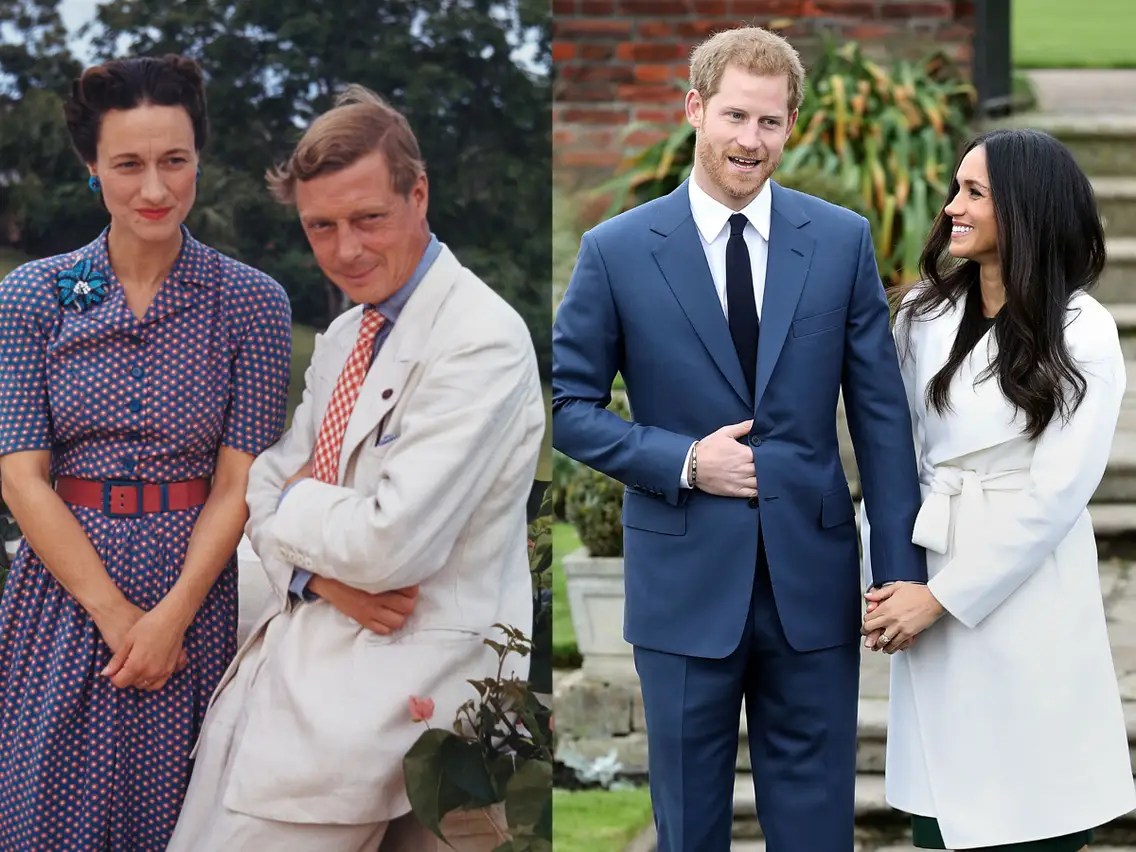
There are lots of parallels between Wallis Simpson and former King Edward VIII (left) and Prince Harry and Meghan Markle (right) (Insider)

Few weeks ago, I reviewed Andrew Lownie’s enthralling and fascinating book Traitor King: The Scandalous Exile of the Duke & Duchess of Windsor. The author – a disillusioned monarchist who believes in institution but feels let down by some members of it – generously accepted to answer a few questions for this blog. Below is the content of our discussion.

________

Mr. Lownie, while researching Traitor King, did you make any findings that surprised you?

Lots not least the extent of the Windsors’ dealings with the Nazis which can be found in documents, the knowledge that the Royal Family and Government had of their activities and the rather bizarre relationship the couple had and their bisexuality. Also, the degree of the attempted British cover up of his treachery.

Understandably, Winston Churchill is a frequent guest in the book. I might be wrong, but I didn’t get the sense that he became a tooth-and-nail opponent of the Duke of Windsor during the war. How would you describe the evolution of the relationship between the two men?

Churchill had been one of the Duke’s strongest supporters during the Abdication, mainly because of his romantic notion of the monarchy, but the scales fell when he saw the Duke’s duplicity over the financial settlement in 1937 and the disloyalty shown during the war when Churchill had to threaten him with court martial. The relationship then became more pragmatic with Churchill trying to find him a job after the war and suppressing the embarrassing captured German documents, but he refused to join a cruise when he learnt the Windsors would be present.

Continue reading “The Harry and Meghan episode is worse than the abdication crisis”