L’espoir renaît en 1942

Les auteurs Julien Peltier et Cyril Azouvi (YouTube)

Dans la foulée de ma recension de leur formidable livre 1942 – la « bissectrice de la guerre » – les coauteurs Cyril Azouvi et Julien Peltier ont aimablement accepté de répondre à quelques questions pour ce blogue. Je suis très heureux de livrer ici le contenu de notre échange.

D’entrée de jeu, avez-vous fait des découvertes qui ont suscité votre étonnement dans la rédaction de 1942?

Cyril Azouvi : Aucune « découverte » à proprement parler : l’importance de cette année charnière est connue de tous les historiens de la Seconde Guerre mondiale. Il est de notoriété publique que l’histoire a basculé en 1942 sur tous les fronts (Pacifique, Afrique du Nord, Russie), mais aussi dans bien d’autres domaines (la course à la bombe atomique, la constitution des Nations unies, la Résistance, la Shoah, etc). S’il y a eu découverte, elle a été d’ordre plus personnel : je me croyais savant que cette période, sur cette année et sur ces sujets. J’ai découvert, en plongeant dans le détail, que mes connaissances étaient somme toute assez floues et lacunaires. Ça a été une leçon de modestie! Et, du coup, un travail passionnant.

Continue reading “L’espoir renaît en 1942”

Sauvez Zelensky!

« Volodymyr n’a pas peur de mourir. Je le sais. Il est habité par autre chose. Il est déjà ailleurs », déclare le président de la République française au colonel Coralie Desnoyers, chef du Service Action – bras armé de la Direction générale de la Sécurité extérieure (DGSE) dans les premières heures de la guerre lancée contre l’Ukraine par Moscou.

Dès les premières heures de l’invasion de l’Ukraine par les troupes russes à l’aube du 24 février 2022, le président ukrainien Volodymyr Zelensky s’élève immédiatement au-dessus de la mêlée des chefs ordinaires. Sa réaction, ses interventions, son courage attachant, le distinguent des dirigeants que l’on sait habituellement allergiques aux risques. La politique n’est-elle pas l’art de survivre? Ce logiciel est étranger au héros ukrainien.

Il refuse obstinément de quitter Kyiv, demandant des munitions au lieu d’un taxi. Dans un scénario fiction, le président français s’engage à assurer sa sécurité, notamment face à un commando du groupe Wagner (ainsi nommé « en raison de la fascination de son chef et créateur, Dmitri Outkine, néonazi russe, pour Adolf Hitler. Ce même Outkine décoré par Vladimir Poutine dans l’ordre du Courage au Kremlin ») ayant pour mission de lui offrir un billet pour l’éternité. Cette tâche échoit aux hommes et aux femmes du Service Action – des personnages qui n’ont rien à envier à James Bond.

Continue reading “Sauvez Zelensky!”

The Harry and Meghan episode is worse than the abdication crisis

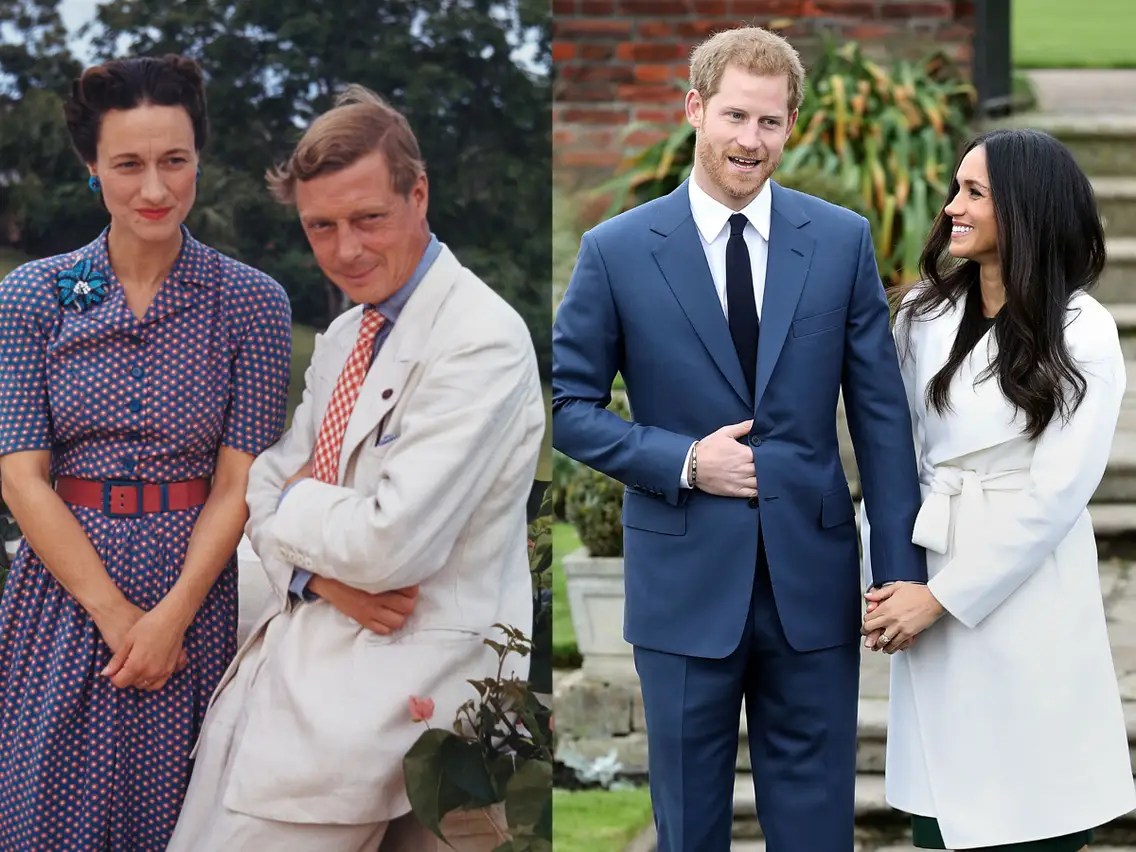
There are lots of parallels between Wallis Simpson and former King Edward VIII (left) and Prince Harry and Meghan Markle (right) (Insider)

Few weeks ago, I reviewed Andrew Lownie’s enthralling and fascinating book Traitor King: The Scandalous Exile of the Duke & Duchess of Windsor. The author – a disillusioned monarchist who believes in institution but feels let down by some members of it – generously accepted to answer a few questions for this blog. Below is the content of our discussion.

________

Mr. Lownie, while researching Traitor King, did you make any findings that surprised you?

Lots not least the extent of the Windsors’ dealings with the Nazis which can be found in documents, the knowledge that the Royal Family and Government had of their activities and the rather bizarre relationship the couple had and their bisexuality. Also, the degree of the attempted British cover up of his treachery.

Understandably, Winston Churchill is a frequent guest in the book. I might be wrong, but I didn’t get the sense that he became a tooth-and-nail opponent of the Duke of Windsor during the war. How would you describe the evolution of the relationship between the two men?

Churchill had been one of the Duke’s strongest supporters during the Abdication, mainly because of his romantic notion of the monarchy, but the scales fell when he saw the Duke’s duplicity over the financial settlement in 1937 and the disloyalty shown during the war when Churchill had to threaten him with court martial. The relationship then became more pragmatic with Churchill trying to find him a job after the war and suppressing the embarrassing captured German documents, but he refused to join a cruise when he learnt the Windsors would be present.

Continue reading “The Harry and Meghan episode is worse than the abdication crisis”

Le point de bascule de 1942

L’année 1942 aura toujours une signification particulière pour moi. Mon défunt père est né cette année-là, pendant la bataille de Stalingrad. Il m’a initié à la Seconde Guerre mondiale par une belle collection de livres à l’intérieur de laquelle je me suis plongé le nez très jeune. Dans leur magnifique livre 1942 (Passés / Composés), Cyril Azouvi et Julien Peltier m’ont permis de découvrir toute l’envergure et la signification de cette année « bissectrice de la guerre » pour reprendre l’expression citée et empruntée à l’historien français Henri Michel.

Pour revenir à Stalingrad, il ne devait suffire que « […] d’une seule journée pour réduire en cendres cette cité moderne et pluricentenaire » selon les plans établis par les hautes sphères allemandes. À la tête de troupes mal équipées par sa faute pour un combat hivernal, Hitler avait pourtant mal évalué le coriace adversaire qui revêtait l’uniforme du soldat soviétique et qui allait payer avec son sang les erreurs stratégiques commises par Staline au début de la guerre. Quant aux soldats portant le feldgrau, ils sortiront de la ville éponyme du dirigeant soviétique la gueule cassée et promis à une rude captivité après 6 mois et 22 jours d’une bataille dont la Wehrmacht ne parviendra pas à se relever.

Continue reading “Le point de bascule de 1942”

The khaki presidency of Volodymyr Zelensky

Serhii Rudenko (courtesy of himself)

After the publication of my review of his insightful biography of Ukraine’s President Volodymyr Zelensky, author and political analyst Serhii Rudenko generously accepted my invitation to respond to a few questions for this blog.

In the aftermath of the war launched by Vladimir Putin on February 24th, the offices of the television station where he worked became a bomb shelter. He has moved to another region, which suffered the recent Russian onslaught. The coming winter will undoubtedly be extremely difficult for Ukrainians, but Mr. Rudenko’s resilience and determination to pursue his work is immensely commendable.

I consider myself privileged to be in touch with him and to present you with the content of our discussion.

________

Mr. Rudenko, in your book, you depict an administration with a lack of political experience and a very high turnover level. Has the situation stabilized since the beginning of the war?

Yes, it has stabilized. In the conditions of war, Zelensky had to choose the most optimal and effective people. Now we see around the President of Ukraine a team that governs the state in the conditions of war. Hardly anyone in the world has such experience in governing the state. It is not easy.

Continue reading “The khaki presidency of Volodymyr Zelensky”

How Putin Saved Zelensky

The world “would hardly have heard about [Volodymyr] Zelensky if he had become an engineer, gone into the military, or became a doctor”, writes political commentator Serhii Rudenko in a recent biography of the Ukrainian President (Polity Books). Thanks to the political reality crafted by Servant of the People in which he played the role of a history teacher elected against the odds to lead the country, fiction turned into reality in 2019. And thanks to Russian President Vladimir Putin’s decision to start a war on Ukraine before sunrise on February 24th, the actor turned President has become an icon of resilience in defense of freedom and democracy.

Serhii Rudenko paints the portrait of a leader who was not on sure footing before the war intervened.

After his election, Zelensky broke his promise to distance himself from the nepotism espoused by his predecessor, Petro Poroshenko. “[…] A year after his election, the Poroshenko family was replaced by the Zelensky family – or, more precisely, by the Kvartal 95 Studio.” In other words, those who accompanied him in his showbusiness career, including in his role as President Vasily Petrovych Goloborodko on television.

Continue reading “How Putin Saved Zelensky”

“Justin Trudeau inspired me to enter politics” – Volodymyr Zelensky

I’m not the type who runs after books of quotations in bookstores. But I have two exceptions to that rule: Winston Churchill and Volodymyr Zelensky. Because both men decided to face the adverse winds of history at a most crucial time.

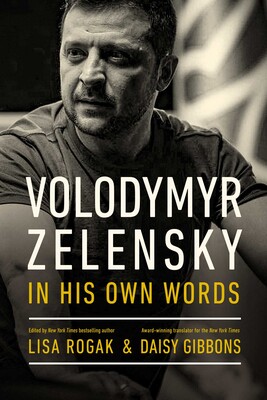
Bestselling author Liza Rogak, assisted by translator Daisy Gibbons, opens a window into the Ukrainian President’s worldview in a new book Volodymyr Zelensky in His Own Words (Pegasus Books). “You’ve never seen someone like me”, declared the statesman in April 2019. Coupled with his staunch determination to hold his ground in front of Russian President Vladimir Putin, this might be one of the reasons why he is so popular. “I don’t trust anyone at all” he said a few months later. Who could blame him, when you imagine allies hedging their bets at the beginning of the war to see if he stood a chance or not.

Continue reading ““Justin Trudeau inspired me to enter politics” – Volodymyr Zelensky”

Stan Andrews and the birth of the Israeli Air Force

Seventy-five years ago, on November 27, 1947, the United Nations adopted Resolution 181 to partition the British mandate in Palestine into two states, one Jewish and one Arab. While the new Israelis were celebrating, the leaders of the Yishuv – the organized Jewish community – were scratching their heads. The neighboring Arab states of Lebanon, Syria, Iraq, Egypt and Jordan wanted to smother the newborn Jewish State in its cradle.

In their new book Fighting Back: Stan Andrew and the Birth of the Israeli Air Force (Wicked Son), authors Jeffrey and Craig Weiss write, “It became clear that a Jewish homeland would only be established by armed force. To defeat the Arabs, the Jews would need to build an army.”

Easier said than done. “On May 14, 1948, the day the government [of Israel] declared independence, Israel did not have a single combat aircraft, and all its fighter pilots were in Europe.” With ingenuity and determination, Prime Minister David Ben-Gurion and his team set upon the gigantic task of equipping their soldiers, notably against a U.S. embargo on weapons sales to the Middle East. At the same time, London presumably continued furnishing Egypt and Jordan.

Continue reading “Stan Andrews and the birth of the Israeli Air Force”

« Je pense que Harry couche avec le fantôme de sa mère »

L’historien et biographe Jean des Cars (source: The Limited Times)

Le comte Jean des Cars est un personnage des plus sympathiques et généreux. Sa bibliographie est impressionnante et il est le spécialiste de référence des têtes couronnées européennes. Il m’a accordé il y a quelques jours un long entretien à propos de la monarchie britannique, dans la foulée du décès de Sa Majesté la reine Elizabeth II survenu le 8 septembre dernier.

« J’ai été le premier journaliste francophone reçu à Buckingham Palace par le prince Charles [maintenant le roi Charles III]. C’était en 1982, avant son mariage avec Diana », de mentionner fièrement l’auteur du récent livre à succès Pour la reine (Perrin) qui en est à sa cinquième réédition. « J’avais appris qu’il allait venir en France, pour honorer la mémoire des combattants de la Royal Air Force qui s’étaient cachés dans les caves à champagne et qui avaient vécu des moments épouvantables. Il devait être accompagné de Lord Mountbatten. J’ai donc dit au journal (Le Figaro) : « Et si on demandait un entretien au prince de Galles? » Tout le monde me regarde et me dit : « vous êtes fou. » J’ai donc pris l’annuaire téléphonique de Londres. J’ai appelé Buckingham et j’ai demandé à parler à l’officier de presse en charge du prince de Galles. On me passe alors un Australien avec un accent de crocodile qui me demande de lui envoyer par télécopieur une photocopie de mon passeport et ma liste de questions. Deux jours plus tard, on me confirmait un rendez-vous qui était prévu le surlendemain. Personne n’a cru que j’avais simplement obtenu cet entretien simplement à cause d’un appel à Buckingham Palace », de se remémorer l’historien avec gourmandise.

poursuivre la lecture

Elizabeth II a rapproché la monarchie du peuple

Le 10 décembre 1936 marque une date cruciale dans l’histoire de la monarchie britannique en général, mais aussi de la petite Elizabeth Windsor en particulier. Son oncle, le roi Édouard VIII abdique pour vivre pleinement son amour avec Wallis Simpson, une divorcée américaine. La jeune fille est alors âgée de 10 ans. Son monde, celui de sa famille immédiate également, vient de basculer radicalement. Son père, le duc d’York, lui succède de facto et prend le nom de George VI. Il s’agit de l’une des pires crises traversées par la monarchie britannique, un point tournant pendant lequel on s’interroge sérieusement sur l’avenir de la Couronne. Tout aurait pu basculer et les tenues d’apparat rangées dans les musées pour l’éternité. Ce ne fut pas le cas. Heureusement.

George VI, notamment en raison de son stoïcisme, de sa résilience et de son empathie, remet l’ouvrage sur le métier. Les nouveaux locataires de Buckingham Palace commencent à recoudre le blason de la famille royale dans le tissu social britannique et de l’Empire. Elizabeth n’est pas une enfant comme les autres. Le coup de crayon donné par son oncle en cette date fatidique fait en sorte qu’elle ne pourra plus jamais baisser la garde. Elle est l’héritière du trône et, 15 ans plus tard, elle relèvera le gant dans un règne déchaîné de tourments et ponctué de moments glorieux.

poursuivre la lecture