Countdown bin Laden

Twenty years ago this morning, our hearts crumbled simultaneously with New York’s Twin Towers. Osama bin Laden orchestrated an attack that would scar the face of the Earth and change history forever. After the heartless attacks that left 2977 people dead and countless families grieving, it was inevitable that the terrorist leader would be brought to face justice.

In his new book, Fox News Sunday anchor Chris Wallace offers the gripping story of this historic manhunt and the commendable sacrifices made by those who planned and executed it over a period of 9 months.

In the same manner he wrote his authoritative Countdown 1945, the renowned journalist (with Mitch Weiss) details the nitty-gritty of what will certainly be remembered as one of the most famous and consequential special operation in the history of warfare in Countdown bin Laden: The Untold Story of the 247-Day Hunt to Bring the Mastermind of 9/11 to Justice. Tremendous sacrifices were consented by these intelligence officials who sacrificed their family lives. SEAL Team 6 operators faced their own mortality as they were ordered to descend in the Devil’s Den at the Abbottabad compound where bin Laden had taken refuge between 2005 and May 1st, 2011.

More than the military aspects of the mission to bring back OBL dead or alive, what impressed me most in this book was the decision-making process of the operation. It is easy to associate the warlord tag to President George W. Bush for his decision to launch a war against Al Qaida in Afghanistan and Saddam Hussein in Iraq. His successor, Barack Obama, appears as a more dovish character, at least in the public’s perception.

Continue reading “Countdown bin Laden”

Wellington took care of his soldiers

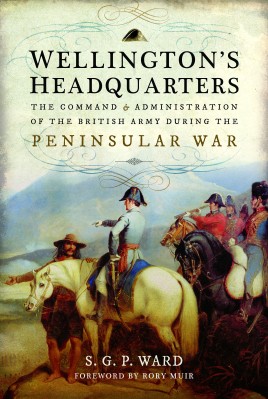
A few months ago, I reviewed the very insightful book Wellington’s Command by G. E. Jaycock. Being interested in anything related to the Iron Duke, it was therefore natural for me to read S. P. G. Ward’s Wellington’s Headquarters: The Command and Administration of the British Army during the Peninsular War (Pen & Sword).

While the objective of the author was to detail and explain the functioning of the Peninsular Army and give a portrait of the overall machinery of war, the most interesting aspect of the book is the portrait of the warlord. Wellington, it is a known fact, was a micromanager. For instance, the author explains that “[…] he was his own Director of Military Intelligence”. One doesn’t need to be a psychologist to understand that he must have been quite a difficult character to deal with – like most famous personalities in history. About the interrogation of prisoners of war, he reduced one of his subordinates, Stewart, to tears because the latter wrongfully thought it fell within the province of his responsibilities.

Continue reading “Wellington took care of his soldiers”

In Afghanistan “with bayonet and kukri”

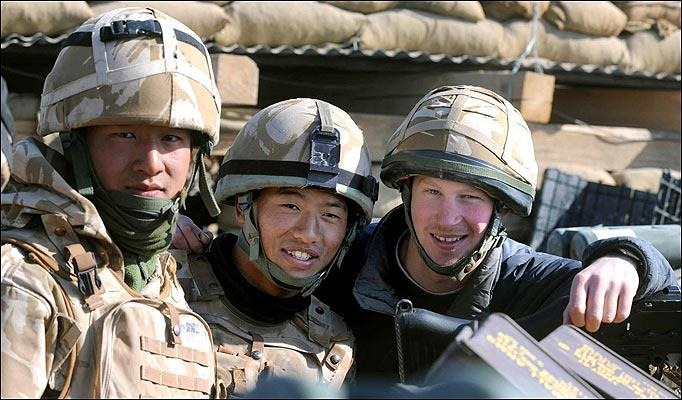
HRH Prince Harry (right) pictured while he was deployed with Gurkha soldiers in Afghanistan (source: Nepal News Blog)

Having devoured General Sir Peter Duffell’s book The Gurkha Odyssey (which I reviewed here recently) and being interested in anything related to these élite and legendary soldiers, I was extremely worried about the evacuation of the 100 Nepalese Gurkhas who had been tasked with guarding the Canadian embassy in Kabul. I was relieved when I heard that they had been safely taken away from the country.

Nonetheless, the whole episode reminded me of the chapter Sir Peter devoted to the Gurkhas contribution to Britain’s fight in Afghanistan – during the 1st Afghan War (1839-1842), the Second Afghan War (1878-1880), the Third Afghan War (1919) and the Fourth Afghan War (2001-2021). Since 2001, the Gurkhas took part in no less than 24 deployments!

Continue reading “In Afghanistan “with bayonet and kukri””

« Je suis un mauvais tsar; un bon tsar, c’est celui qui tue » – Mikhaïl Gorbatchev

19 août 1991. Il y a trente ans aujourd’hui. Je me souviens de cette journée comme si c’était hier. Fan de Mikhaïl Gorbatchev, malgré mon jeune âge et les admonestations de mon père qui ne voulait pas me voir devenir communiste, j’apprends au bulletin de nouvelles qu’un putsch est ourdi en URSS. Les chars d’assaut ont fait déambuler leurs chenilles dans Moscou et tout peut arriver. Mon héros (avec Reagan et Thatcher) est assigné à résidence dans sa demeure estivale en Crimée. Rien ne va plus dans mon univers. Je resterai rivé aux bulletins de nouvelles, téléphonant – à peu près à toutes les heures – à la salle de rédaction de mon quotidien local pour m’enquérir de l’évolution de la situation.

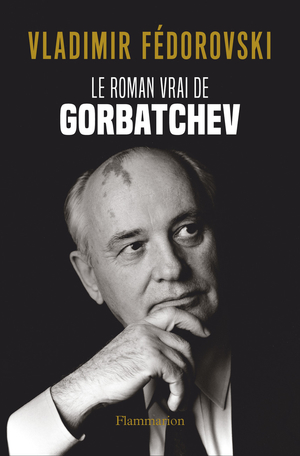
Gorbatchev m’a toujours fasciné. Et en ces jours où des corollaires sont inévitablement établis entre le retrait américain d’Afghanistan ordonné par le président Joe Biden et celui effectué par l’Armée rouge entre mai 1988 et février 1989 sous la gouverne de « Gorby », le dernier livre de Vladimir Fédorovski permet de mieux comprendre ce personnage adulé en Occident, mais clivant (c’est le moins que l’on puisse dire) chez lui.

Pour tout dire, Le Roman vrai de Gorbatchev (Flammarion) brosse un portrait tout en nuance d’un politicien d’exception. Avant d’endosser les habits du réformateur, le futur chef d’État devait grimper au mât de cocagne de la politique soviétique, ce qu’il sut faire avec brio en annotant avec flatterie les projets de discours de Brejnev ou en dégustant poisson et gâteau au fromage sous la véranda avec le chef du KGB – et futur numéro un soviétique – le redoutable Iouri Andropov.

Continue reading “« Je suis un mauvais tsar; un bon tsar, c’est celui qui tue » – Mikhaïl Gorbatchev”

“If we’re going to withdraw, then my husband died for literally nothing”

This quote from the widow of Special Forces engineer sergeant Matthew McClintock has been haunting me over the last couple of days as I watch events unfold in Afghanistan. “Mick” was killed during his tour while trying to secure the medevac of one of his comrades. I’ve never been to Afghanistan, but I have always been a staunch supporter of the missions deployed there. When Canada sent a contingent of Canadian soldiers from the “Vandoos” (the legendary Québec’s Royal 22e Régiment) to Kandahar, I drove with my wife and daughter to Québec City to applaud them on their departing parade. As we hold our breath in expectation of what will happen in Afghanistan, I have a hard time coming to terms with recent developments.

Just last week, I finished reading Jessica Donati’s excellent but tragic book Eagle Down: The Last Special Forces Fighting the Forever War (PublicAffairs). Her exposé is depressing, to say the least. Over the last couple of years, Washington sent the best of the best, the Special Forces, under the guise of “a training and assistance mission” in order to maintain deniability. In reality, they were there in combat mode, although denied certain tools to accomplish their mission properly, such as not authorizing air strikes that could have proven crucial at certain times, or that “no GPS-guided parachutes [which could efficiently deliver supplies in combat zones, ensuring they would not fall into enemy hands] were left in the country because the US military was no longer supposed to be in combat.” These guys fought an enemy that proved adept at using clouds to articulate its strategy (no air support can be offered when skies are not clear, therefore denying Special Forces with much-needed air support). When you ask people to do such a crucial job, the least you can do is give them the tools to do it.

Continue reading ““If we’re going to withdraw, then my husband died for literally nothing””

“The epicenter of the Cold War”

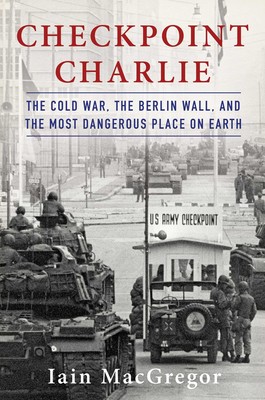
In June 1987, just shy of my 13th birthday, international affairs were already part of my daily interests. I would clip newspaper articles about the Cold War from our local paper before my parents even had the chance of reading it, much to their despair. During that month, on the 12th to be more precise, US President Ronald Reagan stood in front of the Brandenburg Gate in Berlin and pronounced a major speech calling for Soviet leader Mikhail Gorbachev to tear down the wall. “He’ll never do that”, my father replied to me. Retrospectively, anything is possible of course. But few people could imagine back then what would happen only two years later when the Wall crumbled without a single shot being fired.

Fast-forward to 2015. After 9 grueling months stranded as administrative prisoners in Poland due to lack of efficient bureaucracy (to put it mildly), we finally received our coveted residency cards. First order of business was to plan a serious change of scenery for everyone. I could finally take a few days off. Berlin was just a couple hours away by train and I knew this was an opportunity not to be missed.

Continue reading ““The epicenter of the Cold War””

« Xi Jinping est, hélas, le chef d’État actuel le plus impressionnant » – général Henri Bentégeat

Le Général (à la retraite) Henri Bentégeat (source: Alchetron)

Dans la foulée de ma recension de l’excellent livre Les ors de la République (Éditions Perrin) du général d’armée (à la retraite) Henri Bentégeat, j’ai soumis quelques questions à son attachée de presse. Très aimablement, il s’est empressé d’y répondre. C’est donc avec grand plaisir que je partage cet entretien avec vous.

Mon général, j’ai dévoré Les ors de la République avec énormément d’intérêt et de fascination. Vous y brossez un portrait fascinant des présidents François Mitterrand et Jacques Chirac. Mais comme vous avez naturellement côtoyé des chefs d’État étrangers, je me demandais lequel vous avait le plus impressionné et pourquoi?

Ayant côtoyé de nombreux chefs d’État, avec Jacques Chirac ou en tant que chef d’état-major des armées, j’ai quelque peine à désigner celui ou celle qui m’a le plus impressionné. Avant la campagne aérienne contre la Serbie qui a révélé son messianisme exalté, j’aurais volontiers cité Tony Blair, tant son enthousiasme souriant, sa simplicité et sa maitrise des dossiers me séduisaient. Je retiens donc plutôt Cheikh Zayed que j’ai rencontré au soir de sa vie. Celui qui présidait au destin des Émirats arabes unis, avait un charisme peu commun et sa sagesse proverbiale s’exprimait avec une douceur ferme et souriante, ouverte au dialogue sans céder sur l’essentiel. Chirac vénérait ce grand modernisateur respectueux des traditions et faiseur de paix.

Les présidents et leurs conseillers ayant pris goût à la disponibilité et à la discrétion du personnel militaire, le ministère de la Défense a été invité à détacher à l’Élysée des chauffeurs, des secrétaires, des maîtres d’hôtel et des rédacteurs pour le service du courrier…
Poursuivre la lecture

Le « général Morphée », vainqueur de la Révolution française

Questionné un jour dans un entretien privé à savoir s’il était impatient d’apprendre un jour la rédaction et la publication de sa biographie, un ancien ministre canadien des finances me répondit : « Pas du tout. J’aime mieux demeurer dans la légende que passer à l’histoire. » Cet épisode m’est immédiatement venu en mémoire lorsque j’ai débuté la lecture de La journée révolutionnaire : Le peuple à l’assaut du pouvoir 1789-1795 (Passés Composés) de l’historien Antoine Boulant.

Tout au long de son propos, l’auteur s’emploie à départager l’histoire de l’imaginaire. « Alors que l’imaginaire collectif associe volontiers la journée révolutionnaire à des combats sanglants et des tueries collectives, une analyse plus nuancée s’impose. » À plusieurs endroits, on mesure à quel point les journées révolutionnaires étudiées dans ces pages n’avaient rien de spontané. Seulement quelques centaines d’insurgés se retrouvaient devant les murs de la Bastille le 14 juillet 1789. La majorité des Parisiens ne faisaient pas partie de la foule révolutionnaire, les franges les plus misérables de la société y étaient minoritaires et ce n’est pas « une foule déguenillée » qui a pris d’assaut la Bastille et les Tuileries.

Quel ne fut pas également mon étonnement de constater à quel point la prise des armes servait les intérêts de personnages importants de l’establishment comme le duc d’Orléans, que l’on soupçonne notamment d’avoir financé les émeutiers. Et que dire du rôle déterminant des rumeurs, comme par exemple tout le bruit entourant le « banquet des gardes du corps » propagées dans une véritable campagne de relations publiques. De véritables Fake News qui n’ont rien à envier aux tribulations d’un certain politicien américain. Aussi bien l’avouer, je me suis senti à des années lumières du film culte La Révolution française de Robert Enrico et Richard T. Heffron que j’ai longtemps vénéré.

Poursuivre la lecture

La sérénité de Jacques Chirac

Le général Henri Bentégeat (à droite sur la photo) accompagnant le président Jacques Chirac dans son command-car le 14 juillet 2005 (Photo par Sebastien DUFOUR / Gamma-Rapho via Getty Images)

Allons enfants de la patrie…

Chaque 14 juillet, une partie de mon cœur se tient aux abords de l’avenue des Champs-Élysées et bat au rythme du magnifique défilé militaire qui y déambule. La fête nationale de la France a toujours été un moment fort pour moi. Un jour, je me promets d’y assister en personne.

Cette année, j’ai donc pensé solliciter le concours d’un auteur français dont j’admire beaucoup le parcours et le talent à nous livrer ses impressions sur cette journée importante.

Dans son excellent livre Les ors de la République, le général Henri Bentégeat, qui fut chef de l’état-major particulier du président de la République du 30 avril 1999 au 2 octobre 2002 et chef d’état-major des Armées (CEMA) du 30 octobre 2002 au 3 octobre 2006, partage avec ses lecteurs plusieurs aspects fascinants et révélateurs de la personnalité du président Jacques Chirac. Je pense notamment au fait où mention est faite que « ses voyages préférés » étaient « ses visites aux armées ». Et que la Défense était l’un des domaines « qu’il aimait le plus ». Dit autrement, Jacques Chirac était à l’aise et heureux auprès de la troupe. Il était donc naturellement dans son élément lors du défilé du 14 juillet.

Poursuivre la lecture

The Pacific Theatre should no longer take a backseat to the war in Europe during WW2

Author Kevin Maurer with and ANCOP officer (Afghan National Civil Order Police) in Kandahar in 2010 (source: Kevin Maurer)

In the aftermath of my review of the impressive book Rock Force, author Kevin Maurer kindly accepted to answer questions for this blog. Here is the content of our interesting exchange.

Rock Force is an excellent book and now ranks among my favorites. Where did the idea of this book come from?

The idea came from my editor, Brent Howard. We were talking about World War II books and he mentioned his grandfather jumped with the 503rd. He said no one had really told the story in a narrative fashion, so I took the challenge. It was great working with Brent because from the start, it was clear he was as invested in the success of the book as I was. He was an amazing collaborator and the book is much better thanks to his edits.

I wrote Rock Force at night from 8 p.m. to 11 p.m.
Continue reading “The Pacific Theatre should no longer take a backseat to the war in Europe during WW2”