The Sinews of Victory, the Seeds of Defeat

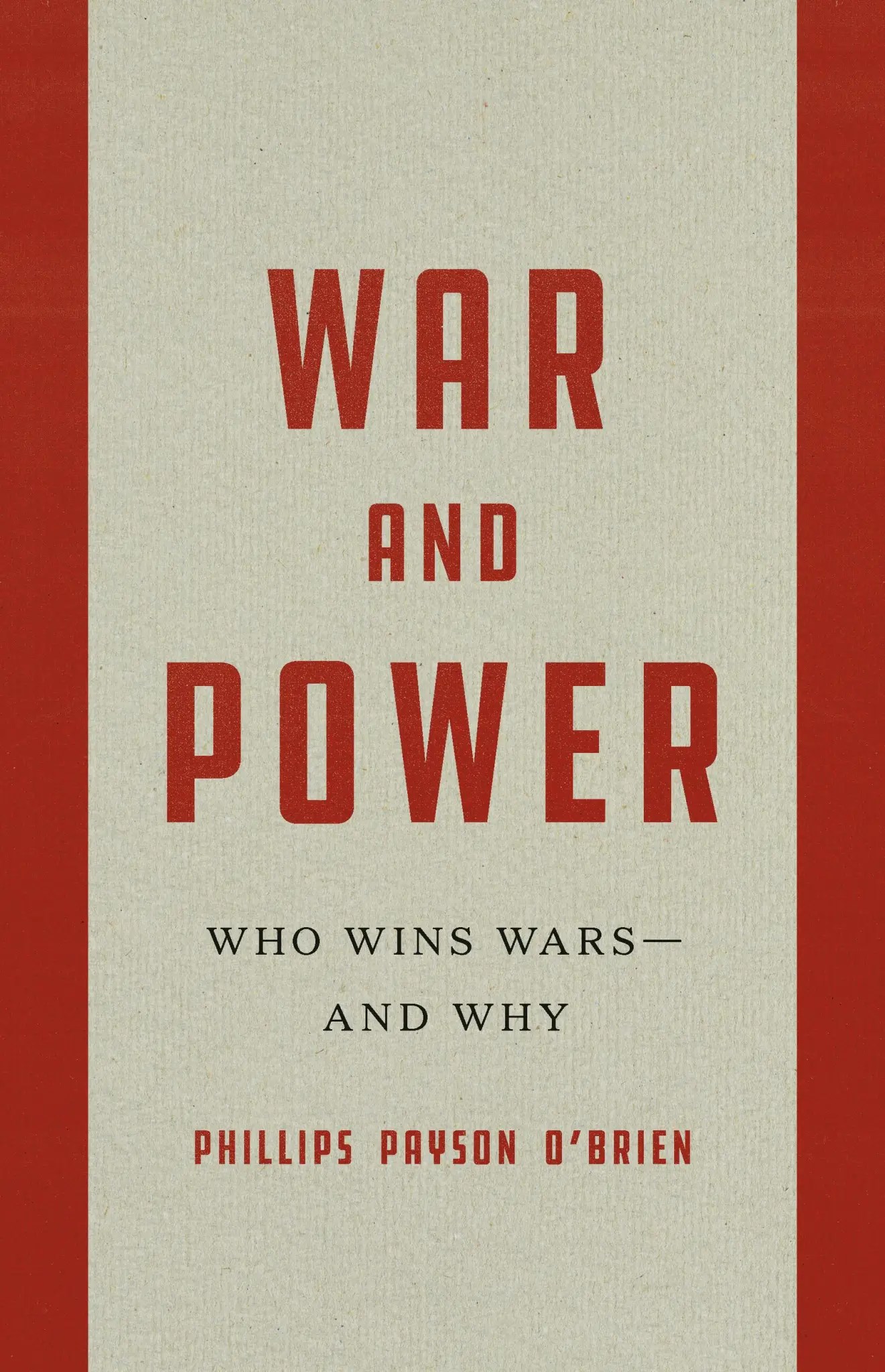
The fate of war is sealed long before the sound of cannons fills the air. That is the conclusion I reached after reading Phillips Payson O’Brien’s latest book, and it recalls Sun Tzu’s teaching that victorious warriors win first and then go to war.

The argument resonates in a particular way when viewed against the backdrop of a news report according to which “the U.S. Army has significantly depleted its stockpile of highly accurate long-range missiles” (The Independent). Not necessarily the strongest posture from which to engage a determined enemy. “Going back to the great invasion of Greece by the Persian emperor Xerxes in 480 BCE (sometimes referred to as his second invasion), it can be seen how the largest and most powerful military forces can be crippled by the lack of supply”, writes the acclaimed historian in War and Power: Who Wins Wars and Why (PublicAffairs).

Before and beyond the clashes of iron and blood, “war is a test of various systems in a multitude of different ways; it is not a test of armies, and certainly not something that is determined by supposedly decisive battles”. Societies must therefore be willing to sustain the financial, industrial, and moral investments required to prevail when called upon. Alas, “instead of investing in their militaries, western European countries [to which we could add other countries, like Canada] have prioritized their vast welfare states”, as observed by former Senior National Security Adviser to the Australian government John Lee in a recent Foreign Affairs article. Such choices carry a cost—not only for national resources, but also for long-term strategic credibility.

Continue reading “The Sinews of Victory, the Seeds of Defeat”

“If we’re going to withdraw, then my husband died for literally nothing”

This quote from the widow of Special Forces engineer sergeant Matthew McClintock has been haunting me over the last couple of days as I watch events unfold in Afghanistan. “Mick” was killed during his tour while trying to secure the medevac of one of his comrades. I’ve never been to Afghanistan, but I have always been a staunch supporter of the missions deployed there. When Canada sent a contingent of Canadian soldiers from the “Vandoos” (the legendary Québec’s Royal 22e Régiment) to Kandahar, I drove with my wife and daughter to Québec City to applaud them on their departing parade. As we hold our breath in expectation of what will happen in Afghanistan, I have a hard time coming to terms with recent developments.

Just last week, I finished reading Jessica Donati’s excellent but tragic book Eagle Down: The Last Special Forces Fighting the Forever War (PublicAffairs). Her exposé is depressing, to say the least. Over the last couple of years, Washington sent the best of the best, the Special Forces, under the guise of “a training and assistance mission” in order to maintain deniability. In reality, they were there in combat mode, although denied certain tools to accomplish their mission properly, such as not authorizing air strikes that could have proven crucial at certain times, or that “no GPS-guided parachutes [which could efficiently deliver supplies in combat zones, ensuring they would not fall into enemy hands] were left in the country because the US military was no longer supposed to be in combat.” These guys fought an enemy that proved adept at using clouds to articulate its strategy (no air support can be offered when skies are not clear, therefore denying Special Forces with much-needed air support). When you ask people to do such a crucial job, the least you can do is give them the tools to do it.

Continue reading ““If we’re going to withdraw, then my husband died for literally nothing””