

In light of yesterday’s historic elections in Israel and the resounding victory of Prime Minister Benjamin Netanyahu for a fourth consecutive term (his fifth) at the helm of the government, I find it pertinent to post here the content of an op-ed I have penned, 14 years ago this month, about this legendary statesman. Many people were then very skeptical about my prediction. But history and the leader of the Likud have proven me right.
Netanyahu is not finished
by Marc Nadeau
(originally published in the Record (Sherbrooke), Friday. March 31st, 2006, p. 7)
Conventional wisdom suggests that Benjamin Netanyahu was the great loser of this week’s election in Israel. Finishing fifth, the Likud Party he has led since Ariel Sharon departed to create Kadima sustained its worst defeat since its creation in 1973.
Even before voters went to the polls, pundits and observers predicted that Netanyahu would be challenged for the leadership of his own party.
The Likud finished not only behind the ruling Kadima and the Labor Party, but was also eclipsed by the Shas, a party popular among Orthodox Jews and Beiteinu, an outfit that draws most of its support from Russian-born immigrants.
Consequently, some say that the traditional voice of conservatism in Israeli public life may has lost its pertinence. For many reasons, it’s far too soon to conclude that.
If he decides to stay on, the man who led his country as prime minister from 1996 to 1999 is not finished.
In the past, Netanyahu has shown a legendary resilience. He not only came back from oblivion after his defeat in 1999, becoming minister of foreign affairs and minister of finance, but when Sharon left the Likud last November, it fell to him to pick up the shattered pieces of a party that lost an important number of members.
The result of this week’s election was not a personal defeat, but rather a testimony that Israeli politics have dramatically changed in the past few months. Thus, he should not shoulder the exclusive blame for Tuesday’s electoral outcome.
Analyzing the results further, one can also note that the Likud’s agenda did not spur popular passion this time.
About security issues – Netanyahu’s forte – the former Prime Minister was hardly a match for another leader – new Prime Minister Edud Olmert – who promoted the exchange of territory for peace. The withdrawal plan for the West Bank comes when many are tired with the Israeli-Palestinian confrontation.
From now on the new Prime Minister will have to deliver on this plan. The road may bring numerous pitfalls.
First, Olmert is ready to unilaterally implement a plan which would give a group that promotes terrorism and refuses to recognize the existence of Israel – Hamas – the opportunity to govern a new Palestinian state.
Second, Israelis have not directly encountered terrorism for some time. But if a resurgence of violence was to directly affect Israel again in the future, the Prime Minister may find it difficult to promote concessions toward Israel’s tormentors.
Such a context, along with the failure of the upcoming government in its general policies may well pave the way for a Netanyahu comeback.
Last but not least, contemporary Israel history teaches its observers that it is sometimes premature to write up a political obituary.
Following his 1977 retirement from politics, who could have predicted that Itzhak Rabin would orchestrate the victory of the Labor party in 1992? In the aftermath of the controversy of his involvement in the Lebanese war, Sharon’s career seemed to have come to an end. He came back and left his imprint of Israeli politics, notably by becoming Prime Minister in 2001.
These are two eloquent illustrations that public figures may have a long life in the land of the prophets. After all wasn’t it Menachem Begin – another famous figure from the Likud – who was asked to form a government after 29 years in the opposition?
In politics, anything can happen. Netanyahu could decide to retire and attend to other challenges. He may alternatively be defeated in his bid to retain the leadership of his party. But if he decides to stay in the arena, he still has many good cards in his hand.
It may thus be too soon to confine him to the pages of history. Already, Netanyahu “shall never be with those cold and timid souls who know neither victory nor defeat”, to borrow an expression from former US President Theodore Roosevelt.
 « Je ne suis ni meilleur ni plus intelligent qu’aucun de vous. Mais je ne me décourage pas et c’est pourquoi le rôle de chef me revient. » – Theodor Herzl
 « La guerre n’est jamais avare de nouvelles inventions », d’écrire l’historien Claude Quétel dans son dernier livre
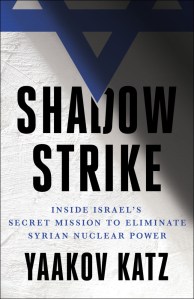 Reading Yaakov Katz’s book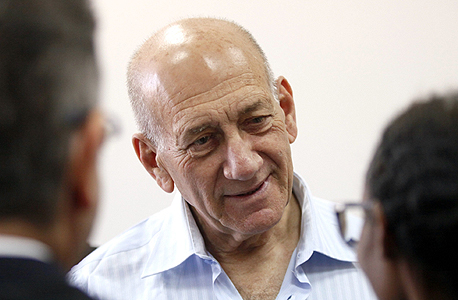

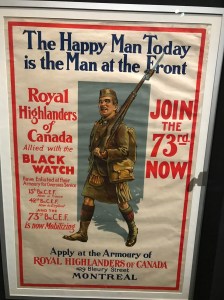 “This charge of Fraser’s 78th [during the battle of the Plains of Abraham in 1759] and the heroic performance of the 42nd at Ticonderoga, would transform the image of the Highlanders in the popular consciousness from that of dangerous savages who posed a threat to the security of the state to loyal and hardy shock troops of the empire. From this point on, the Highlanders joined the Guardsmen as the elite of the British Army, and both would win laurels in virtually every major conflict they fought, often – as was the case in Waterloo, the Alma, Tel-el-Kebir, Loos and Alamein – fighting almost side by side.” (


 BookMarc