“Overall, 2021 has been a difficult year for the Biden team” – Admiral James Stavridis

Admiral James Stavridis USN (Ret.) (source: US Naval Institute)

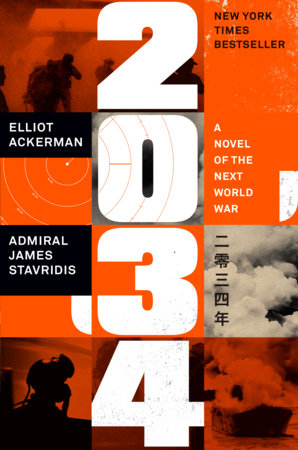
Before the Holidays, Admiral James Stavridis USN (Ret.), one of my favorite authors, granted me an end of year interview about issues related to his amazing novel 2034 about a war between China and the United States. These geopolitical issues are unlikely to disappear from the radar in the coming months and years. The Admiral’s insights are therefore not only very informative, but also crucial to grasp the state of the world.

Admiral Stavridis, I’ve read and reviewed 2034: A Novel of the Next World War (Penguin Random House) with tremendous interest. Before we head into more serious stuff, a question burns my tongue. Since there are lots of mention of the delicious M&Ms throughout the novel, I was wondering if you are a fan of that candy yourself and if that’s the reason why it is mentioned in the book?

While I am not personally a fan of M&M candies, I have known many sea-going naval officers who are. I liked the idea of Lin Bao [one of the main characters of 2034] enjoying an American candy, essentially a nod to the duality of his upbringing.

Continue reading ““Overall, 2021 has been a difficult year for the Biden team” – Admiral James Stavridis”

2034: The War With China?

I am not a person who enjoys novels. My youngest daughter was therefore astonished when she saw me reading 2034: A Novel of the Next World War. “Yes, but it’s about a potential war between the United States and China. Plus, it’s written by an author I really like and admire, Admiral Stavridis [and Elliot Ackerman]”, I said. I admit that this was an exceptional experience and not only because of the genre, but mainly because this is one of the most thoughtful books anyone interested in geopolitics and the fate of the world should read now.

2034. About 12 years from now. Might as well say tomorrow. Russian President Vladimir Putin still occupies the highest office in the Kremlin – a scenario that made me smile – and the Israelis have lost the Golan after a military confrontation with Syria – an outcome that makes me cringe, since I have seen with my own eyes how vital this territory is to Israel’s security. The Chinese are still vying for “[…] uncontested control of the South China Sea.” Equipped with superior cyber capabilities, the Chinese People’s Liberation Army neutralizes the weapons and communications system of a flotilla of three American warships. Only one of them will remain afloat at the end of the confrontation. A military operation that was supposed to serve as a message turned into a World War.

Continue reading “2034: The War With China?”

11 Minutes to Recognize Israel

Harry S. Truman always ranked among my favorite presidents of the United States, if only because he made sure America was the first country to recognize the birth of the State of Israel on May 14, 1948. In his new book Saving Freedom: Truman, the Cold War, and the Fight for Western Civilization (HarperCollins), bestselling author and renowned TV personality (MSNBC) Joe Scarborough reiterates that the 34th president faced stern opposition from his Secretary of State George C. Marshall and his deputies, which “[…] led to an open conflict between the State Department and the White House.”  Although such a conflict is to be expected, I was surprised and amazed to read that it only took 11 minutes for the president to make his decision, against all odds.

Not much is written about Truman. Not enough in my humble opinion. After all, there is much more to the 34th President than the decision to use the bomb to end World War II. In Joe Scarborough’s words, he was “the most consequential foreign policy president of the past seventy-five years.”

Apart from showing tremendous courage in facing headwinds about Israel, he had previously been instrumental in blocking the Soviet Union’s advance in the Mediterranean area. Upon learning in February 1947 that Great Britain could no longer shoulder its global role because “[…] Hitler’s war machine wreathed that nation in everlasting glory, but exhausted its resources and its people”, the Truman administration had a choice to make. Revert to isolationism or espouse a leadership role in the world. Great Britain would pass the torch to the United States and Washington would undertake the mission of developing and implementing a policy to prevent Greece and Turkey from falling under the hammer and sickle.

Continue reading “11 Minutes to Recognize Israel”

“Henry Kissinger is still listened to in China” – Exclusive interview with Prof. Kerry Brown

Dr. Kerry Brown, Director of the Lau China Institute and Professor of Chinese Studies (source: China Daily).

After the publication of my recent review of his insightful book about the history of China (Polity Books), Professor Kerry Brown kindly accepted to answer my questions about the relationship between the United States and China – an extremely timely subject. Without further introduction, here is the content of our exchange.

Chinese still admire some aspects of the western world, but not, anymore, its political figures.

On page 71 of your compelling book, you write that President Nixon was impressed “[…] witnessing Zhou Enlai redo the front page of the People’s Daily.” I often ask myself if any figure has a comparable influence in Xi Jinping’s entourage?

I imagine the figures from the outside world that most impress Chinese leaders today are more our business or technology leaders than our political ones. The excitement of new acquaintance from the Nixon era has long gone. Now, figures like Warren Buffett probably arouse more interest in China, or Bill Gates. I guess this is simply a sign that Chinese still admire some aspects of the western world, but not, anymore, its political figures.

I think we deceive ourselves if we do think individuals can magically find a way around the issue of the relationship between China and the US.

In the case where there would be no such influential figure, do you think it would help, notably in the relations with the US, and why?

Henry Kissinger is still listened to in China, and indeed, till recently, went there. I don’t know however whether intermediary figures are of much help now. This is not an issue of individual people being able to sort this out – the disagreements between China and the US are structurally too deep. There are maybe groups of people who might, over time, help – academics, perhaps, in trying to at least maintain some middle space. But I think we deceive ourselves if we do think individuals can magically find a way around this issue.

Continue reading ““Henry Kissinger is still listened to in China” – Exclusive interview with Prof. Kerry Brown”

“The CIA Director is ultimately the person we depend on to prevent another 9/11 or lethal pandemic.” – Exclusive interview with Chris Whipple

Chris Wh

In the aftermath of my review of The Spymasters, author Chris Whipple was very generous in accepting to respond to a few questions. If you have not read the book already, I trust this interview will provide you with an additional incentive to do so.

The content of our exchange follows.

Mr. Whipple, in light of the nomination of Ambassador William J. Burns as Director of the CIA (pending his confirmation), could you tell us in what direction the relationship between the President and the Director will lead things?

Given his breadth of knowledge in the national security field, and his hands-on experience with CIA operations when he was ambassador to Jordan, William Burns will have a short learning curve as CIA director. As an outsider, Ambassador Burns is very much in the Leon Panetta mold. And like Panetta, he is grounded and confident—essential qualities for a great CIA director. His congenial relationship with President Joe Biden is also a tremendous advantage.    

Continue reading ““The CIA Director is ultimately the person we depend on to prevent another 9/11 or lethal pandemic.” – Exclusive interview with Chris Whipple”

President-elect Joe Biden and the Return of Empathy

Like millions of people around the world, I’m impatient to see the results of Tuesday’s US presidential elections. Full disclosure, I ardently root for a Joe Biden victory. Not because I’m a traditional Democrat supporter (I am not, I canvassed in New Hampshire for my favorite contemporary president George W. Bush and I attended the 2004 and 2008 Republican National Conventions), but because of my profound lack of affinities for his opponent.

If you’re a Trump supporter, you can stop right here (and I suspect you will), because you won’t like the rest of this review.

When I read Bob Woodward’s latest book, Rage, a few weeks ago, I was struck by the following passage from one of his discussions with the current president of the United States:

“When’s the last time you apologized?”, asked Woodward. “Oh, I don’t know, but I think over a period – I would apologize. Here’s the thing: I’m never wrong.”

To me, that exchange encapsulates the Trump problem. Like kings of the Middle Ages, he thinks he can do no wrong. And he believes he can do or say whatever he wants, to hell with the consequences.

You don’t expect a head of state or government to be perfect. You want him or her to abide by certain standards but also to be human – like the rest of us. In this day and age, that’s precisely Joe Biden’s main quality in this race.

I was therefore curious to read Evan Osnos’ Joe Biden: The Life, The Run, and What Matters Now, to see what more could I learn about the man who might be on his way to march on Pennsylvania street after his inauguration on January 20th, 2021. I did not seek a policy book. I wanted a full-rounded portrait of a man seeking the highest office in the US, detailing his qualities and shortcomings. By all means, the author did not disappoint. An avid reader, Biden is known for his loyalty and being humble, as well as being arrogant and sometimes sloppy. He’s human!

Evan Osnos writes that he is such a tactile politician that “When Biden and Obama worked a rope line, Biden sometimes took so long that aides had to restart the soundtrack.” Or when “Leon Panetta recalled listening to Biden work the phone at the White House: “You didn’t know whether he was talking to a world leader or the head of the political party in Delaware.””

In a nutshell, Biden is the kind of guy you’d like to sip a caramel macchiato with on a Saturday morning.

Thanks to the author, I learnt that Joe Biden – contrary to some political accusations – is not part of the establishment. He was, incidentally, “[…] among the least prosperous members of the United States Senate” and he planned to take a second mortgage to pay for his son’s cancer treatments (who passed away later). President Obama offered to help him financially, but his vice-president never came back to ask for it.

Biden suffered in his life. A lot. And one of his strongest traits (in my humble opinion) is that he is not afraid to share his humanity. A few days before Christmas 1972, he lost his first wife and daughter in a car accident. He went through serious health issues. The most touching part of the book for me is when the author writes about “Brayden Harrington, a thirteen-year-old from New Hampshire, [that] gave credit to Biden for telling him that they belonged to “the same club – we stutter.””

America is in a state of turmoil. Americans are suffering. Greatly. This mood won’t disappear at the touch of a magic wand nor at the turn of a blind eye. If he is elected this week, Joe Biden will probably never rank among the transformational presidents such as FDR, LBJ or Reagan. But he can be a gifted and consequential transitional one like Harry S. Truman or George H. W. Bush. The grandfather who looks like he’s just out of the gym (I borrow this formula from the author) would bring a healthy dose of much-needed humanity, sincerity, modesty, decency and, dare I say, sometimes vulnerability in the White House.

This electoral cycle, I suspect many people are voting against Donald Trump and not necessarily for Joe Biden. For those unfamiliar with who Joe Biden’s character, Evan Osnos opens a window on the personality of an attaching man whose challenges will be of Himalayan proportions depending on Tuesday’s electoral results.

Joe Biden most certainly won’t be able to transform US politics in a heartbeat, but at least Americans will have a good man at the helm of the ship of state.

Let us now hope that Evan Osnos will put his exceptional talents as a biographer at our service in writing about another political or historical figure in the near future. In his book about Joe Biden, he mentions the Democratic contender has read one of the tomes about LBJ by Robert A. Caro. Having myself tremendously enjoyed this four-volumes biography of JFK’s successor, I find Osnos talents to be comparable to those of the iconic writer.

__________

Evan Osnos, Joe Biden: The Life, The Run, and What Matters Now, New York, Scribner, 2020, 192 pages.

I would like to express my heartfelt gratitude to the always helpful Athena Reekers of Simon & Schuster Canada for providing me with a copy of this book.

Should We Fear Russia?

USSoldiersAfghanistan_Newsweek
US soldiers in Afghanistan (Source: Newsweek)

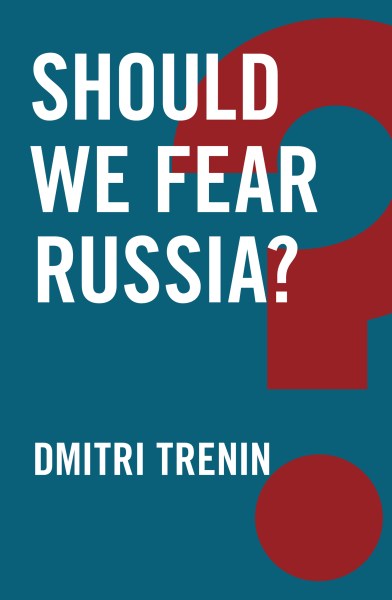
“Russia has no serious reason to fear the West », writes Dmitri Trenin – Director of the Carnegie Moscow Center – in his insightful book Should We Fear Russia? But President Vladimir Putin is not shy to “punch above his weight” and “always testing and pushing one’s boundaries” to ensure that Russia’s place at the table of great powers is respected.

ShouldWeFearRussiaAs I read these words, the New York Times revealed last Sunday that “United States intelligence officers and Special Operations forces in Afghanistan alerted their superiors as early as January to a suspected Russian plot to pay bounties to the Taliban to kill American troops in Afghanistan.
Then, another quote from Dr. Trenin came to mind: “Forcing his way to the high table, and making others deal with him out of necessity if not of choice, has become Vladimir Putin’s diplomatic trademark in his relations with US leaders.”

There is always a murky zone around special ops and covert operations, which always offer “plausible deniability” for operations like what allegedly happened in Afghanistan. Conventional wisdom would suggest that targeting soldiers for assassination does not appear like a good way to make and keep friends. But Moscow might get away with murder, since “for all its military superiority that it has been using elsewhere quite liberally, the United States lacks serious military options vis-à-vis Russia.” In other words, Vladimir Putin can continue pushing his luck with impunity.

Continue reading “Should We Fear Russia?”

Vladimir Putin, Defender of Russia’s Interests

VladimirPutin
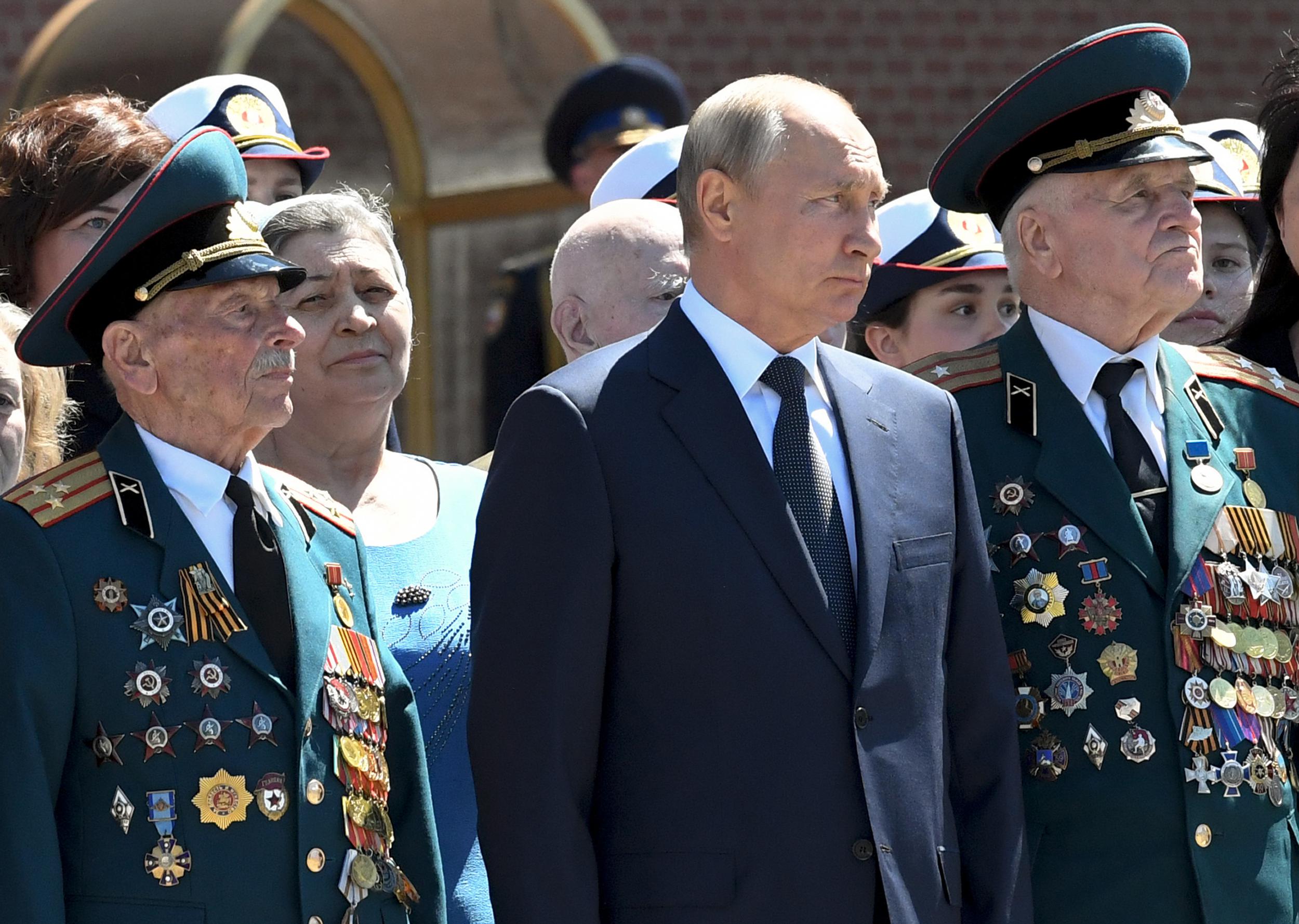
President Vladimir Putin, participates in a wreath laying ceremony at the Tomb of Unknown Soldier in Moscow, Russia, on June 22, 2020 (Source: Spokesman.com)

Cliquez ici pour la version française

In just a couple hours, the heart of Russia will vibrate to the sound of patriotic military music. People will celebrate Victory Day and the 75th anniversary of the defeat of Nazi Germany – a feat that would have been impossible without Soviet contribution. President Vladimir Putin will be the host of the ceremony that will unfold in Moscow. Since he has been at the helm of Russia for 20 years and because it is realistic to think that he will carry on beyond the end of his current mandate in March 2024, I thought it might be interesting to conduct an interview about the President of the Federation with a leading expert of this country. Dr. Dmitri Trenin, author of many insightful books on the subject (I recently reviewed his captivating book about the history of Russia) and Director of the Carnegie Moscow Center, has generously accepted to answer my questions. Here is the content of our exchange.

Putin has broken the American monopoly in world affairs.

Entire forests have been used to print analysis and op-eds condemning President Putin and portraying him as a threat to the world’s stability. On the other side, your book about the history of Russia presents him as a leader who wants his country to be respected. What is his worldview and agenda?

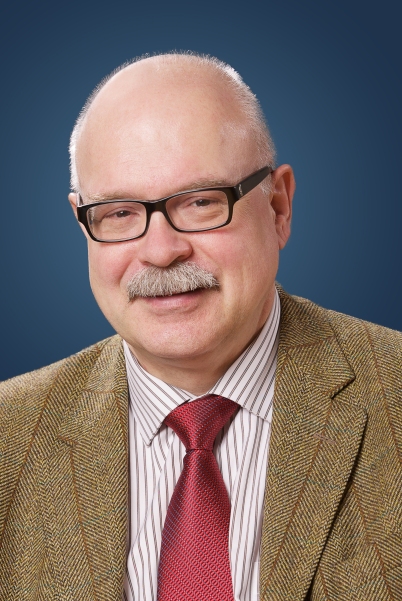
DmitriTrenin
Dr. Dmitri Trenin

What you say depends on where you sit. For those defending the current – post-Cold War – order of unprecedented dominance of the United States and the liberal and democratic norms that the U.S. has established – upholds and polices, Vladimir Putin is a dangerous disruptor. Since his Munich speech of 2007, he has been publicly challenging U.S. global hegemony and since 2008 (pushing back against Georgia’s attempt to recover breakaway South Ossetia) and 2014 (intervening in Crimea and Eastern Ukraine) has been pushing back against Western geopolitical expansion. Putin has broken U.S. de facto monopoly on intervening in the Middle East by sending forces into Syria in 2015. The following year, Russia interfered with its information resources in U.S. domestic politics which stunned many Americans who are not used to foreigners seeking to influence them. Russia has also strengthened partnership with China, America’s principal challenger of the day. Moscow has energy assets in Venezuela, whose leadership Washington seeks to topple; it has a relationship with Iran and contacts with North Korea, two minor enemies of the United States. Above all, however, Russia, under Putin, has veered off the West’s political orbit; returned to the global scene as a great power; and rebuilt its military might. Russia, which had been relegated to yesterday’s news, an international has-been, a regional power at best (Obama) and a filling station masquerading as a country (McCain), made a stunning comeback.

Continue reading “Vladimir Putin, Defender of Russia’s Interests”

The importance of “Soft Power”

GeorgeHWBush_ChinaFile
President George H. W. Bush on Tiananman Square in Beijing (China), February 25, 1989 (Source: ChinaFile)

Cliquez ici pour la version française

Few years ago, I was captivated by Professor Joseph S. Nye Jr.’s book Soft Power: The Means to Success in World Politics. I recently approached the former Dean of the Harvard’s Kennedy School of Government and former Clinton administration official to submit him a few questions. He generously accepted to respond. Here is the content of our exchange.

You are the father of the term soft power. Just to make sure all my readers understand well, what would be the best short definition of this concept and why is it so important in international relations?

Power is the ability to affect others to get the outcomes you want and it is basic to international relations analysis.  You can affect others by coercion, payment, and attraction. Soft power is the ability to get what you want by attraction rather than coercion or payment.

Continue reading “The importance of “Soft Power””

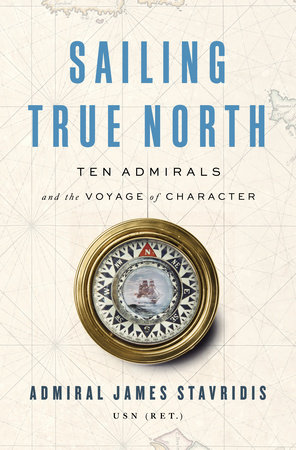
Sailing True North: A character-building guide in these troubled times

SailingTrueNorthSea Power has always fascinated me. I will forever cherish the memories of walking in the footsteps of Admiral Chester Nimitz in Pearl Harbor and Admiral Horatio Nelson at Gibraltar. Back in 2011, I spent a night on the Rock and had trouble sleeping. Heat certainly had something to do with it, but I was also pondering how the British legend spent his days here, defending the interests of King and Country at the entrance of the Mediterranean Sea. I like to think that I might have crossed his spirit while walking in the beautiful streets of this British Overseas Territory.

These men and women who ruled the waves were gifted with exceptional and inspirational values. And I’m very grateful to retired Admiral James Stavridis for writing Sailing True North: Ten Admirals and the Voyage of Character, where he details how these larger than life figures not only mastered what are certainly some of the most demanding jobs in the world, but also their character in front of adversity, whether it is the threat of invasion, war, bureaucracy, sexism or racism just to quote these examples. The best lessons are seldom learnt in easy circumstances.

Naturally, I will not talk about each of the fascinating personas that are presented between the covers, but I will write a few words about my Top 3.

Continue reading “Sailing True North: A character-building guide in these troubled times”