

“Russia has no serious reason to fear the West », writes Dmitri Trenin – Director of the Carnegie Moscow Center – in his insightful book Should We Fear Russia? But President Vladimir Putin is not shy to “punch above his weight” and “always testing and pushing one’s boundaries” to ensure that Russia’s place at the table of great powers is respected.
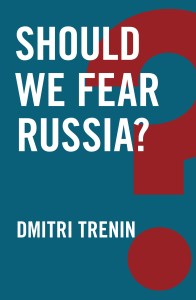 As I read these words, the New York Times revealed last Sunday that “United States intelligence officers and Special Operations forces in Afghanistan alerted their superiors as early as January to a suspected Russian plot to pay bounties to the Taliban to kill American troops in Afghanistan.”
Then, another quote from Dr. Trenin came to mind: “Forcing his way to the high table, and making others deal with him out of necessity if not of choice, has become Vladimir Putin’s diplomatic trademark in his relations with US leaders.”
There is always a murky zone around special ops and covert operations, which always offer “plausible deniability” for operations like what allegedly happened in Afghanistan. Conventional wisdom would suggest that targeting soldiers for assassination does not appear like a good way to make and keep friends. But Moscow might get away with murder, since “for all its military superiority that it has been using elsewhere quite liberally, the United States lacks serious military options vis-à-vis Russia.” In other words, Vladimir Putin can continue pushing his luck with impunity.

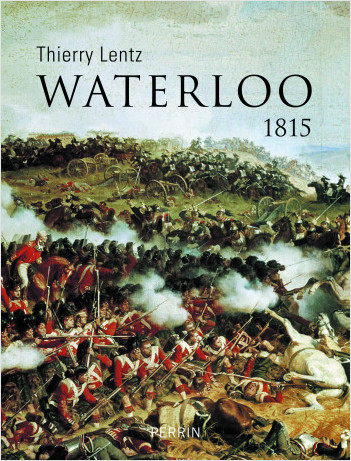 L’été 2014 fut le plus beau de ma vie, en ce qu’il m’a offert le privilège de visiter une multitude de champs de bataille et lieux historiques sur le continent européen. De ceux-ci, Waterloo figurait en tête de liste. Ayant toujours nourri un vif intérêt envers le Duc de Wellington, j’étais fasciné de passer une bonne heure dans ce que fut son quartier général à l’époque (et qui porte maintenant le nom de Musée Wellington).
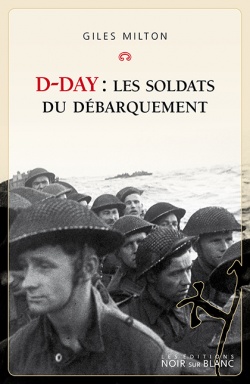 Je me suis souvent posé la question à savoir comment se sentaient les soldats qui ont été parachutés et qui sont débarqués en Normandie dans le cadre de l’Opération Overlord. À la fin de l’été 2015, j’ai eu l’immense privilège de fouler le sable de Juno Beach, le secteur canadien du débarquement. Après la visite d’une position fortifiée, nous nous sommes dirigés sur la plage avec notre guide. J’ai alors été envahi d’un double sentiment. Je ressentais d’une part une très grande fierté de savoir que les bottes canadiennes ont traversé ce sol sacré pour libérer l’Europe de la horde brune. D’autre part, je ne pouvais m’empêcher de me demander comment ces hommes se sentaient au moment d’accomplir le destin auquel leur dévouement les appelait.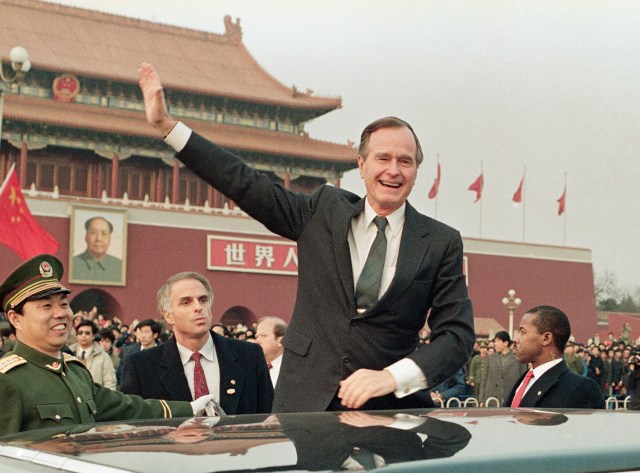
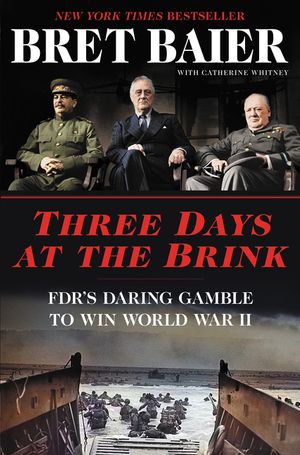 I have always loved to read about FDR, one of my favorite Presidents. Being a fan of presidential libraries and having done some research in a few in the past, I have vivid memories of the time I spent at his inspiring Presidential Library at Hyde Park. I was therefore very interested in Bret Baier’s latest book, not only because it covers a period of contemporary history – World War II – for which I have an unquenchable intellectual thirst, but also because he dove into the presidential archives, a real treasure trove for anyone eager to fully understand the magnitude of the accomplishments of those larger than life Commanders in chief who lead America at crucial times.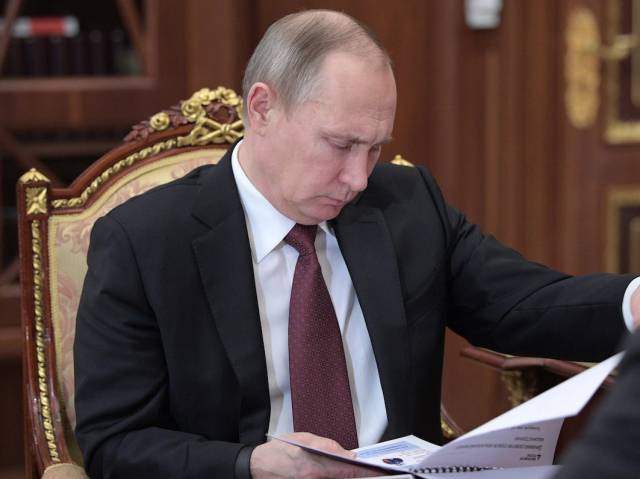
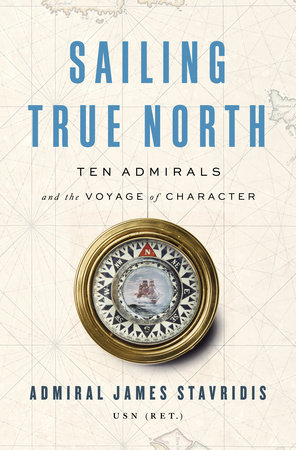 Sea Power has always fascinated me. I will forever cherish the memories of walking in the footsteps of Admiral Chester Nimitz in Pearl Harbor and Admiral Horatio Nelson at Gibraltar. Back in 2011, I spent a night on the Rock and had trouble sleeping. Heat certainly had something to do with it, but I was also pondering how the British legend spent his days here, defending the interests of King and Country at the entrance of the Mediterranean Sea. I like to think that I might have crossed his spirit while walking in the beautiful streets of this British Overseas Territory.
 BookMarc