Le chaos, cet allié de Vladimir Poutine

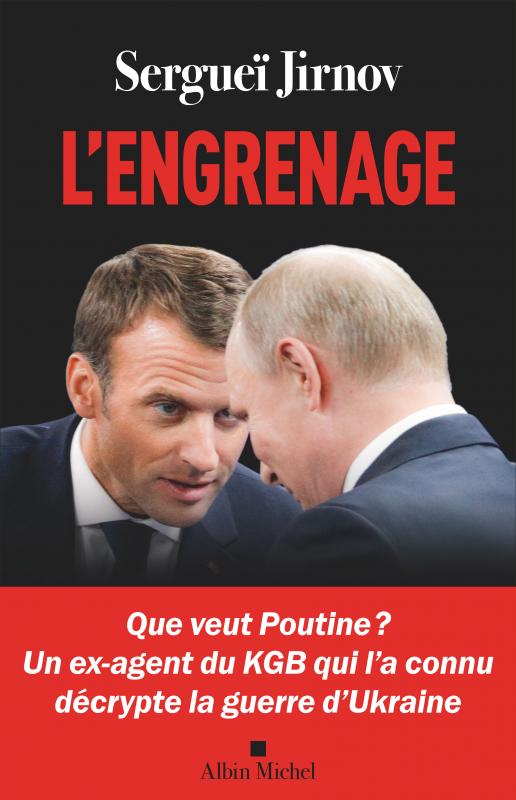
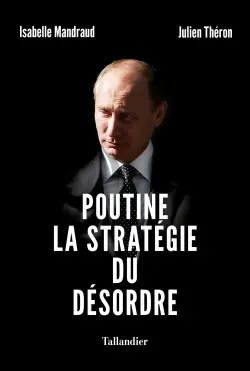
Mais quelle mouche a bien pu piquer Vladimir Poutine? Telle est la question que je me posais au matin du 24 février 2022, agglutiné que j’étais aux informations et reportages continus diffusés sur CNN. Depuis des années, je m’intéresse au président russe et à la dynamique géopolitique qu’il a instauré dès son entrée en fonction. Le livre d’Isabelle Mandraud et Julien Théron, Poutine, la stratégie du désordre (Tallandier) m’apparaissait comme contribuant à répondre aux nombreuses questions qui se bousculaient dans mon esprit en cette froide matinée.

« La violence est constitutive de la présidence de Vladimir Poutine », exposent les auteurs. On pourrait même ajouter qu’elle est en filigrane de l’histoire de la Russie depuis des siècles. L’âme russe s’est forgée au son des épées, dans le bruit des canons et le sacrifice de la boue et du sang des champs de bataille. Lors de mes deux séjours à Moscou, j’avais été frappé par l’importance de l’héritage militaire de ce pays en sillonnant les expositions du musée de la guerre patriotique de 1812 à quelques pas du Kremlin et le musée de la Victoire consacré à la Deuxième Guerre mondiale.

poursuivre la lecture

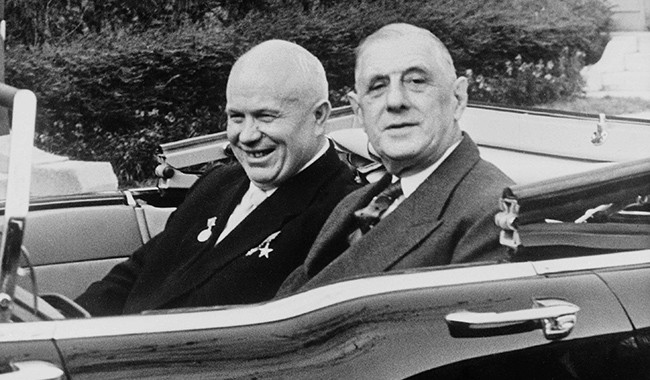
De Gaulle aurait condamné sans appel l’intervention russe en Ukraine

Le dirigeant soviétique Nikita Khrouchtchev en compagnie du Général de Gaulle (source Histoire & Civilisations)

J’ai récemment eu le privilège d’adresser quelques questions à l’historien et auteur de renommée internationale Éric Branca, dans le contexte de la guerre en Ukraine. Avec un retard pour lequel je suis désolé, il me fait grand plaisir de publier aujourd’hui cet entretien qui soulève des aspects éclairants.

Voici donc le contenu de notre échange.

_____________

BookMarc : Monsieur Branca, sans vouloir tomber dans l’imprudence d’une conjecture, disposons-nous d’indices pour savoir comment de Gaulle aurait réagi à la suite de l’invasion de l’Ukraine le 24 février dernier?

Éric Branca : Il est toujours périlleux de faire parler les morts ou de dire ce qu’ils auraient fait, mais il est relativement simple de savoir ce qu’ils n’auraient pas fait, sachant ce qui a constitué la logique profonde de leur existence et de leur action, en l’occurrence l’indépendance de la France et sa mise au service de la paix en luttant contre les empires.

poursuivre la lecture

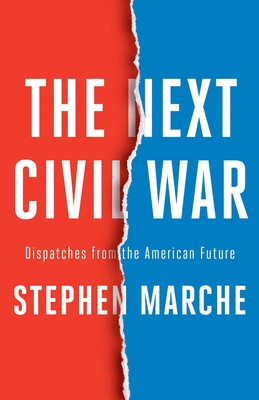
How America Could Fall

There has always been a soft spot for the United States in my heart. When I was about 10 years old, I uninstalled my parents’ clothesline to attach a flag of the United States on July 4th. I sensed my father was upset, but he said nothing, probably because he was somehow impressed with my audacity. A few decades later, my feeling of admiration and appreciation remained intact, and it was important for me to visit the Gettysburg National Military Park – which commemorates the most iconic battle of the Civil War during which approximately 50 000 soldiers became casualties. During those captivating pilgrimages on the battlefield, I remember the comfort I felt in my heart that such an occurrence would not happen again. America, I like to think, will remain a beacon of the values to which I am attached for many decades to come. And I guess my heart would like to believe it will be centuries…

But the last few years have considerably shaken this conviction. You may think I’m talking about Donald Trump’s election on November 8, 2016, and you are partially right. The events that occurred on January 6, 2021, were a formidable earthquake. I would never have believed anyone predicting those terrifying images of hooligans storming the US Capitol – the very seat of American democracy. Never. But here we were.

Continue reading “How America Could Fall”

L’évacuation de Kaboul

« L’Afghanistan est un pays facile à envahir, difficile à tenir, dangereux à quitter », observe David Martinon dans son époustouflant livre Les 15 jours qui ont fait basculer Kaboul (Éditions de l’Observatoire). J’étais impatient de me procurer cet ouvrage, de le parcourir et de le recenser. J’étais littéralement glué aux bulletins de nouvelles dans les dernières semaines de cet été 2021, alors que les forces occidentales opéraient un retrait en catastrophe de l’Afghanistan qui tombait chaque jour davantage aux mains de la horde talibane.

Et j’ai été ravi.

J’avais bien lu quelques articles dans Le Figaro à propos de cet ambassadeur charismatique qui fut porte-parole de la présidence de la République sous Nicolas Sarkozy en prime. Quel ne fut pas mon plaisir de lire sa plume alerte mais souvent angoissante, au fil du récit de l’une des pages les plus tragiques de l’histoire contemporaine.

Continue reading “L’évacuation de Kaboul”

One man can change the course of a battle

“The vast majority of men receiving the Medal of Honor in World War II belonged to the infantry but the American public was fixated on marines and the glamour boys in the air corps with their nice blue uniforms”, writes acclaimed author and historian Alex Kershaw in his recent book Against All Odds: A True Story of Ultimate Courage and Survival in World War II (Caliber).

Undoubtedly, Alex Kershaw is the master of the battle narrative. His books always remind me of Sir John Keegan’s classic The Face of Battle, in detailing the reality and sacrifices of fighting soldiers. Between the covers, he details the courageous and selfless feats of Maurice “Footsie” Britt, Michael Daly, Audie Murphy and Keith Ware. All these men were part of the “[…] 3rd Division, the legendary “Rock of the Marne” outfit that had saved Paris in July 1918 by blocking the last great German offensive of World War I.” The men of that Division were sent on the first line to absorb a strong German attack along the Marne River in April 1918. The stubbornness of their defense earned them the famous nickname. Their successors in World War II would be no different.

Continue reading “One man can change the course of a battle”

Top Gun Maverick and the Taiwanese flag – Exclusive interview with Chris Fenton

Chris Fenton (source: Variety.com)

With the release of Top Gun Maverick and all the buzz surrounding the issue of the Taiwan flag on Maverick’s leather jacket, Hollywood former movie executive and author Chris Fenton kindly accepted to answer a few questions for this blog. Needless to say, I was extremely happy to be exchanging with the producer of one of my favorite movies, Iron Man 3.

Here is the content of our exchange.

Mr. Fenton, the last couple of years have been difficult for the United States on the world scene and many observers are pontificating about its supposed loss of power. Do you think Top Gun Maverick is a good shot in the arm of American patriotism?

100% yes. Hollywood content can be an extremely effective tool for soft power. Top Gun is the best example of that.

What is the recipe for the success of that iconic movie?

The star power of Tom Cruise and the brand awareness among global consumers of the original Top Gun film.

The Taiwan flag was not supposed to appear on Maverick’s jacket – from what I remember of the 2019 trailer. Could you tell us why the situation has changed?

Continue reading “Top Gun Maverick and the Taiwanese flag – Exclusive interview with Chris Fenton”

“Putin is clearly trying to ignite a larger conflict” – Martin Dugard

Author Martin Dugard (source: MartinDugard.com)

After the publication of my review of his excellent book Taking Paris: The Epic Battle for the City of Lights (Caliber), Martin Dugard kindly accepted to answer some questions for this blog. I feel privileged for the interview with an excellent and engaging author, who is also the coauthor of Bill O’Reilly’s Killing Series.

Here is the content of our exchange.

____________

Mr. Dugard, where did the idea of writing Taking Paris originate from?

The book actually started as Taking Rome but as the research expanded it became obvious that the story of Rome worked more nicely as a small section in the larger context of the 1940 fall of Paris and 1944 liberation.

Continue reading ““Putin is clearly trying to ignite a larger conflict” – Martin Dugard”

Vladimir Poutine et la nouvelle armée russe

Lundi prochain, les troupes russes défileront au pas d’oie sur la Place rouge. Elles sont déjà en répétition sur la rue Tverskaya. Les forces militaires profiteront également de l’occasion pour faire parader l’attirail qui forme l’arsenal de Moscou. Le Jour de la Victoire est toujours un moment fort dans la psyché russe, en raison de la place dominante occupée par la guerre dans l’histoire du pays.

Depuis l’invasion de l’Ukraine le 24 février dernier, l’armée russe est omniprésente dans l’actualité internationale et sa performance outre-frontière soulève plusieurs questions et observations.

poursuivre la lecture

Moscow has no discernible exit strategy in Ukraine

Professor Bettina Renz (source: YouTube)

In the aftermath of my review of her timely and absorbing book Russia’s Miltiary Revival (Polity), author and University of Nottingham Professor of International Security Bettina Renz granted me an interview. I am extremely grateful for her insights, one week from Victory Day parade in Moscow.

Below is the content of our exchange.

_________

The situation is now a war of attrition with no immediate end in sight.

Professor Renz, considering the last 9 weeks, what is your assessment of the performance of the Russian army in Ukraine? Are you surprised by the way the situation evolved?

Knowing what we know now, the poor performance of the Russian armed forces in Ukraine is no surprise. On the one hand, the Russian military is numerically and technologically superior to their Ukrainian counterpart. On the other hand, the history of warfare has demonstrated repeatedly that superiority in numbers and kit cannot make up for poor strategy.

Continue reading “Moscow has no discernible exit strategy in Ukraine”

A striking parallel between Zelensky and de Gaulle

I initially wanted to review Taking Paris: The Epic Battle for the City of Lights by Martin Dugard last February, but then Vladimir Putin launched his troops against Ukraine and I had to shuffle my publications calendar. As you will see, there are fascinating parallels between the fate of France in World War II and the current situation in Ukraine, if only at the leadership level.

After the invasion of France by the Germans in May 1940, the country is in disarray and its statesmen have given up. In the ashes of defeat, a temporary brigadier general will rise to the occasion. Fleeing his homeland on board an airplane provided by British Prime Minister Winston Churchill, Charles de Gaulle left with a “[…] hastily packed suitcase contain[ing] four shirts, one pair of pants, and a single photograph of Yvonne and the children, whose current whereabouts he does not know.” I couldn’t help but think of the same predicament in which Ukrainian President Volodymyr Zelensky found himself on February 24th. As did de Gaulle, he chose to fight, but from home.

Continue reading “A striking parallel between Zelensky and de Gaulle”