Le professeur de De Gaulle

Dans son Dictionnaire amoureux du Général (que j’ai l’intention de recenser ici prochainement), le regretté Denis Tillinac citait De Gaulle qui affirmait : « L’homme d’action ne se conçoit guère sans une forte dose d’égoïsme, d’orgueil, de dureté, de ruse. » Cette citation m’a beaucoup tracassé, parce qu’on a souvent tendance à idéaliser les grands personnages. On les imagine au-dessus des défauts affligeant le commun des mortels. Après tout, le souvenir de leurs accomplissements ne permet-il pas à leur mémoire de prendre place dans l’Olympe des consciences?

J’affirme que cette citation m’a tracassé, parce que la lecture du dernier livre de Pierre Servent, De Gaulle et Pétain (Éditions Perrin) a répondu au questionnement qui m’habitait à propos de l’homme du 18 juin.

Figure d’inspiration de nos jours, De Gaulle a néanmoins cumulé une feuille de route parsemée d’animosité. « Détesté par une bonne partie de l’élite de l’armée », « il n’a guère d’amis dans l’armée ». Il peut cependant, au début de son parcours, compter sur le soutien indéfectible d’un père spirituel hors norme – le Maréchal Pétain – qui lui apprend tous les trucs du métier, dont celui d’être un bon comédien. Une excellente école pour le protégé.

L’auteur nous rappelle qu’au sortir de l’École de guerre en 1924, « Son attitude arrogante, ses contre-performances dans l’exécution de certains exercices qu’il juge au-dessous de son talent naturel, sa difficulté à accepter la critique font que la majorité du corps enseignant souhaite le classer en queue de peloton de la promotion de l’École de guerre, dans le troisième tiers, avec la mention « assez bien ». C’est une catastrophe qui ne se remonte jamais dans une carrière militaire déjà mal engagée. »

J’étais pourtant sous l’impression que De Gaulle était un premier de classe…

Trois ans plus tard, le Maréchal l’impose comme conférencier extraordinaire. De quoi faire rager les détracteurs – et on devine qu’ils sont nombreux – du Connétable. La mauvaise réputation de De Gaulle était notamment assortie du fait qu’il était connu pour être un chef très dur et distant envers ses subalternes.

À priori, on serait porté à croire qu’un tel patronage s’accompagnerait d’une loyauté sans faille. Pas pour De Gaulle, dont la boussole personnelle est orientée par son destin et celui de la France. S’il faut trahir une vieille amitié pour y arriver, qu’il en soit ainsi.

En 1938, De Gaulle fait accepter le manuscrit de La France et son armée par un éditeur, Plon, lequel ignore « […] que son nouvel auteur publie un texte qui, d’une certaine façon, appartient à un autre […] ». Le livre résultant d’une commande passée du maréchal sera publié et la rupture entre les deux hommes sera irrémédiablement consommée. Le vin est tiré… Et la table est mise pour la scène légendaire qui se jouera quelques mois plus tard.

De Gaulle n’a pas hésité à grimper sur les épaules de son protecteur pour se hisser au faîte de la gloire, une gloire néanmoins chèrement acquise dans les sacrifices encaissés sur la route de l’exil pendant la Seconde Guerre mondiale.

Lorsqu’il aborde le thème de l’orgueil – une caractéristique arborée fièrement par les deux protagonistes de son récit – Pierre Servent se déploie à multiplier les qualificatifs : cosmique, incommensurable, sans bornes, immense, puissant, d’airain, himalayen… Mais aussi bafoué et blessé. Comme pour nous rappeler que le destin des grands personnages est forgé au feu des épreuves et que les orgueils surdimensionnés constituent un rempart protégeant une sensibilité ne voulant pas s’exposer. Des épreuves que tout un chacun peu à peine imaginer. Je repense, en écrivant ces mots, à la séquence du film mettant en vedette Wilson Lambert et Isabelle Carré – que j’ai eu le privilège de visionner avant son retrait des salles de cinéma du Québec à cause de la COVID-19 – au cours de laquelle on voit le personnage principal quitter fin seul la France en juin 1940.

Pour devenir un artisan de l’histoire, De Gaulle avait compris qu’il ne faut pas être aimable et docile, mais qu’il fallait savoir ramer à contre-courant, contrairement à son ancien mentor qui profitait de la vie bonne dans la thermale Vichy.

Le maréchal Pétain fut certes le professeur généreux du Général de Gaulle dans la période formatrice de sa vie. La capacité de l’élève à se démarquer – certains diront à tuer la figure – du maître, lui aura permis de se détacher de tout en juin 1940 pour mieux attacher son wagon à la locomotive de l’histoire.

Sous la plume animée de cet éminent spécialiste en histoire militaire – qui nous a réservé d’autres bons livres comme une excellente biographie du Feld-maréchal Erich von Manstein et L’extension du domaine de la guerre que j’avais beaucoup apprécié – on apprend que le destin a un prix, celui de ne croire qu’en soi. Contre vents et marées. Une leçon puissante, surtout en cette période difficile.

_____________

Pierre Servent, De Gaulle et Pétain, Paris, Éditions Perrin, 2020, 224 pages.

Je remercie Mme Marie Wodrascka, des Éditions Perrin, qui m’a aimablement fourni un exemplaire de cet excellent livre.

The sources of Russian conduct

Russian President Boris Yeltsin and US President Bill Clinton (Source: The Telegraph)

Russia is fascinating, Russia is dangerous. It is nevertheless important to question ourselves as to the sources of its current pugilistic conduct. Was it predestined by its history, its political DNA or could this reality have been avoided by a more efficient engagement in the past?

Professor Sergey Rudchenko’s recent article “Nothing but humiliation for Russia’: Moscow and NATO’s eastern enlargement, 1993-1995”, published in the last issue of the Journal of Strategic Studies, offers many answers.

The Cardiff University Professor argues that in the immediate aftermath of the Cold War, the “adversarial relationship [between Washington and Moscow] was replaced with the idea of a partnership between Russia and the West but would that partnership carry enough weight to satisfy the Russian elites’ pretensions to global importance? The proof was in the pudding, and the baker was in Washington.”

In a nutshell, Russia wanted to be seated “[…] at the head of the table, right next to America’s” But Washington “[…] did not need Russia’s help in running the world, neither during the Cold War, nor, especially, in its aftermath.” After all, “[…] the world was a jungle, where the mightiest had the power of persuasion and no one listened to the counsel of the weak.”

Fast forward, Vladimir Putin has learnt that lesson and applies it in the implementation of his vision of international relations.

But let’s go back to Boris Yeltsin and Bill Clinton. There were talks about Moscow joining NATO, but no one in the West was much interested in that prospect, even though American officials dangled the possibility as bait. During that period, the embers of war inflamed former Yugoslavia and the world witnessed a vicious and murderous civil war begin in 1991. President Yeltsin “tried to make Bosnia a showcase of Russian-American cooperation.” But Washington was not interested, and Russia was “left on the sidelines”, the pride associated to her self-declared status humiliated. Much the same happened when Moscow sought to collaborate in the negotiations with North Korea’s nuclear program.  

In a word, Moscow was not to be seated at the head of the table with Washington.

But by embracing enlargement without finding an appropriate role for Russia, the same [Western] policy makers overlooked the possibility that it might actually contribute to the latter’s nationalistic resurgence or, indeed, externally legitimize it. This is exactly what happened.

Pr. Sergey Radchenko

At that stage, one can sympathize with Russia’s frustration and feeling of abandonment.

Since nature abhors vacuum, “Russia’s own ontological security as a part of the West depended in large part on whether it was being recognized as such. If it wasn’t – that, too, was legitimating, because it helped the Russian political elites find their ground in an uncertain world, if not as friends, then at least as adversaries of the West.”

Professor Radchenko brings some nuances to that point of view, when he writes that “[…] one can of course lament Russia’s exclusion from Europe as a deliberate act of policy but it is hard to deny that such exclusion was partly justifiable in view of Russia’s own policies [like, for example, the war in Chechnya] […].”

Russia sought “legitimation through an adversarial relationship”, while the United States refused to offer “[…] enough leeway for legitimation through a genuine and inclusive partnership.” The seeds of confrontation had been planted by efficient gardeners. “It is hard to blame the White House”, writes the author. “They were the realists. But by being too realistic and not sufficiently idealistic at a time when they could have made a difference, they helped make Russia’s imperialist resurgence a self-fulfilling prophecy.”

As a student of history, I would bet that a discreet apparatchik named Vladimir Putin took careful notes and vowed not to fall into the idealist trap if his time came. And it came.

Russia certainly is not faultless in the current international context. But one can wonder what could have happened if the Clinton administration had adopted a different posture. In the land of “what ifs”, anything is possible, and I am not fond of revisionism. But one can easily assume that humiliating someone is never a good insurance policy for future good relations.

You can’t change the past, but there is always hope for the future. Russia is not immune to good relations with the United States. Vladimir Putin was the first international leader to call and offer assistance to President George W. Bush after the horrendous terrorist attacks on 9/11 and he was among the first ones to wish a speedy recovery to Donald Trump after news broke that the US President had tested positive to Covid-19.

Jesus Christ and General Jackson

In just a few hours, veteran news anchor Chris Wallace will moderate the first presidential debate between Donald Trump and Joe Biden, an exercise that will shine a bright light on the character of these individuals vying to occupy the Oval Office starting next January 20th.

As a seasoned journalist, Chris Wallace has a unique perspective of those who are called to occupy the seats of power. He has recently put this quality to good use in offering a better understanding of Harry S. Truman, one of the most consequential President in American history.

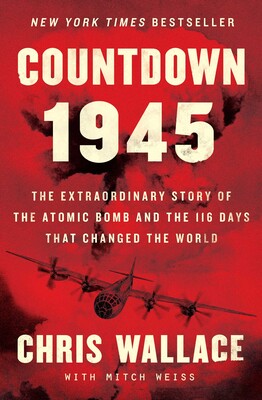
In Countdown 1945: The Extraordinary Story of the Atomic Bomb and the 116 Days That Changed the World, the anchor of Fox News Sunday surprised me with his portrait of Truman. I had always been under the impression that the 33rd President was a trigger-happy man who was only too pleased to bomb America’s nemesis in the Pacific. The reality is much more nuanced.

On April 12, 1945, President Roosevelt’s Veep left behind the bourbon and branch water drink he was enjoying on Capitol Hill to reach the White House urgently. Notoriously sick, the news of the death of the United States Commander in chief nevertheless sent shock waves throughout the country and the world. Clearly unprepared, Truman was de facto constitutionally called to replace the beloved leader.

Approximately two weeks after becoming the new White House resident, Secretary of War Henry Stimson broke the news to President Truman that he was about to possess a new superweapon, the atomic bomb, which could play a determining role in the end of the hostilities with Japan. Only two months after being sworn in, Truman travelled to Potsdam for a summit with seasoned leaders Churchill and Stalin. His education as a warlord must have been quite brutal.

Confronted with a seemingly war with no end, the President juggled many different scenarios over several weeks. At first, he considered a ground invasion, a scenario that entailed “[…] a long and bloody conflict.” Another option was “[…] a nonmilitary demonstration [of their new weapon], so the Japanese would see the futility of continuing the war.” But the possibility that the bomb might not work disqualified that option. Furthermore, Secretary of War Stimson, Chief of Staff Leahy, General Marshall and General Eisenhower were all against going for the atomic avenue. And they were no peaceniks. According to the author, “Truman spent more and more time on the question of how to deliver a final ultimatum to Japan”. After several weeks of “long and careful thought”, of agonizing, losing sleep and suffering from headaches, the new President “[…] felt it was inescapable that if the weapon worked, he must be willing to use it.” Even if he didn’t like it.

Even though I will always feel that the bombings of Hiroshima and Nagasaki have been one of the greatest human tragedies of history, I am nevertheless of the opinion that the Americans were blessed to have a thoughtful and considerate man like Harry S. Truman to end the war.

Throughout his book, Chris Wallace depicts him as a decent, loyal and straightforward man whose favorite expression was “Jesus Christ and General Jackson!” (I might adopt it myself!). The kind of person you would like to have breakfast with at your favorite eatery. To that effect, my favorite passage from the book is worth quoting at length:

One evening, after another frustrating day at the conference, Truman’s motorcade was leaving the palace when an Army public relations officer asked if he could get in the president’s car. Once the two men were by themselves in the backseat, the colonel said, “Listen, I know you’re alone over here. If you need anything like, you know, I’ll be glad to arrange it for you.”

“Hold it, don’t say anything more,” the president interrupted. “I love my wife, my wife is my sweetheart. I don’t want to do that kind of stuff. I don’t want you ever to say that again to me.” Truman and the colonel rode the rest of the way back to the Little White House in silence.

Chockfull of interesting details that entertain the reader, I was captivated to read about the creation of the Underwater Demolition Teams – the ancestors of the American Navy SEALs – who had to endure “Hell Week”. I also enjoyed learning about Sergeant Bob Caron – a tail gunner from New York – who wrote to the Brooklyn Dodgers to ask for a baseball cap of his favorite team, which he wore during the fateful mission on August 7th, 1945. These are the type of eccentricities that give life to history.

Countdown 1945 deserves a place in the gallery of great books about past US Presidents. Chris Wallace has an engaging pen and a knack for evoking the kind of details that humanizes the characters of his story – even though I would never be fond of being invited to a liver and bacon meal like the one Truman and Stalin liked so much to share at Potsdam.

Hopefully, Chris Wallace’s questions and interventions in tonight’s presidential debate will highlight the qualities required for the highest office in the United States.

___________

Chris Wallace (with Mitch Weiss), Countdown 1945: The Extraordinary Story of the Atomic Bomb and the 116 Days That Changed the World, New York, Avid Reader Press, 2020, 313 pages.

I would like to express my sincere gratitude to Allie Lawrence from Avid Reader Press (Simon & Schuster), who has been extremely kind in helping me obtaining a copy of this enthralling book.

Xi, l’anti-Gorby

De par le nouveau positionnement de son pays sur la scène internationale, Xi Jinping fascine ou suscite la crainte. Parfois même peut-être un peu les deux. Il fascine parce que, même s’il est arrivé sur scène dans une démarche feutrée et discrète, sa personnalité politique est nettement moins effacée que ses prédécesseurs Jiang Zemin et Hu Jintao, dont seuls les férus d’affaires internationales se souviennent probablement aujourd’hui. À l’inverse, Xi occupe tout l’espace. Sans complexe, ni gêne.

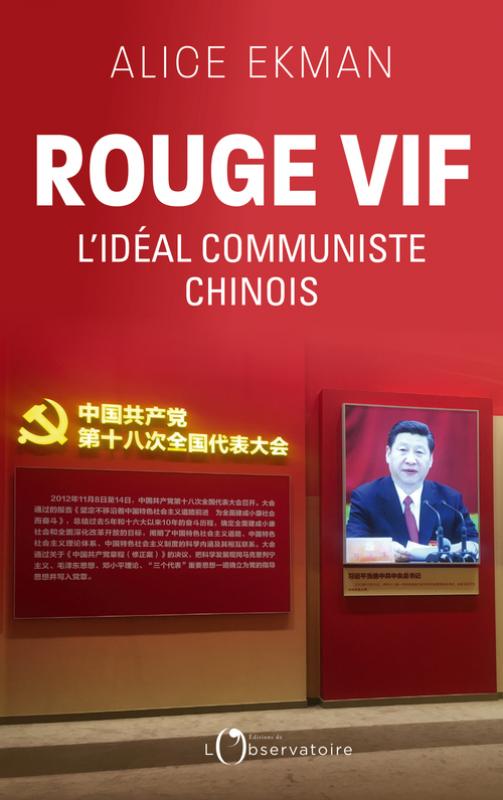
Il y a quelques semaines, lorsque j’ai aperçu la couverture du récent ouvrage de Alice Ekman, Rouge vif : L’idéal communiste chinois, j’ai été intrigué. Parce que tout ce qui concerne Xi Jinping retient mon attention. Après tout, comment être attentif à la géopolitique mondiale sans vouloir mieux connaître le chef de file du Parti communiste chinois?

Entre les couvertures du livre, la réputée spécialiste de la Chine nous révèle les ressorts de l’action de ce Timonier au sourire espiègle et parfois énigmatique. Xi Jinping avait 38 ans lorsque le drapeau de l’URSS a été descendu de la célèbre coupole du Kremlin en décembre 1989. Pour l’apparatchik rouge qu’il était, cela a dû laisser une empreinte indélébile. Et il n’était pas question de marcher sur le même sentier, de répéter les mêmes erreurs.

Parce que, « selon lui, l’effondrement de l’Union soviétique est survenu parce que personne n’a été « assez homme » face à Gorbatchev et que les membres du Parti ont négligé les fondements idéologiques du régime. » Ce jugement cinglant constitue néanmoins le socle du mode opératoire du régime chinois en place actuellement. Premièrement, pas question pour le chef de l’État de vaciller et, deuxièmement, le parti et son message doivent être au cœur de la gestion politique et du tissu social. Avec une idéologie revigorée aux accents fièrement maoïstes (n’évoque-t-il pas une « nouvelle Longue Marche »?). Il n’en faut guère plus pour que « […] le président chinois renforce le monopole du Parti communiste avec vigueur et rapidité […]. » Fait à noter, le Parti communiste chinois regroupe actuellement plus de 90 millions de membres – c’est-à-dire plus de 2 fois la population du Canada – constitue une institution puissante et doté « […] d’une grande capacité d’adaptation et d’ajustement […] » selon l’auteure. Un gage solide pour l’avenir donc.

Si Xi a renforcé son rôle et la centralité du parti à travers les différentes sphères sociales et politiques, l’un des thèmes qui revient fréquemment sous la plume d’Alice Ekman est celui du pragmatisme / réalisme de Pékin, principalement au niveau de son positionnement dans le monde. « Selon lui [Xi Jinping], la victoire du socialisme sur le capitalisme prendra du temps, au moins plusieurs décennies, et la Chine devra s’armer de patience et de discernement. » Nouant des liens accrus avec un cercle d’amis internationaux dont la liste s’allonge, capitalisant sur la « […] convergence des ressentiments anti-occidentaux », ripostant vigoureusement aux attaques assénées par ses détracteurs sur l’échiquier des grands, la Chine active actuellement le plus important réseau diplomatique aux quatre coins du globe – devant les États-Unis. Comme quoi elle sait se donner les moyens de son ambition. Une ambition qui gagne du terrain, à mesure que Washington en perd.

Xi Jinping aurait dû terminer son mandat en 2022, mais la Constitution du pays a été amendée en 2018, lui permettant de prolonger sa présence à la tête du pays et de continuer à promouvoir et articuler son agenda. Malgré les soubresauts comme la COVID-19, l’élection présidentielle américaine et une potentielle réélection de Donald Trump à la Maison-Blanche, Xi Jinping continuera de faire avancer ses pions à mesure que les opportunités se manifesteront à lui. J’ignore s’il joue aux échecs, mais force est de prévoir que, muni d’un appareil étatique dont la fidélité n’a d’égal que la crainte d’être taxé de déloyauté (avec les conséquences que cela implique), le leader chinois continuera de faire montre de pragmatisme, de détermination – que l’on devine bien être de fer – de vision et d’une bonne dose de prévisibilité. Des valeurs qui manquent cruellement à son principal nemesis depuis quelques années.

Si vous nourrissez un intérêt quelconque ou soutenu envers le président chinois et son agenda politique, Rouge vif est une lecture essentielle. Au surplus, Alice Ekman transmet fort agréablement un contenu qui pourrait être autrement ardu s’il était livré par une plume moins inspirée.

J’espère avoir le bonheur de la lire de nouveau prochainement.

______________________

Alice Ekman, Rouge vif : L’idéal communiste chinois, Paris, Éditions de l’Observatoire, 2020, 223 pages.

Je tiens à remercier d’une manière particulière Mme Simone Sauren, directrice des communications des Éditions Flammarion, de m’avoir si aimablement offert un exemplaire de cet excellent livre.
“I shall be an autocrat: that’s my trade”

Following the news about Russian political life these days – notably in the aftermath of the poisoning of opposition figure Alexey Navalny – one might think that this quote comes from President Vladimir Putin. But it would be wrong to assume that. These words were pronounced by none other than Catherine the Great.

In his brilliant and insightful book A Short History of Russia: How the World’s Largest Country Invented Itself, from the Pagans to Putin, Professor Mark Galeotti chronicles the historical continuity – and I could add ingenuity – of power in the land of the double-headed eagle. During his reign (980-1015), Vladimir the Great took “[…] the Rus’ beyond their Viking roots”, made a show of piety that “[…] was actually a piece of ruthless statecraft.” If that sounds familiar with today’s operating mode, that’s “[…] because one can draw a direct and often-bloody line between these times and the present day. The origin story, in which vulnerability is spun as agency, sets the tone, especially as this is not simply a story of weakness, but of embracing conquest and creating something new from it.”

Ever since, Russian leaders have proven pragmatic and ruthless in crafting power. To remain at the top, Russian stateswomen and statesmen had to thwart the power and influence of indocile aristocrats, because a strong state requires subjecting real and potential opposition to undivided authority. Those considering Vladimir Putin to be a scandalous anomaly should consider the fact that Peter the Great “[…] had his eldest son tortured under suspicion of plotting against him, a torment from which he died.” Or that the great Catherine was complicit in the assassination of her husband-tsar to ascend to the throne.

Not that I condone violence, poisoning and assassinations – far from it.

But past leaders who did not abide by the rule that power is acquired and kept at all cost – sometimes at the price of violence – did not last. Soviet leaders Nikita Khrushchev and Mikhail Gorbachev were excellent cases in point. Before them, tsar Nicholas II impotently saw power escape from his hands because of his lack of political skills.

Vladimir Putin, of whom many say that he is a keen student of history, certainly keeps this storyline close to mind. Western governments can draft protests condemnations, launch inquiries and express the most eloquent outrage. Alas for them, they have little to say in who occupies the Kremlin. The day he loses his grip on power and the forced docility of current-day boyars will be the last of his reign. One can and should feel sorry for what happened to Alexey Navalny. Making a political opponent suffer physically – and potentially die – is something I guess I will never be able to understand. At the same time, the trends of Russian history are much larger than the evolution of our current values. Mr. Navalny is not the first nemesis of the throne to be tossed aside in the land of the tsars. And my guess is he won’t be the last either. I imagine that few tsars and successors departed this world with a conscience clean of such lethal political maneuvers.

All in all, those who seek to better understand the nature and demands of power in Russian politics should grab a copy of Mark Galeotti’s latest book and embark on the journey of understanding why Vladimir Putin acts the way he does. “Much is known about Peter [the Great]; much less is truly understood”, writes the author. The same applies to the current defender of the double-headed eagle. You may dislike him and what he does, but that does not diminish the urgent need to better understand the sources of Russian power.

At the stylistic level, Pr. Galeotti has an acknowledged quality offering the reader a simplified version of the intricacies of names and events – where other authors could simply bore the reader. He writes in a way that requires being peeled away from his book in order to attend to other tasks. I will await with great eagerness his next book.

________________

Mark Galeotti, A Short History of Russia: How the World’s Largest Country Invented Itself, from the Pagans to Putin, Toronto, Hanover Square Press, 2020, 224 pages.

I would like to express all my gratitude to Emer Flounders, from HarperCollins, who provided me with a review copy of this excellent book and who is always more than generous and helpful whenever I need some assistance about a title published by this fantastic publishing house.

Putin and Israel

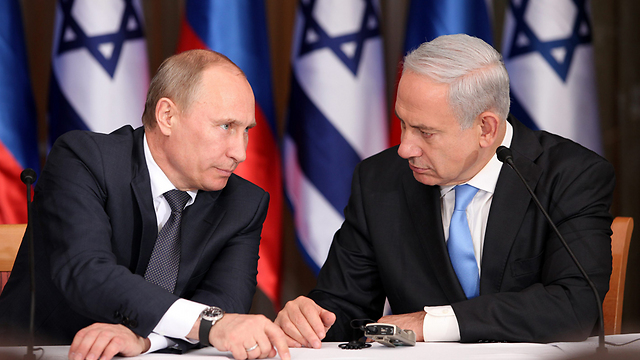
Russian President Vladimir Putin and Israeli Prime Minister Benjamin Netanyahu (Source: Ynetnews)

(version française)

There are lots of historic and major diplomatic announcements between Israel and Arab countries (UAE and Bahrain) these days, a development in which the United States are directly associated. In the last couple of years, we have observed the existence of another well-frequented diplomatic channel between Moscow and Jerusalem and I was very glad when acclaimed author Professor Mark Galeotti – author of an excellent biography of Vladimir Putin and more recently of A Short History of Russia – accepted to respond to a few questions about the subject a few weeks ago. Here is the content of our exchange.

Putin tends to respond well to tough interlocutors.

Do you think the election of pro-Russian Ariel Sharon as Prime Minister in 2001 played a role in President Putin’s stance about Israel?

I think it certainly helped in that Putin tends to respond well to tough interlocutors.

Israel is in many ways a Russian ally, despite some inevitable points of contention […].

Judging by the number of meetings between Prime Minister Netanyahu and President Putin (10 visits by Benjamin Netanyahu in Moscow since 2013 and 2 visits by Vladimir Putin in Israel since 2012), one could think that there is a notable rapprochement between Moscow and Jerusalem. How important is this relationship for the Russian president?

It’s important for both Putin and Russia. Israel is in many ways a Russian ally, despite some inevitable points of contention – when the IAF bombs Hezbollah positions in Syria, for example, the Russian air defense system there is not activated and clearly they have been forewarned. Likewise, Russia at times shares intelligence with Israel about Iran.

How important are the Middle East issues in Russian domestic politics? Is there a link between Russian domestic politics and President Putin’s relationship with Israel?

Honestly, it’s not really a factor – neither a plus, nor a minus.

Some observers are of the opinion that Israel is just a pawn on Russia’s chessboard. Could Russia become a key strategic ally of Israel in the near future?

That gives Israel too little credit. Yes, it has good relations with Russia (the first drones the Russians fielded were bought from Israel, for example), but it is not going to be anyone’s pawn.

Putin sends the signal that anti-Semitism is not acceptable.

You mention it briefly in your book (on page 75), when you mention that President Putin demonstrates “[…] no hint of anti-Semitism”, but could you tell us more about where he stands on the issue and what he does to confront this trend?

One can’t say that he has especially actively fought against it, but his evidently good relations with Israel and also the Chief Rabbi of Moscow are certainly powerful symbols to powerful and ambitious Russians that anti-Semitism is not acceptable.

Compared to the trend observable in other East European countries (like Poland for example), what is the current status of anti-Semitism in Russia?

It’s present, of course, but subjectively it feels in decline – in the 1990s one could often see anti-Semitic graffiti on the walls or slurs in the media, but both are much less evident today. In some ways an interesting development is that the extreme nationalists, from whom one might expect some prejudice, actually express respect for Israel in terms of its willingness to stand up for its own interests, with force if need be.

Apart from the President and the Prime Minister, who are the engineers of the relationship between the two countries? Is there any track II diplomacy involved in your opinion?

Pinchas Goldschmidt, the Chief Rabbi of Moscow, has been a very significant player in this respect – and, of course, there are many oligarchs and minigarchs of Jewish origins and often dual Russian-Israeli citizenship who act as connectors.

__________________

(version française)

Poutine et Israël

On assiste ces jours-ci à plusieurs annonces diplomatiques historiques et majeures entre Israël et des pays arabes (les Émirats arabes unis et le Bahreïn), un développement auquel les États-Unis sont directement associés. Dans les dernières années, nous avons observé l’existence d’un autre canal diplomatique très fréquenté entre Moscou et Jérusalem et j’étais très heureux que le Professeur Mark Galeotti – auteur réputé d’une excellente biographie de Vladimir Poutine et plus récemment du livre A Short History of Russia – accepte de répondre à quelques questions à ce sujet il y a quelques semaines. Voici le contenu de cet échange.

Poutine a tendance à bien réagir face à des interlocuteurs coriaces.

Pensez-vous que l’élection d’Ariel Sharon, qui était notoirement pro-russe, au poste de Premier ministre en 2001 a joué un rôle dans la position du président Poutine sur Israël?

Je pense que cela a certainement aidé, dans la mesure où Poutine a tendance à bien réagir face à des interlocuteurs coriaces.

Israël est, à bien des égards, un allié de la Russie, et ce, malgré certains points de frictions inévitables.

À en juger par le nombre de rencontres entre le Premier ministre Netanyahu et le président Poutine (10 visites de Benjamin Netanyahu à Moscou depuis 2013 et 2 visites de Vladimir Poutine en Israël depuis 2012), on pourrait penser qu’il y a un rapprochement notable entre Moscou et Jérusalem. Quelle est l’importance de cette relation pour le président russe?

C’est important pour Poutine et pour la Russie. Israël est, à bien des égards, un allié de la Russie, et ce, malgré certains points de frictions inévitables. Par exemple, lorsque l’IAF (les forces aériennes israéliennes) bombarde les positions du Hezbollah en Syrie, le système de défense aérienne russe n’est pas activé et les Russes ont clairement été prévenus. De même, la Russie partage parfois des renseignements avec Israël au sujet de l’Iran.

Quelle est l’importance des questions moyen-orientales dans la politique intérieure russe? Existe-t-il un lien entre la politique intérieure russe et les relations du président Poutine avec Israël?

Honnêtement, ce n’est pas vraiment un facteur – ce n’est ni un avantage, ni un inconvénient.

Certains observateurs estiment qu’Israël n’est qu’un pion sur l’échiquier russe. La Russie pourrait-elle devenir un allié stratégique clé d’Israël dans un avenir prochain?

Ce serait accorder trop peu de crédit à Israël. Oui, ce pays entretient de bonnes relations avec la Russie (les premiers drones russes qui sont entrés en fonction avaient été achetés en Israël, par exemple), mais Jérusalem ne deviendra le pion de personne.

Vous mentionnez brièvement, à la page 75 de votre livre, que le président Poutine ne manifeste « […] pas une once d’antisémitisme », mais pourriez-vous nous en dire davantage à propos de sa position sur le sujet et ce qu’il fait pour lutter contre ce fléau?

Poutine envoie le message que l’antisémitisme est inacceptable.

On ne peut pas dire qu’il l’a particulièrement activement combattu, mais ses relations manifestement bonnes avec Israël et avec le grand rabbin de Moscou sont certainement des symboles puissants pour les Russes influents et ambitieux à l’effet que l’antisémitisme est inacceptable.

Par rapport à la tendance observable dans d’autres pays d’Europe de l’Est (comme la Pologne par exemple), quel est l’état actuel de l’antisémitisme en Russie?

Le phénomène est présent, bien sûr, mais subjectivement, il semble en déclin – dans les années 1990, on pouvait souvent voir des graffitis antisémites sur les murs ou des insultes proférées dans les médias, mais les deux manifestations sont beaucoup moins évidentes aujourd’hui. À certains égards, une évolution intéressante est observable à l’effet que les nationalistes extrémistes, de qui on peut s’attendre à des préjugés, expriment en fait leur respect pour Israël, au niveau de sa volonté de défendre ses propres intérêts, avec force si nécessaire.

À part le président et le premier ministre, qui sont les architectes des relations entre les deux pays? À votre avis, y a-t-il une diplomatie parallèle à l’œuvre?

Pinchas Goldschmidt, le grand rabbin de Moscou, a été un acteur très important à cet égard – et, bien sûr, il existe de nombreux oligarques et minigarques d’origine juive et souvent détenteurs de la double nationalité russo-israélienne qui agissent comme entremetteurs.

Anti-Semitism ANZACS Australia Benjamin Netanyahu Canada Czech Republic France Gallipoli Histoire History Holocaust IDF Iran Iraq ISIS Israel Jerusalem Post Jewish Soldiers King and Country Mark Urban Middle East Military Military Expenditures Moshe Dayan NATO Poland Pope Francis Prince Harry Red Army Remembrance Revisionism Russia Saudi Arabia Terrorism The Edge Toy Soldiers Ukraine United States USSR US Troops Vladimir Putin World War I WW2 WWI WWII

De Gaulle, cet indocile

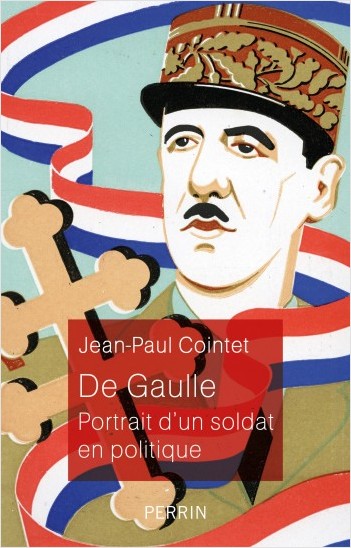
DeGaulleCointet2Winston Churchill a toujours occupé les premières loges de ma passion de l’histoire. Sa relation avec Charles de Gaulle m’a toujours fasciné, notamment en raison des nombreuses similitudes entre ces deux grands : impulsivité, génie, mélancolie passagère, éloquence, sens de l’histoire, caractère rebelle et j’en passe.
Mais De Gaulle ne serait pas devenu De Gaulle sans juin 1940 et, dans une certaine mesure, sans Churchill. Au moment de l’Appel du 18 juin, les deux hommes se distinguent pourtant par une feuille de route bien différente. Jean-Paul Cointet, dans son fascinant livre De Gaulle : Portrait d’un soldat en politique résume que lorsque le Général effectue ses premiers pas dans les arcanes de Whitehall, le Britannique et le Français cumulaient respectivement « […] trente-cinq ans d’expérience politique, de l’autre un tout récent sous-ministre. »

C’est dire à quel point De Gaulle a été contraint de se dépasser et de lutter pour assurer non seulement les intérêts de la France combattante, mais également les siens sur le plan personnel et ce, même si les deux peuvent facilement apparaître comme ayant été identiques, tellement le militaire français incarnait pratiquement à lui seul le mouvement dont il avait pris la tête.

Continue reading “De Gaulle, cet indocile”

Napoléon, le moine militaire

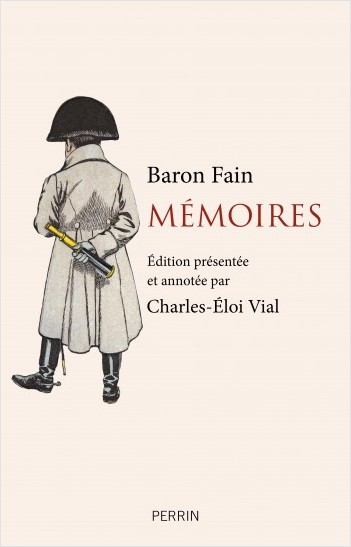
BaronFainMémoiresNapoléon fascine notamment par son génie militaire et l’empreinte qu’il a laissé dans l’histoire. Mais ce qui m’a toujours fasciné davantage, c’est l’homme et ses ressorts. Qu’est-ce qui le motivait, comment pensait-il et comment travaillait-il? Je piaffais donc d’impatience de plonger dans la récente édition des Mémoires du Baron Fain – qui fut l’un de ses plus proches collaborateurs – et qui viennent d’être éditées par l’historien et Napoléonologue Charles-Éloi Vial.
Dans un échange avec lui, l’auteur me précisait que Fain « fait partie de la « galaxie » napoléonienne, au même titre que Méneval, Duroc, Daru ou encore Bacler d’Albe ou Mounier. Ce sont les personnages qui se sont fait apprécier de l’Empereur pour leur ardeur au travail, leur efficacité et leur discrétion. Et comme Napoléon n’aime pas les nouvelles têtes, il les garde avec lui le plus longtemps possible. »

Outre l’admiration de Fain envers ce patron à qui il reconnaît des qualités de grande générosité, de méticulosité et de vaillance – l’expression « travailleur infatigable » revenant à quelques reprises – j’ai surtout été fasciné par les habitudes de lecture de celui que l’auteur compare à un « moine militaire » (j’adore l’expression), « gouvernant et administrant un empire immense du fond d’un cabinet secret, que cette retraite soit dérobée aux yeux par les lambris d’un palais ou par les rideaux d’une tente. » L’auteur l’évoque clairement et nous fait bien sentir au fil des pages que ce sanctuaire est l’endroit où Napoléon était le plus à l’aise pour travailler. Dans une dynamique régimentée dont les contours sont effectivement comparables à ceux de la vie monastique. Et c’est dans ce contexte qu’il l’a côtoyé.

Continue reading “Napoléon, le moine militaire”

A new Cold War with China seems inevitable

AdmiralJamesStavridis_UNDispatch
Retired four-star Navy Admiral and acclaimed author James Stavridis (Source: UN Dispatch)

(version française)

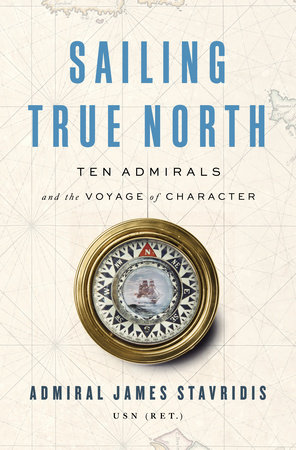
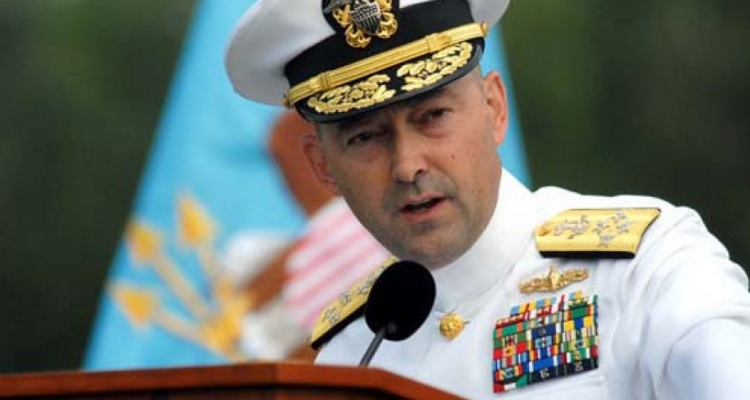
Retired Four-Star Admiral James Stavridis served as the 16th NATO Supreme Allied Commander – a function once occupied by the legendary General Dwight D. Eisenhower. In 2016, it was reported that he was vetted as a potential running mate for Democratic presidential candidate Hillary Clinton. He recently published an excellent book Sailing True North: Ten Admirals and the Voyage of Character which I recently had the privilege – and tremendous pleasure – to review here on this blog.

Having always been attached to the Fourth of July celebrations because of my deep admiration for the United States, it was my intention of publishing a special interview for the occasion. Admiral Stavridis generously accepted to answer my questions and I’m profoundly grateful.

There is absolutely no doubt in my mind that this book would be an excellent holiday read. Happy Fourth of July to all my American friends!

Here is the content of this insightful interview.

We are headed into a new Cold War with China. That seems inevitable now, but we need a strategy to avoid it turning into a shooting war. 

SailingTrueNorthIn Sailing True North, one of my favorite chapter (with the one devoted to Nelson) is the one about Zheng He. What do you think of the current tense situation with China and how do you think we should deal with that?
We are headed into a new Cold War with China. That seems inevitable now, but we need a strategy to avoid it turning into a shooting war. That will require a mix of diplomacy, military deterrence, tech savvy, economic tools (both in competition with China and in encouraging other nations to avoid Chinese “debt traps”). In essence, we should confront China where we must (cyber, trade, tariffs, their claims of “owning” the South China Sea) but cooperate where we can (environment, pandemics, arctic trade routes).  It will be a difficult and at times a dangerous passage. My next book, In Face, out in March 2021, is a novel about … a war with China! It is a cautionary tale, and let’s hope we don’t find it turning from fiction to fact before our eyes. Here’s a link to the Amazon page.

In the book, there are several references to religion, one to the Conclave, the other to John XXIII and Thomas Aquinas. I might be wrong, but I assume you are a Catholic and that faith seems to have had a significant impact on your journey. Am I wrong? Would you say that faith might also be an important buoy on the voyage of character?

I’m Greek Orthodox, and yes faith is vital for me personally – and for many others. Continue reading “A new Cold War with China seems inevitable”

Should We Fear Russia?

USSoldiersAfghanistan_Newsweek
US soldiers in Afghanistan (Source: Newsweek)

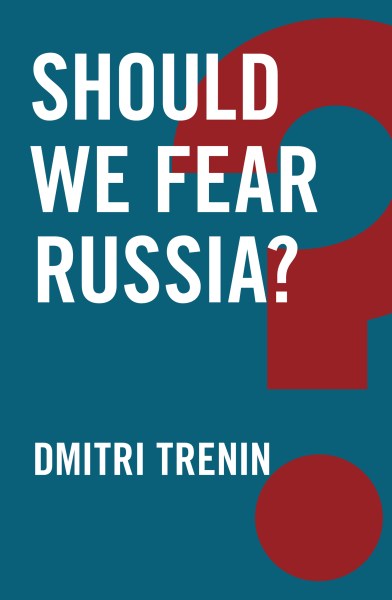
“Russia has no serious reason to fear the West », writes Dmitri Trenin – Director of the Carnegie Moscow Center – in his insightful book Should We Fear Russia? But President Vladimir Putin is not shy to “punch above his weight” and “always testing and pushing one’s boundaries” to ensure that Russia’s place at the table of great powers is respected.

ShouldWeFearRussiaAs I read these words, the New York Times revealed last Sunday that “United States intelligence officers and Special Operations forces in Afghanistan alerted their superiors as early as January to a suspected Russian plot to pay bounties to the Taliban to kill American troops in Afghanistan.

Then, another quote from Dr. Trenin came to mind: “Forcing his way to the high table, and making others deal with him out of necessity if not of choice, has become Vladimir Putin’s diplomatic trademark in his relations with US leaders.”

There is always a murky zone around special ops and covert operations, which always offer “plausible deniability” for operations like what allegedly happened in Afghanistan. Conventional wisdom would suggest that targeting soldiers for assassination does not appear like a good way to make and keep friends. But Moscow might get away with murder, since “for all its military superiority that it has been using elsewhere quite liberally, the United States lacks serious military options vis-à-vis Russia.” In other words, Vladimir Putin can continue pushing his luck with impunity.

Continue reading “Should We Fear Russia?”