Behind the scenes in the Sit Room

From Pearl Harbor to the neutralization of Osama bin Laden, every US President is confronted with crises. Any one of them also needs to manage relations with foreign leaders. Hence, a need for an organized mechanism and apparatus to navigate the traffic and make sure that POTUS can take the pulse of the world at a moment’s notice. This is made possible thanks to a vital institution, whose history is brilliantly recounted by former Clinton administration official and ABC host George Stephanopoulos in The Situation Room: The Inside Story of Presidents in Crisis (Grand Central).

Before its establishment, Presidents monitored world events on an ad hoc basis. For any military history enthusiast, the depiction of Franklin D. Roosevelt’s wheelchair being pushed in a former billiard room to consult maps pinned on the walls to monitor developments unfolding during World War II is captivating. Like so many other things, John F. Kennedy would be an innovator by creating the Situation Room in light of the 1961 Bay of Pigs disaster. Every one of his successors would rely on this evolving institution to accompany the United States’ presence on the world scene.

The most important takeaway from the book relates to the notion of the “three Ps”. The Situation Room is: 1) a place where information is gathered, processed, analyzed and decided upon; 2) it regroups people who serve the Presidency in a selfless and non-partisan way and; 3) a process revealing how every commander in chief manages the affairs of the world.

Continue reading “Behind the scenes in the Sit Room”

Netanyahu Was Right

I had the privilege of meeting Israeli Prime Minister Benjamin Netanyahu years ago. During our discussion, he stressed the fact that it was crucial to support Israel because it is the first line of defense of the West and its values. As a commando soldier, diplomat and statesman, this man has accumulated a vast experience fighting extremism in its most brutal forms.

I was therefore not surprised to learn that he was the first world leader to make a congratulatory call to President Donald Trump, after the Americans liberated the world of the nefarious presence of Qasem Soleimani, the Iranian warlord in charge of the Revolutionary Guards who was a combination of “James Bond, Erwin Rommel, and Lady Gaga rolled into one” for his supporters.

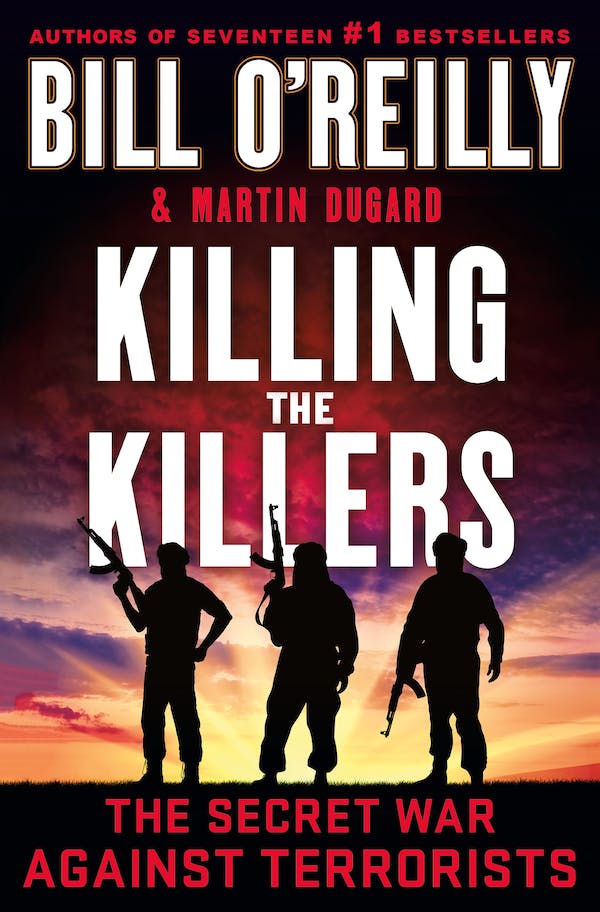
That information is revealed in Killing the Killers: The Secret War Against Terrorism (St. Martin’s Press) by veteran journalist Bill O’Reilly and acclaimed author Martin Dugard, whose books I reviewed on this blog.

Continue reading “Netanyahu Was Right”

« Vladimir Poutine n’est pas un ennemi mortel pour l’Occident » – Entrevue exclusive avec Antoine Mariotti

Antoine Mariotti (source: France 24)

À la suite de ma recension de son livre La Honte de l’Occident – un exposé qui fait réfléchir, de par les nombreuses révélations qu’il contient et qui permettant de mieux comprendre l’état actuel de la politique internationale le journaliste de France 24 Antoine Mariotti a aimablement accepté de répondre à quelques questions pour ce blogue. C’est un livre qui se dévore avec une bonne tasse de thé, sous la plume d’un auteur de talent dont on souhaite qu’il nous offre d’autres plaisirs littéraires. Voici donc le contenu de notre échange.

_____________

Monsieur Mariotti, l’un des aspects qui m’a le plus marqué dans La Honte de l’Occident est à l’effet que Moscou et Téhéran pourraient devenir des rivaux à moyen et long terme. Pourriez-vous nous en dire davantage à propos des sujets et intérêts sur les récifs desquels cette relation pourrait se détériorer?

Ce sont les deux parrains du pouvoir syrien. Ils ont endossé ce rôle parce qu’ils estiment qu’ils ont aussi à y gagner. Il va être intéressant de voir le partage des marchés économiques… certains auraient été promis aux deux. Par ailleurs, sur un sujet comme Israël (voisin de la Syrie), les positions russe et iraniennes sont radicalement opposées. Moscou est allié au pouvoir israélien alors que Téhéran est son ennemi juré. Tsahal intervient militairement régulièrement en Syrie contre des intérêts iraniens et avec le feu vert, actif ou passif, de la Russie qui gère une grande partie de l’espace aérien syrien.

Poursuivre la lecture

Barack Obama a pavé la voie à Vladimir Poutine en Crimée

20 août 2012. Derrière le podium de la salle de presse de la Maison Blanche, le président Barack Obama met en garde le régime syrien de Bachar el-Assad de ne pas franchir la ligne rouge que représente l’utilisation d’armes chimiques. Une admonestation dont le président syrien fera fi un an plus tard. On s’attend alors à ce que les Américains entre dans la danse et utilisent leur puissance militaire pour mettre le dirigeant récalcitrant au pas. Il n’en sera rien. Obama tergiverse. L’osmose fait défaut entre lui et son administration sur le dossier syrien. Traumatisé stratégiquement par les péripéties martiales de son prédécesseur, le patron « ne veut pas se retrouver dans la même situation que celle de George W. Bush en Irak […]. »

Devant lui, les Russes et leur président Vladimir Poutine veillent au grain. Pas question de se faire damer le pion pour le maître du Kremlin. Et pourquoi pas tirer avantage de la situation? À ce jeu, il est redoutable, surtout devant la faiblesse des Occidentaux qui peinent à articuler une position solide. Difficile de poser les jalons du changement de régime à Damas, puisque l’opposition est tout autant tétanisée par l’exil que par les divisions.

Diplomatiquement, d’abord, Moscou sauvera la face des Américains en annonçant le « désarmement chimique de son allié syrien ». Le repli décidé dans le Bureau Ovaleaura ensuite des répercussions majeures sur le plan militaire.

Poursuivre la lecture

Countdown bin Laden

Twenty years ago this morning, our hearts crumbled simultaneously with New York’s Twin Towers. Osama bin Laden orchestrated an attack that would scar the face of the Earth and change history forever. After the heartless attacks that left 2977 people dead and countless families grieving, it was inevitable that the terrorist leader would be brought to face justice.

In his new book, Fox News Sunday anchor Chris Wallace offers the gripping story of this historic manhunt and the commendable sacrifices made by those who planned and executed it over a period of 9 months.

In the same manner he wrote his authoritative Countdown 1945, the renowned journalist (with Mitch Weiss) details the nitty-gritty of what will certainly be remembered as one of the most famous and consequential special operation in the history of warfare in Countdown bin Laden: The Untold Story of the 247-Day Hunt to Bring the Mastermind of 9/11 to Justice. Tremendous sacrifices were consented by these intelligence officials who sacrificed their family lives. SEAL Team 6 operators faced their own mortality as they were ordered to descend in the Devil’s Den at the Abbottabad compound where bin Laden had taken refuge between 2005 and May 1st, 2011.

More than the military aspects of the mission to bring back OBL dead or alive, what impressed me most in this book was the decision-making process of the operation. It is easy to associate the warlord tag to President George W. Bush for his decision to launch a war against Al Qaida in Afghanistan and Saddam Hussein in Iraq. His successor, Barack Obama, appears as a more dovish character, at least in the public’s perception.

Continue reading “Countdown bin Laden”

Pragmatism will determine Naftali Bennett’s premiership

Israeli Prime Minister Naftali Bennett (source: The New York Times)

Last year, I had the tremendous privilege of obtaining an exclusive interview with former Israeli Prime Minister Ehud Olmert. Despite a busy schedule, he accepted in the last couple of days to answer a few questions about the designation of Naftali Bennett as 13th Prime Minister of the country. I always appreciate his straightforward style.

Here is therefore the content of our exchange.

Mr. Olmert, what are your personal impressions of Prime Minister Bennett? Do you know him personally and what are your first impressions upon his designation?

I am very happy that Naftali Bennett was sworn in as Prime Minister. I know him, of course, and I think that he is a worthy person. Obviously, he doesn’t have a longtime experience considering his short time in national politics. But how experienced was President Obama when he was elected President?

Continue reading “Pragmatism will determine Naftali Bennett’s premiership”

Joe Biden sera aussi ferme que Trump par rapport à la Chine

Le journaliste et sinologue François Bougon (source: Asialyst).

Je recensais, en décembre dernier, le très pertinent livre du journaliste et sinologue François Bougon, Hong Kong, l’insoumise (Tallandier). Dans la foulée de cette publication, l’auteur a accepté de répondre à quelques questions sur ce sujet chaud de l’actualité internationale, notamment suite à l’arrivée du président Joe Biden aux commandes et au niveau des développements entourant les relations entre la nouvelle équipe en place à Washington et le gouvernement de Pékin.

Dans le dossier de la rétrocession de Hong Kong à la Chine, l’empressement britannique a poussé Deng Xiaoping a adopter une position dure.

M. Bougon, sous votre plume, la première ministre britannique Margaret Thatcher apparaît comme étant chancelante, mal à l’aise. On semble être à des lustres de la « Dame de fer ». Selon vous, quelle est le bilan global de sa gestion du dossier de la rétrocession de Hong Kong? Aurait-elle pu agir autrement?

Les Britanniques ont été pris à leur propre piège en mettant sur la table la question de l’avenir de Hong Kong à la sortie du maoïsme, alors que les Chinois ne la considéraient pas comme prioritaire.

Il existait différentes opinions à cette époque au sein des élites du Royaume-Uni. Certains étaient partisans de tenter le tout pour le tout afin de maintenir la présence dans l’une des dernières colonies britanniques. D’autres étaient plutôt partisans de se retirer pour se consacrer pleinement aux affaires européennes et aussi pour satisfaire les revendications de Pékin. Margaret Thatcher a dû trancher entre ces différents avis, consultant même des personnalités chinoises de Hong Kong proches à la fois du parti conservateur et des autorités communistes. Lors de sa première visite à Pékin, elle pensait pouvoir adopter une ligne de fermeté, mais elle a dû faire face à un « homme de fer » sur la question de la souveraineté chinoise, Deng Xiaoping.

lire la suite

Biden cares about people other politicians would ignore

Evan Osnos besides a picture of his excellent biography of President Joe Biden (source: The Aspen Institute).

(version française)

Few days before the US presidential election of November 3rd, I reviewed the biography of then-Democratic presidential candidate Joe Biden by acclaimed author and journalist Evan Osnos.

Those of you who watched CNN during the last couple of weeks have certainly seen him, since he notably commented the inauguration of the 46th President.

Despite a hectic schedule, Mr. Osnos kindly accepted to answer a few exclusive questions for this blog. I’m very happy to share this insightful interview which sheds light on the personality of the new resident of the White House.

Here is the content of our exchange.

I was amazed to see that President Biden installed a bust of President Harry S. Truman in the Oval Office. How does this former President inspire him? 

Biden has fond memories of Truman because of his grandfather’s political influence on him. He recalls visiting his “Grandpop” Ambrose Finnegan, in Scranton, and all the Irishmen in the neighborhood were blue-collar “Truman Democrats.” “That’s the thing they liked about Harry Truman: no artifice,” Biden wrote in his first memoir. “He knew where he stood, and he wasn’t afraid to say it.”

Continue reading “Biden cares about people other politicians would ignore”

President-elect Joe Biden and the Return of Empathy

Like millions of people around the world, I’m impatient to see the results of Tuesday’s US presidential elections. Full disclosure, I ardently root for a Joe Biden victory. Not because I’m a traditional Democrat supporter (I am not, I canvassed in New Hampshire for my favorite contemporary president George W. Bush and I attended the 2004 and 2008 Republican National Conventions), but because of my profound lack of affinities for his opponent.

If you’re a Trump supporter, you can stop right here (and I suspect you will), because you won’t like the rest of this review.

When I read Bob Woodward’s latest book, Rage, a few weeks ago, I was struck by the following passage from one of his discussions with the current president of the United States:

“When’s the last time you apologized?”, asked Woodward. “Oh, I don’t know, but I think over a period – I would apologize. Here’s the thing: I’m never wrong.”

To me, that exchange encapsulates the Trump problem. Like kings of the Middle Ages, he thinks he can do no wrong. And he believes he can do or say whatever he wants, to hell with the consequences.

You don’t expect a head of state or government to be perfect. You want him or her to abide by certain standards but also to be human – like the rest of us. In this day and age, that’s precisely Joe Biden’s main quality in this race.

I was therefore curious to read Evan Osnos’ Joe Biden: The Life, The Run, and What Matters Now, to see what more could I learn about the man who might be on his way to march on Pennsylvania street after his inauguration on January 20th, 2021. I did not seek a policy book. I wanted a full-rounded portrait of a man seeking the highest office in the US, detailing his qualities and shortcomings. By all means, the author did not disappoint. An avid reader, Biden is known for his loyalty and being humble, as well as being arrogant and sometimes sloppy. He’s human!

Evan Osnos writes that he is such a tactile politician that “When Biden and Obama worked a rope line, Biden sometimes took so long that aides had to restart the soundtrack.” Or when “Leon Panetta recalled listening to Biden work the phone at the White House: “You didn’t know whether he was talking to a world leader or the head of the political party in Delaware.””

In a nutshell, Biden is the kind of guy you’d like to sip a caramel macchiato with on a Saturday morning.

Thanks to the author, I learnt that Joe Biden – contrary to some political accusations – is not part of the establishment. He was, incidentally, “[…] among the least prosperous members of the United States Senate” and he planned to take a second mortgage to pay for his son’s cancer treatments (who passed away later). President Obama offered to help him financially, but his vice-president never came back to ask for it.

Biden suffered in his life. A lot. And one of his strongest traits (in my humble opinion) is that he is not afraid to share his humanity. A few days before Christmas 1972, he lost his first wife and daughter in a car accident. He went through serious health issues. The most touching part of the book for me is when the author writes about “Brayden Harrington, a thirteen-year-old from New Hampshire, [that] gave credit to Biden for telling him that they belonged to “the same club – we stutter.””

America is in a state of turmoil. Americans are suffering. Greatly. This mood won’t disappear at the touch of a magic wand nor at the turn of a blind eye. If he is elected this week, Joe Biden will probably never rank among the transformational presidents such as FDR, LBJ or Reagan. But he can be a gifted and consequential transitional one like Harry S. Truman or George H. W. Bush. The grandfather who looks like he’s just out of the gym (I borrow this formula from the author) would bring a healthy dose of much-needed humanity, sincerity, modesty, decency and, dare I say, sometimes vulnerability in the White House.

This electoral cycle, I suspect many people are voting against Donald Trump and not necessarily for Joe Biden. For those unfamiliar with who Joe Biden’s character, Evan Osnos opens a window on the personality of an attaching man whose challenges will be of Himalayan proportions depending on Tuesday’s electoral results.

Joe Biden most certainly won’t be able to transform US politics in a heartbeat, but at least Americans will have a good man at the helm of the ship of state.

Let us now hope that Evan Osnos will put his exceptional talents as a biographer at our service in writing about another political or historical figure in the near future. In his book about Joe Biden, he mentions the Democratic contender has read one of the tomes about LBJ by Robert A. Caro. Having myself tremendously enjoyed this four-volumes biography of JFK’s successor, I find Osnos talents to be comparable to those of the iconic writer.

__________

Evan Osnos, Joe Biden: The Life, The Run, and What Matters Now, New York, Scribner, 2020, 192 pages.

I would like to express my heartfelt gratitude to the always helpful Athena Reekers of Simon & Schuster Canada for providing me with a copy of this book.

The importance of “Soft Power”

GeorgeHWBush_ChinaFile
President George H. W. Bush on Tiananman Square in Beijing (China), February 25, 1989 (Source: ChinaFile)

Cliquez ici pour la version française

Few years ago, I was captivated by Professor Joseph S. Nye Jr.’s book Soft Power: The Means to Success in World Politics. I recently approached the former Dean of the Harvard’s Kennedy School of Government and former Clinton administration official to submit him a few questions. He generously accepted to respond. Here is the content of our exchange.

You are the father of the term soft power. Just to make sure all my readers understand well, what would be the best short definition of this concept and why is it so important in international relations?

Power is the ability to affect others to get the outcomes you want and it is basic to international relations analysis.  You can affect others by coercion, payment, and attraction. Soft power is the ability to get what you want by attraction rather than coercion or payment.

Continue reading “The importance of “Soft Power””