Jens Stoltenberg and the “Trump Effect”

Prima facie, the relationship between President Donald Trump and NATO is delicate. The role of Secretary General of the organization is anything but a sinecure. Yet the relationship between the resident of Avenue Louise in Brussels and the occupant of 1600 Pennsylvania Avenue in Washington stands out for its closeness. In Le Figaro, the astute journalist Florentin Collomp even wrote that Mark Rutte “is probably the only European capable of influencing the will of the President of the United States.” And as Collomp notes, it was following a meeting with NATO’s Secretary General at the Davos Forum that Donald Trump announced his dramatic reversals on Greenland and tariffs. Personal relationships are clearly crucial in international relations—especially with the US President. We could even say any US President.


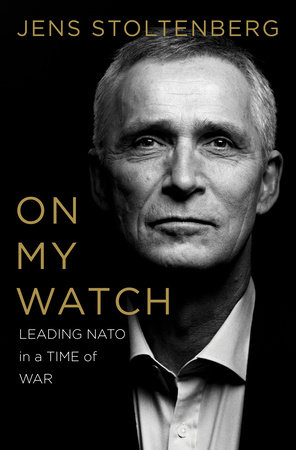
This may come as a surprise to some, yet the closeness between the American statesman and the captain of the NATO ship fits within a clear continuum. In his memoirs, Jens Stoltenberg—former Norwegian Labour Prime Minister and current Finance Minister—describes a relationship that, exhausting as it may have been, proved beneficial. Stoltenberg, who accepted the post at Barack Obama’s invitation and had his term renewed under both Donald Trump and Joe Biden, candidly admits in his memoir, On My Watch: Leading NATO in a Time of War (Norton) to having adopted a strongly critical stance toward the United States in his youth. He also confesses to underestimating the chances of victory of the real estate mogul. Jens Stoltenberg is certainly no MAGA sympathizer—but his assessment is unambiguous: “When Donald Trump’s first term as President came to an end, NATO was stronger than it had been when he took office.” Intriguing, isn’t it?
Continue reading “Jens Stoltenberg and the “Trump Effect””

Le réalisme de Donald Trump

Je suis plongé depuis quelques jours dans la biographie de Turenne, ce grand capitaine qui figurait parmi les figures héroïques qui ont inspiré Napoléon, par Arnaud Blin. L’auteur y expose que la formation de son sujet a coïncidé « avec l’apogée du « siècle de fer », période allant du milieu du XVIe siècle à la seconde moitié du XVIIe siècle », une époque faste dans l’histoire de la polémologie. Observant, dans une lecture collée sur l’actualité, le glissement du monde vers ce qu’il qualifie de « logiques impériales », Dominique de Villepin écrit, dans son dernier ouvrage Le Pouvoir de dire non, que « nous sommes entrés dans un nouvel âge de fer ». Quatre siècles séparent la vie de Turenne du parcours de l’ancien premier ministre français, mais la compréhension de la géopolitique qui tient les rênes de la gouvernance du monde n’a rien perdu de son importance — de sa nécessité.

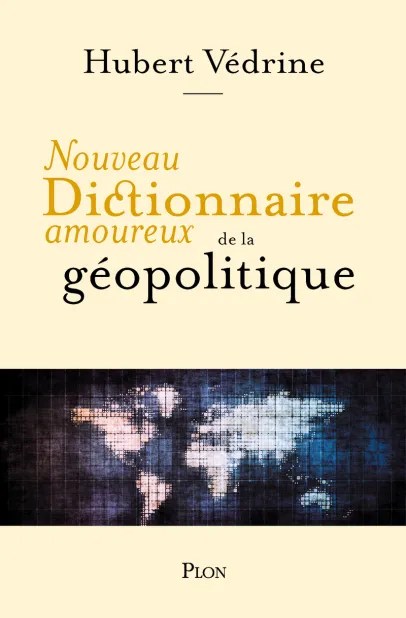
Les rayons des librairies sont bien garnis de toutes ces couvertures qui affichent le mot géopolitique. Dans le contexte actuel, c’est à la fois pertinent et vendeur. Étant moi-même féru du sujet, j’y succombe volontiers. L’un des meilleurs titres qu’il m’a été donné de dévorer récemment est le Nouveau dictionnaire amoureux de la géopolitique (Plon), d’Hubert Védrine, qui fut aux premières loges de la vie internationale auprès du président François Mitterrand — en tant que proche conseiller — puis de Jacques Chirac, comme ministre des Affaires étrangères durant la cohabitation avec Lionel Jospin.

poursuivre la lecture

La Chine, cette nouvelle thalassocratie

Sillonnant les points chauds de la planète et déjouant les complots ourdis par des puissances maléfiques jusque dans l’espace, Tintin est sans doute le plus illustre géopoliticien du XXᵉ siècle — et sa légende n’est pas près de s’estomper. Les circonstances actuelles aidant, sa pertinence ne fait que se confirmer. Prenons simplement Le Lotus bleu. Le jeune reporter y suit la trace d’un réseau international de trafiquants d’armes et d’opium déjà mis au jour dans Les Cigares du Pharaon. Le cinquième album d’Hergé se déroule ainsi dans une Chine écartelée entre les grandes puissances de l’époque — la Grande-Bretagne, la France, les États-Unis et le Japon — qui imposent au pays une diplomatie de la canonnière destinée à asseoir leurs intérêts économiques et politiques.

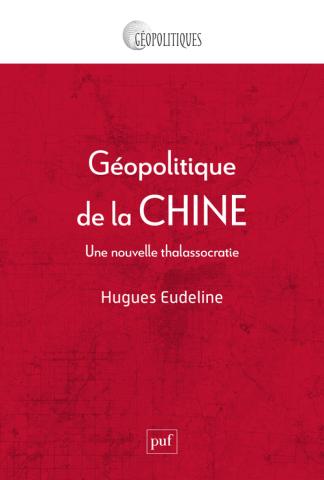
Dans son brillant ouvrage Géopolitique de la Chine : Une nouvelle thalassocratie (PUF), le spécialiste de géopolitique maritime et militaire Hugues Eudeline rappelle que « faute d’avoir pu disposer d’une force militaire et navale moderne, l’empire du Milieu a été contraint de faire des concessions et a subi une humiliation dont la mémoire se transmet de génération en génération. » L’auteur détaille comment la Chine a navigué « pas à pas » vers son positionnement actuel de compétitrice à la domination des États-Unis, ces « héritiers historiques de la Grande-Bretagne », en tant que puissance maritime.

poursuivre la lecture

Xi et Poutine dans le temps long

Dans une tribune publiée ces derniers jours, le politologue américain Seth G. Jones soulignait que la trajectoire des relations entre la Russie et la Chine apparaît avec une clarté renouvelée, marquée par un rapprochement soutenu dans les domaines politique, militaire et économique. Cette complicité entre Xi Jinping et Vladimir Poutine contribue à redessiner, sous nos yeux, les contours d’un nouvel équilibre géopolitique. Par sa nature, sa portée et le contexte dans lequel elle s’inscrit, cette dynamique mérite toute notre attention.

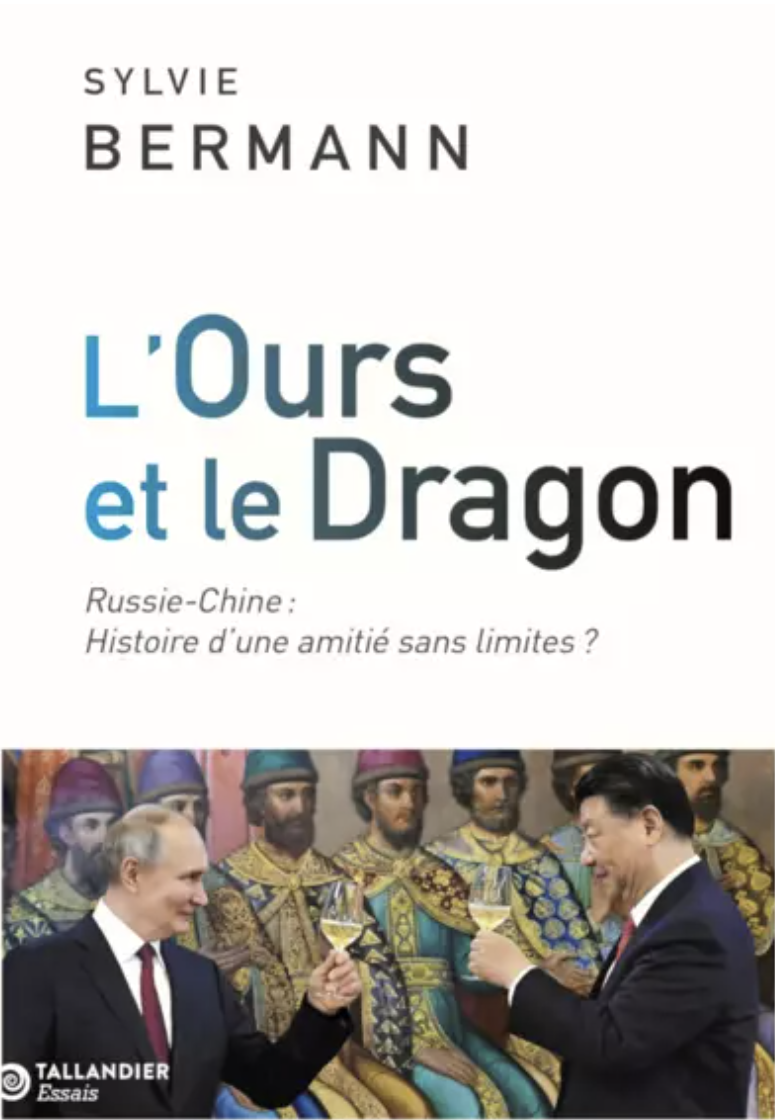
L’ancienne ambassadrice de France à Pékin et à Moscou, Sylvie Bermann, se penche sur cette proximité dans L’Ours et le Dragon : Chine-Russie : Histoire d’une amitié sans limites ? (Tallandier). Elle y brosse un portrait éclairant de la relation de la Chine avec les grandes puissances et de son ascension progressive dans ce cercle restreint. Car avant de se poser en compétitrice des États-Unis, Pékin a longtemps été ballottée au gré des intérêts des puissances dominantes des époques successives. À cet égard — et ce n’est pas le moindre des mérites de l’ouvrage — l’auteure convoque Hergé qui, dans Le Lotus bleu, plonge Tintin au cœur des événements entourant l’invasion japonaise du sud de la Mandchourie en 1931. Comme quoi le jeune journaliste francophone figurera toujours parmi les grandes figures géopolitiques du XXᵉ siècle.

poursuivre la lecture

L’histoire comme arme géopolitique

Lors d’une récente discussion, un ancien haut-gradé des Forces armées canadiennes me faisait prendre conscience à quel point la géopolitique nous affecte. Quotidiennement. Par exemple, au niveau des chaînes d’approvisionnement, lesquelles dépendent largement du transport maritime. Quand on sait que la principale route commerciale est celle qui relie la Chine à l’Europe par le canal de Suez, il y a tout lieu de s’intéresser de beaucoup plus près à ce qui se passe en mer de Chine. Mais comme c’est moins visible et criant que le bruit de bottes qui se font entendre actuellement aux frontières de l’Ukraine ou de l’exaspération découlant des négociations corsées avec l’Iran, on y prête moins attention.

C’est justement cet aspect inaudible des relations internationales que l’historien et spécialiste en géopolitique Thomas Gomart s’emploie à illustrer dans son dernier livre, Guerres invisibles : Nos prochains défis géopolitiques (Tallandier) dont je viens de terminer la passionnante lecture.

Poursuivre la lecture

The Peasant Emperor

A few years ago, media outlets reported that Chinese President Xi Jinping dined on steamed buns in a Beijing restaurant. Whether this venue was an orchestrated photo opportunity or the instantaneous desire of a world leader searching for a whiff of normalcy in the sometime claustrophobic alleys of power doesn’t really matter. Its true purpose was revelatory of who Xi is; a leader who is and wants to be close to the people.

I was reminded of that outing while reading Kerry Brown’s book The World According to Xi: Everything You Need to Know About the New China (I.B. Tauris), a pertinent and still timely book (2018) on the actual leader of the second most important economy on the planet.

“Of the recent leaders of China since Deng [Xiaoping], in many ways Xi is the one with the most authentic, best-known links to the countryside, and his use of this set of experiences aims to convey this.” Furthermore, and probably because he was a victim of the Cultural Revolution himself, Xi had to make no less than 10 attempts to become a member of the Party. In a nutshell, the General Secretary of the Party didn’t get an easy pass to power. And I’m certain this resonates with many ordinary people.

Continue reading “The Peasant Emperor”

Xi Jinping: micro-manager

Deng Xiaoping (left) and Xi Jinping (right). (sources: Wikipedia and CNN)

I have always been fascinated with anything related to Deng Xiaoping. It is thus not surprising that an article from the Journal of Contemporary China caught my attention a few days ago.

In the scope of a few pages, the late Ezra Vogel compares the stewardship of Deng to the one of the current leader of China, Xi Jinping. The Harvard University academic, who passed away a few days before last Christmas, was also the acclaimed biographer of Deng, who was at the helm of the People’s Republic of China between 1978 and 1989.

Xiaoping, in the author’s words, established “[…] the foundations for the most successful four decades in China’s history”. He rose to power at the age of 74, cumulating decades of experience, notably collaborating with Zhou Enlai and 13 years spent in the inner sanctum of power. This enviable track record prepared him well for supreme responsibility. Well versed in the discipline of power and most probably surrounded by people who were well acquainted with his methods and thinking, Deng could afford to be a macro-manager. To that end, the following anecdote told by Ezra Vogel is illuminating:

Continue reading “Xi Jinping: micro-manager”

“Henry Kissinger is still listened to in China” – Exclusive interview with Prof. Kerry Brown

Dr. Kerry Brown, Director of the Lau China Institute and Professor of Chinese Studies (source: China Daily).

After the publication of my recent review of his insightful book about the history of China (Polity Books), Professor Kerry Brown kindly accepted to answer my questions about the relationship between the United States and China – an extremely timely subject. Without further introduction, here is the content of our exchange.

Chinese still admire some aspects of the western world, but not, anymore, its political figures.

On page 71 of your compelling book, you write that President Nixon was impressed “[…] witnessing Zhou Enlai redo the front page of the People’s Daily.” I often ask myself if any figure has a comparable influence in Xi Jinping’s entourage?

I imagine the figures from the outside world that most impress Chinese leaders today are more our business or technology leaders than our political ones. The excitement of new acquaintance from the Nixon era has long gone. Now, figures like Warren Buffett probably arouse more interest in China, or Bill Gates. I guess this is simply a sign that Chinese still admire some aspects of the western world, but not, anymore, its political figures.

I think we deceive ourselves if we do think individuals can magically find a way around the issue of the relationship between China and the US.

In the case where there would be no such influential figure, do you think it would help, notably in the relations with the US, and why?

Henry Kissinger is still listened to in China, and indeed, till recently, went there. I don’t know however whether intermediary figures are of much help now. This is not an issue of individual people being able to sort this out – the disagreements between China and the US are structurally too deep. There are maybe groups of people who might, over time, help – academics, perhaps, in trying to at least maintain some middle space. But I think we deceive ourselves if we do think individuals can magically find a way around this issue.

Continue reading ““Henry Kissinger is still listened to in China” – Exclusive interview with Prof. Kerry Brown”

How Deng Xiaoping shaped China

“Ideology doesn’t attract Chinese people – Marxism-Leninism barely registers with them”, writes Professor Kerry Brown in his succinct excellent new book whose title is soberly China (Polity Books). That notion comes as a surprise to anyone following international politics and assuming that communism is the glue of the régime. But the key to understand the rising superpower can rather be found in two other aspects. First, nationalism, which is frequently evoked between the covers.

And pragmatism. The author, who is also Director of the Lau China Institute at King’s College London, credits Deng Xiaoping with ensuring the rise of his country on the world scene. “It was the less dramatic Deng who finally found a balance, trying to work with the world, gain from relations internationally, but always with an eye to China’s benefit.”

Those who assume that those who work at Zhongnanhai (the seat of Chinese power in the Forbidden City) are just a bunch of ideologues should think twice. Of course, the ruling party still advances under the red banner, but its strategists have a cunning vision of history. Hence, the shift from being simply concerned with influence on land to developing capacities to also emerge as a sea power.

While Mao Zedong is pictured as a vengeful and petty figure who encouraged open criticism to expose his enemies, Deng Xiaoping emerges as a more balanced personality and the real power broker behind the current positioning of China. The future leader of the country survived Maoist’s purges because of his “administrative abilities”. Along the way, he was also “[…] one of the many who had noticed that for all the rhetoric of Maoism, something was amiss.” His approach would not be about big speeches and slogans, but concrete actions.

Continue reading “How Deng Xiaoping shaped China”

Joe Biden sera aussi ferme que Trump par rapport à la Chine

Le journaliste et sinologue François Bougon (source: Asialyst).

Je recensais, en décembre dernier, le très pertinent livre du journaliste et sinologue François Bougon, Hong Kong, l’insoumise (Tallandier). Dans la foulée de cette publication, l’auteur a accepté de répondre à quelques questions sur ce sujet chaud de l’actualité internationale, notamment suite à l’arrivée du président Joe Biden aux commandes et au niveau des développements entourant les relations entre la nouvelle équipe en place à Washington et le gouvernement de Pékin.

Dans le dossier de la rétrocession de Hong Kong à la Chine, l’empressement britannique a poussé Deng Xiaoping a adopter une position dure.

M. Bougon, sous votre plume, la première ministre britannique Margaret Thatcher apparaît comme étant chancelante, mal à l’aise. On semble être à des lustres de la « Dame de fer ». Selon vous, quelle est le bilan global de sa gestion du dossier de la rétrocession de Hong Kong? Aurait-elle pu agir autrement?

Les Britanniques ont été pris à leur propre piège en mettant sur la table la question de l’avenir de Hong Kong à la sortie du maoïsme, alors que les Chinois ne la considéraient pas comme prioritaire.

Il existait différentes opinions à cette époque au sein des élites du Royaume-Uni. Certains étaient partisans de tenter le tout pour le tout afin de maintenir la présence dans l’une des dernières colonies britanniques. D’autres étaient plutôt partisans de se retirer pour se consacrer pleinement aux affaires européennes et aussi pour satisfaire les revendications de Pékin. Margaret Thatcher a dû trancher entre ces différents avis, consultant même des personnalités chinoises de Hong Kong proches à la fois du parti conservateur et des autorités communistes. Lors de sa première visite à Pékin, elle pensait pouvoir adopter une ligne de fermeté, mais elle a dû faire face à un « homme de fer » sur la question de la souveraineté chinoise, Deng Xiaoping.

lire la suite