Netanyahu Was Right

I had the privilege of meeting Israeli Prime Minister Benjamin Netanyahu years ago. During our discussion, he stressed the fact that it was crucial to support Israel because it is the first line of defense of the West and its values. As a commando soldier, diplomat and statesman, this man has accumulated a vast experience fighting extremism in its most brutal forms.

I was therefore not surprised to learn that he was the first world leader to make a congratulatory call to President Donald Trump, after the Americans liberated the world of the nefarious presence of Qasem Soleimani, the Iranian warlord in charge of the Revolutionary Guards who was a combination of “James Bond, Erwin Rommel, and Lady Gaga rolled into one” for his supporters.

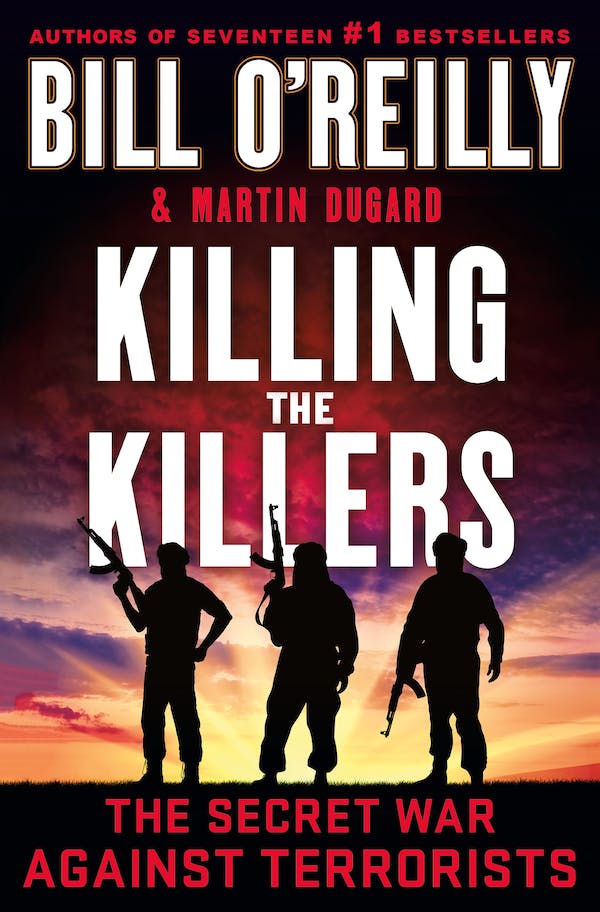
That information is revealed in Killing the Killers: The Secret War Against Terrorism (St. Martin’s Press) by veteran journalist Bill O’Reilly and acclaimed author Martin Dugard, whose books I reviewed on this blog.

Continue reading “Netanyahu Was Right”

Planet Strongman

In his 2020 bestseller Rage, Washington legendary journalist and author Bob Woodward recalls discussing the direction of the Trump administration’s foreign policy with the President. Mentioning his dealings with Turkish President Recep Tayyip Erdogan regarding the war in Syria, the commander-in-chief said: “I get along very well with Erdogan, even though you’re not supposed to because everyone says ‘What a horrible guy’. But for me it works out good. It’s funny the relationships I have, the tougher and meaner they are, the better I get along with them. You know?”

In his captivating recent book The Age of the Strongman (Other Press), Financial Times foreign affairs commentator Gideon Rachman quotes former National Security Affairs specialist Fiona Hill when she declared that her former boss was seduced by “autocrat envy”. From Jair Bolsonaro (in Brazil) to Vladimir Putin, as well as Saudi Crown Prince Mohammed bin Salman (MBS), the 45th President got along quite well with those whom he perceived as being strong, an expression easily interchangeable with being autocratic. This trend was confirmed early last month when Hungarian Prime Minister Viktor Orbán took the stage at the Conservative Political Action Committee (CPAC) gathering in Dallas, Texas.

Continue reading “Planet Strongman”

Pour Kissinger, le désordre est le mal absolu

À 99 ans, son esprit et sa plume demeurent toujours aussi aiguisés. Henry Kissinger distille son expertise aguerrie des relations internationales et, malgré les controverses suscitées comme lorsqu’il conseillait que l’Ukraine devienne « […] un État-tampon entre la Russie et l’Union européenne », ses lumières sont toujours aussi éclairantes parce qu’elles sont dénuées de l’émotion chevillée au corps de la « tyrannie de l’instant ».

Henry Kissinger m’accompagne intellectuellement depuis mes années universitaires, alors que je me plongeais dans son livre-phare Diplomatie et que je partais à la recherche de sa dernière tribune. Nous n’avions pas accès aux banques de données à cette époque. L’exercice n’était donc pas aussi simple et rapide qu’aujourd’hui. Il ne cesse depuis de me fasciner et je prête toujours une oreille très attentive à ses propos.

J’étais donc extrêmement heureux de plonger le nez dans la biographie que lui a récemment consacré le diplomate français Gérard Araud. Henry Kissinger : le diplomate du siècle (Éditions Tallandier) propose un tour d’horizon solide de la vie, de la pensée et de l’oeuvre du grand homme. Alors que l’Holocauste frappe son Allemagne natale, l’adolescent juif de 15 ans arrive avec sa famille aux États-Unis en août 1938. C’est le début d’un parcours exceptionnel qui verra le jeune académique s’épanouir dans les cercles du pouvoir américain après la Seconde Guerre mondiale.

poursuivre la lecture

The financier who exposed Vladimir Putin

Six years ago this week, Turkish President Recep Tayyip Erdogan survived a coup launched by a faction of the Armed Forces. The statesman mobilized his supporters, enjoining them to resist the coup, by using the FaceTime app on his iPhone. At the time, I was impressed by the powerful impact of such a small tool in creating such a momentous outcome.

I was reminded of that story while reading Bill Browder’s book Freezing Order: A True Story of Money Laundering, Murder and Surviving Vladimir Putin’s Wrath (Simon & Schuster), not only because of the cruciality of knowing how to use the modern tools of communications, but also because there is a huge price to pay when you confront an autocrat.

Bill Browder can attest to that.

The author of Freezing Order is an American-born financier (now living in the UK) and founder of Hermitage Capital Management who has been active in Russia between 1996 and 2008. In June 2008, one of his lawyers, “[…] Sergei Magnitsky, discovered that […] criminals had used our stolen companies and their fake claims to apply for a fraudulent $230 million tax refund.” That’s where the roller coaster ride that is this book begins.

Continue reading “The financier who exposed Vladimir Putin”

Barack Obama a pavé la voie à Vladimir Poutine en Crimée

20 août 2012. Derrière le podium de la salle de presse de la Maison Blanche, le président Barack Obama met en garde le régime syrien de Bachar el-Assad de ne pas franchir la ligne rouge que représente l’utilisation d’armes chimiques. Une admonestation dont le président syrien fera fi un an plus tard. On s’attend alors à ce que les Américains entre dans la danse et utilisent leur puissance militaire pour mettre le dirigeant récalcitrant au pas. Il n’en sera rien. Obama tergiverse. L’osmose fait défaut entre lui et son administration sur le dossier syrien. Traumatisé stratégiquement par les péripéties martiales de son prédécesseur, le patron « ne veut pas se retrouver dans la même situation que celle de George W. Bush en Irak […]. »

Devant lui, les Russes et leur président Vladimir Poutine veillent au grain. Pas question de se faire damer le pion pour le maître du Kremlin. Et pourquoi pas tirer avantage de la situation? À ce jeu, il est redoutable, surtout devant la faiblesse des Occidentaux qui peinent à articuler une position solide. Difficile de poser les jalons du changement de régime à Damas, puisque l’opposition est tout autant tétanisée par l’exil que par les divisions.

Diplomatiquement, d’abord, Moscou sauvera la face des Américains en annonçant le « désarmement chimique de son allié syrien ». Le repli décidé dans le Bureau Ovaleaura ensuite des répercussions majeures sur le plan militaire.

Poursuivre la lecture

Vladimir Putin, campaign manager

A few years ago, I was captivated by Peter Schweizer’s book Reagan’s War: The Epic Story of His Forty-Year Struggle and Final Triumph Over Communism. That fascinating book detailed how the 40th President of the United States used the economic weaknesses of the USSR to bring it on its knees, notably with the help of the Saudis regarding the oil price and the military build-up with which Moscow could not compete with Washington.

Turns out that, while the USSR crumbled, a young KGB lieutenant colonel named Vladimir Putin took good note.  In a recent interview with a former Soviet official, my interlocutor spoke to me about the Russian President’s love of judo – his favorite sport – and the transposition of its techniques in politics. The master of the Kremlin’s dealings in world affairs is a good illustration of his abilities to take advantage of his opponents’ weight to knock them down.

Nowhere is this ability more evident than in the pages of British journalist Luke Harding’s book Shadow State: Murder, Mayhem, and Russia’s Remaking of the West (Harper). In a real page-turner, the author details how the Russian government and its entities are influencing the West’s political life. For example, using Novichok as a calling card in attempting to neutralize Sergei Skripal, a former Russian intelligence officer who betrayed the GRU (The Main Directorate of the General Staff of the Armed Forces of the Russian Federation). Or shabby dealings using banks allegedly to bail out influential people – allegedly like former US President Donald Trump. Moscow is determined to go to any lengths “[…] to return to a nineteenth-century model of great-power politics and to disrupt the ideals-based international order established after the Second World War […].”

Continue reading “Vladimir Putin, campaign manager”

Joe Biden sera aussi ferme que Trump par rapport à la Chine

Le journaliste et sinologue François Bougon (source: Asialyst).

Je recensais, en décembre dernier, le très pertinent livre du journaliste et sinologue François Bougon, Hong Kong, l’insoumise (Tallandier). Dans la foulée de cette publication, l’auteur a accepté de répondre à quelques questions sur ce sujet chaud de l’actualité internationale, notamment suite à l’arrivée du président Joe Biden aux commandes et au niveau des développements entourant les relations entre la nouvelle équipe en place à Washington et le gouvernement de Pékin.

Dans le dossier de la rétrocession de Hong Kong à la Chine, l’empressement britannique a poussé Deng Xiaoping a adopter une position dure.

M. Bougon, sous votre plume, la première ministre britannique Margaret Thatcher apparaît comme étant chancelante, mal à l’aise. On semble être à des lustres de la « Dame de fer ». Selon vous, quelle est le bilan global de sa gestion du dossier de la rétrocession de Hong Kong? Aurait-elle pu agir autrement?

Les Britanniques ont été pris à leur propre piège en mettant sur la table la question de l’avenir de Hong Kong à la sortie du maoïsme, alors que les Chinois ne la considéraient pas comme prioritaire.

Il existait différentes opinions à cette époque au sein des élites du Royaume-Uni. Certains étaient partisans de tenter le tout pour le tout afin de maintenir la présence dans l’une des dernières colonies britanniques. D’autres étaient plutôt partisans de se retirer pour se consacrer pleinement aux affaires européennes et aussi pour satisfaire les revendications de Pékin. Margaret Thatcher a dû trancher entre ces différents avis, consultant même des personnalités chinoises de Hong Kong proches à la fois du parti conservateur et des autorités communistes. Lors de sa première visite à Pékin, elle pensait pouvoir adopter une ligne de fermeté, mais elle a dû faire face à un « homme de fer » sur la question de la souveraineté chinoise, Deng Xiaoping.

lire la suite

President-elect Joe Biden and the Return of Empathy

Like millions of people around the world, I’m impatient to see the results of Tuesday’s US presidential elections. Full disclosure, I ardently root for a Joe Biden victory. Not because I’m a traditional Democrat supporter (I am not, I canvassed in New Hampshire for my favorite contemporary president George W. Bush and I attended the 2004 and 2008 Republican National Conventions), but because of my profound lack of affinities for his opponent.

If you’re a Trump supporter, you can stop right here (and I suspect you will), because you won’t like the rest of this review.

When I read Bob Woodward’s latest book, Rage, a few weeks ago, I was struck by the following passage from one of his discussions with the current president of the United States:

“When’s the last time you apologized?”, asked Woodward. “Oh, I don’t know, but I think over a period – I would apologize. Here’s the thing: I’m never wrong.”

To me, that exchange encapsulates the Trump problem. Like kings of the Middle Ages, he thinks he can do no wrong. And he believes he can do or say whatever he wants, to hell with the consequences.

You don’t expect a head of state or government to be perfect. You want him or her to abide by certain standards but also to be human – like the rest of us. In this day and age, that’s precisely Joe Biden’s main quality in this race.

I was therefore curious to read Evan Osnos’ Joe Biden: The Life, The Run, and What Matters Now, to see what more could I learn about the man who might be on his way to march on Pennsylvania street after his inauguration on January 20th, 2021. I did not seek a policy book. I wanted a full-rounded portrait of a man seeking the highest office in the US, detailing his qualities and shortcomings. By all means, the author did not disappoint. An avid reader, Biden is known for his loyalty and being humble, as well as being arrogant and sometimes sloppy. He’s human!

Evan Osnos writes that he is such a tactile politician that “When Biden and Obama worked a rope line, Biden sometimes took so long that aides had to restart the soundtrack.” Or when “Leon Panetta recalled listening to Biden work the phone at the White House: “You didn’t know whether he was talking to a world leader or the head of the political party in Delaware.””

In a nutshell, Biden is the kind of guy you’d like to sip a caramel macchiato with on a Saturday morning.

Thanks to the author, I learnt that Joe Biden – contrary to some political accusations – is not part of the establishment. He was, incidentally, “[…] among the least prosperous members of the United States Senate” and he planned to take a second mortgage to pay for his son’s cancer treatments (who passed away later). President Obama offered to help him financially, but his vice-president never came back to ask for it.

Biden suffered in his life. A lot. And one of his strongest traits (in my humble opinion) is that he is not afraid to share his humanity. A few days before Christmas 1972, he lost his first wife and daughter in a car accident. He went through serious health issues. The most touching part of the book for me is when the author writes about “Brayden Harrington, a thirteen-year-old from New Hampshire, [that] gave credit to Biden for telling him that they belonged to “the same club – we stutter.””

America is in a state of turmoil. Americans are suffering. Greatly. This mood won’t disappear at the touch of a magic wand nor at the turn of a blind eye. If he is elected this week, Joe Biden will probably never rank among the transformational presidents such as FDR, LBJ or Reagan. But he can be a gifted and consequential transitional one like Harry S. Truman or George H. W. Bush. The grandfather who looks like he’s just out of the gym (I borrow this formula from the author) would bring a healthy dose of much-needed humanity, sincerity, modesty, decency and, dare I say, sometimes vulnerability in the White House.

This electoral cycle, I suspect many people are voting against Donald Trump and not necessarily for Joe Biden. For those unfamiliar with who Joe Biden’s character, Evan Osnos opens a window on the personality of an attaching man whose challenges will be of Himalayan proportions depending on Tuesday’s electoral results.

Joe Biden most certainly won’t be able to transform US politics in a heartbeat, but at least Americans will have a good man at the helm of the ship of state.

Let us now hope that Evan Osnos will put his exceptional talents as a biographer at our service in writing about another political or historical figure in the near future. In his book about Joe Biden, he mentions the Democratic contender has read one of the tomes about LBJ by Robert A. Caro. Having myself tremendously enjoyed this four-volumes biography of JFK’s successor, I find Osnos talents to be comparable to those of the iconic writer.

__________

Evan Osnos, Joe Biden: The Life, The Run, and What Matters Now, New York, Scribner, 2020, 192 pages.

I would like to express my heartfelt gratitude to the always helpful Athena Reekers of Simon & Schuster Canada for providing me with a copy of this book.

The sources of Russian conduct

Russian President Boris Yeltsin and US President Bill Clinton (Source: The Telegraph)

Russia is fascinating, Russia is dangerous. It is nevertheless important to question ourselves as to the sources of its current pugilistic conduct. Was it predestined by its history, its political DNA or could this reality have been avoided by a more efficient engagement in the past?

Professor Sergey Rudchenko’s recent article “Nothing but humiliation for Russia’: Moscow and NATO’s eastern enlargement, 1993-1995”, published in the last issue of the Journal of Strategic Studies, offers many answers.

The Cardiff University Professor argues that in the immediate aftermath of the Cold War, the “adversarial relationship [between Washington and Moscow] was replaced with the idea of a partnership between Russia and the West but would that partnership carry enough weight to satisfy the Russian elites’ pretensions to global importance? The proof was in the pudding, and the baker was in Washington.”

In a nutshell, Russia wanted to be seated “[…] at the head of the table, right next to America’s” But Washington “[…] did not need Russia’s help in running the world, neither during the Cold War, nor, especially, in its aftermath.” After all, “[…] the world was a jungle, where the mightiest had the power of persuasion and no one listened to the counsel of the weak.”

Fast forward, Vladimir Putin has learnt that lesson and applies it in the implementation of his vision of international relations.

But let’s go back to Boris Yeltsin and Bill Clinton. There were talks about Moscow joining NATO, but no one in the West was much interested in that prospect, even though American officials dangled the possibility as bait. During that period, the embers of war inflamed former Yugoslavia and the world witnessed a vicious and murderous civil war begin in 1991. President Yeltsin “tried to make Bosnia a showcase of Russian-American cooperation.” But Washington was not interested, and Russia was “left on the sidelines”, the pride associated to her self-declared status humiliated. Much the same happened when Moscow sought to collaborate in the negotiations with North Korea’s nuclear program.  

In a word, Moscow was not to be seated at the head of the table with Washington.

But by embracing enlargement without finding an appropriate role for Russia, the same [Western] policy makers overlooked the possibility that it might actually contribute to the latter’s nationalistic resurgence or, indeed, externally legitimize it. This is exactly what happened.

Pr. Sergey Radchenko

At that stage, one can sympathize with Russia’s frustration and feeling of abandonment.

Since nature abhors vacuum, “Russia’s own ontological security as a part of the West depended in large part on whether it was being recognized as such. If it wasn’t – that, too, was legitimating, because it helped the Russian political elites find their ground in an uncertain world, if not as friends, then at least as adversaries of the West.”

Professor Radchenko brings some nuances to that point of view, when he writes that “[…] one can of course lament Russia’s exclusion from Europe as a deliberate act of policy but it is hard to deny that such exclusion was partly justifiable in view of Russia’s own policies [like, for example, the war in Chechnya] […].”

Russia sought “legitimation through an adversarial relationship”, while the United States refused to offer “[…] enough leeway for legitimation through a genuine and inclusive partnership.” The seeds of confrontation had been planted by efficient gardeners. “It is hard to blame the White House”, writes the author. “They were the realists. But by being too realistic and not sufficiently idealistic at a time when they could have made a difference, they helped make Russia’s imperialist resurgence a self-fulfilling prophecy.”

As a student of history, I would bet that a discreet apparatchik named Vladimir Putin took careful notes and vowed not to fall into the idealist trap if his time came. And it came.

Russia certainly is not faultless in the current international context. But one can wonder what could have happened if the Clinton administration had adopted a different posture. In the land of “what ifs”, anything is possible, and I am not fond of revisionism. But one can easily assume that humiliating someone is never a good insurance policy for future good relations.

You can’t change the past, but there is always hope for the future. Russia is not immune to good relations with the United States. Vladimir Putin was the first international leader to call and offer assistance to President George W. Bush after the horrendous terrorist attacks on 9/11 and he was among the first ones to wish a speedy recovery to Donald Trump after news broke that the US President had tested positive to Covid-19.

Jesus Christ and General Jackson

In just a few hours, veteran news anchor Chris Wallace will moderate the first presidential debate between Donald Trump and Joe Biden, an exercise that will shine a bright light on the character of these individuals vying to occupy the Oval Office starting next January 20th.

As a seasoned journalist, Chris Wallace has a unique perspective of those who are called to occupy the seats of power. He has recently put this quality to good use in offering a better understanding of Harry S. Truman, one of the most consequential President in American history.

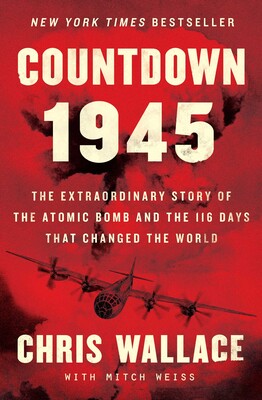
In Countdown 1945: The Extraordinary Story of the Atomic Bomb and the 116 Days That Changed the World, the anchor of Fox News Sunday surprised me with his portrait of Truman. I had always been under the impression that the 33rd President was a trigger-happy man who was only too pleased to bomb America’s nemesis in the Pacific. The reality is much more nuanced.

On April 12, 1945, President Roosevelt’s Veep left behind the bourbon and branch water drink he was enjoying on Capitol Hill to reach the White House urgently. Notoriously sick, the news of the death of the United States Commander in chief nevertheless sent shock waves throughout the country and the world. Clearly unprepared, Truman was de facto constitutionally called to replace the beloved leader.

Approximately two weeks after becoming the new White House resident, Secretary of War Henry Stimson broke the news to President Truman that he was about to possess a new superweapon, the atomic bomb, which could play a determining role in the end of the hostilities with Japan. Only two months after being sworn in, Truman travelled to Potsdam for a summit with seasoned leaders Churchill and Stalin. His education as a warlord must have been quite brutal.

Confronted with a seemingly war with no end, the President juggled many different scenarios over several weeks. At first, he considered a ground invasion, a scenario that entailed “[…] a long and bloody conflict.” Another option was “[…] a nonmilitary demonstration [of their new weapon], so the Japanese would see the futility of continuing the war.” But the possibility that the bomb might not work disqualified that option. Furthermore, Secretary of War Stimson, Chief of Staff Leahy, General Marshall and General Eisenhower were all against going for the atomic avenue. And they were no peaceniks. According to the author, “Truman spent more and more time on the question of how to deliver a final ultimatum to Japan”. After several weeks of “long and careful thought”, of agonizing, losing sleep and suffering from headaches, the new President “[…] felt it was inescapable that if the weapon worked, he must be willing to use it.” Even if he didn’t like it.

Even though I will always feel that the bombings of Hiroshima and Nagasaki have been one of the greatest human tragedies of history, I am nevertheless of the opinion that the Americans were blessed to have a thoughtful and considerate man like Harry S. Truman to end the war.

Throughout his book, Chris Wallace depicts him as a decent, loyal and straightforward man whose favorite expression was “Jesus Christ and General Jackson!” (I might adopt it myself!). The kind of person you would like to have breakfast with at your favorite eatery. To that effect, my favorite passage from the book is worth quoting at length:

One evening, after another frustrating day at the conference, Truman’s motorcade was leaving the palace when an Army public relations officer asked if he could get in the president’s car. Once the two men were by themselves in the backseat, the colonel said, “Listen, I know you’re alone over here. If you need anything like, you know, I’ll be glad to arrange it for you.”

“Hold it, don’t say anything more,” the president interrupted. “I love my wife, my wife is my sweetheart. I don’t want to do that kind of stuff. I don’t want you ever to say that again to me.” Truman and the colonel rode the rest of the way back to the Little White House in silence.

Chockfull of interesting details that entertain the reader, I was captivated to read about the creation of the Underwater Demolition Teams – the ancestors of the American Navy SEALs – who had to endure “Hell Week”. I also enjoyed learning about Sergeant Bob Caron – a tail gunner from New York – who wrote to the Brooklyn Dodgers to ask for a baseball cap of his favorite team, which he wore during the fateful mission on August 7th, 1945. These are the type of eccentricities that give life to history.

Countdown 1945 deserves a place in the gallery of great books about past US Presidents. Chris Wallace has an engaging pen and a knack for evoking the kind of details that humanizes the characters of his story – even though I would never be fond of being invited to a liver and bacon meal like the one Truman and Stalin liked so much to share at Potsdam.

Hopefully, Chris Wallace’s questions and interventions in tonight’s presidential debate will highlight the qualities required for the highest office in the United States.

___________

Chris Wallace (with Mitch Weiss), Countdown 1945: The Extraordinary Story of the Atomic Bomb and the 116 Days That Changed the World, New York, Avid Reader Press, 2020, 313 pages.

I would like to express my sincere gratitude to Allie Lawrence from Avid Reader Press (Simon & Schuster), who has been extremely kind in helping me obtaining a copy of this enthralling book.