Joe Biden: Leader of the Free World

“To every man there comes in his lifetime that special moment when he is figuratively tapped on the shoulder and offered a chance to do a very special thing, unique to him and fitted to his talents,” declared Winston Churchill. For many, that hour comes early. For some, like the heroic British Prime Minister, it comes later. For others, like US President Joe Biden, it comes even later in life.

As we commemorate today the tragic first anniversary of the murderous onslaught launched by Vladimir Putin against Ukraine, it seems fitting to write about one of the best political biographies I have read in a long time. The Fight of His Life: Inside Joe Biden’s White House (Scribner) is required reading for anyone seeking to understand the character of the 46th President of the United States.

In the summer of 2017, the events surrounding the extreme-right manifestations in the streets of Charlottesville convinced former Vice President Biden that Donald Trump “was giving evil a safe harbour”, thus contributing to the Democratic politician’s decision to run. The combat for 2020 was between good and evil. And no one was better equipped than Joe Biden to lead it.

Continue reading “Joe Biden: Leader of the Free World”

“Putin is clearly trying to ignite a larger conflict” – Martin Dugard

Author Martin Dugard (source: MartinDugard.com)

After the publication of my review of his excellent book Taking Paris: The Epic Battle for the City of Lights (Caliber), Martin Dugard kindly accepted to answer some questions for this blog. I feel privileged for the interview with an excellent and engaging author, who is also the coauthor of Bill O’Reilly’s Killing Series.

Here is the content of our exchange.

____________

Mr. Dugard, where did the idea of writing Taking Paris originate from?

The book actually started as Taking Rome but as the research expanded it became obvious that the story of Rome worked more nicely as a small section in the larger context of the 1940 fall of Paris and 1944 liberation.

Continue reading ““Putin is clearly trying to ignite a larger conflict” – Martin Dugard”

« La guerre d’Ukraine a contribué à une détérioration des relations sino-américaines » – Jean-Pierre Cabestan

Les présidents chinois, Xi Jinping, et des États-Unis, Joe Biden (source Al Jazeera)

________

Je publie aujourd’hui la deuxième partie de l’excellente entrevue que j’ai récemment réalisée avec le sinologue et auteur réputé Jean-Pierre Cabestan.

Professeur, à la page 132 de votre livre Demain la Chine : guerre ou paix?, vous écrivez : « La mauvaise nouvelle est que même si les États-Unis remportent la bataille du blocus [contre Taiwan], ils ne sont pas certains de gagner la guerre : Taiwan est plus proche de la République populaire que du continent américain et Pékin est probablement plus résolu que Washington à arriver à ses fins. » Observez-vous une baisse de détermination chez les élites américaines par rapport à Taiwan?

Non pas pour l’instant, et pas du tout dans un avenir prévisible. Cette considération porte sur le long terme et surtout dans le contexte postérieur à une tentative chinoise de prise de contrôle de Taiwan par des moyens militaires. Le rapport des forces actuels dans le Pacifique occidental contraint déjà les États-Unis de recourir à des moyens asymétriques pour espérer contrer toute opération de l’APL (Armée populaire de libération).

poursuivre la lecture

« Nous avons été trop mous avec Poutine »

Le président ukrainien Volodymyr Zelensky (source: New York Post)

Les événements tragiques qui se déroulent en Ukraine depuis jeudi dernier me ramènent à la lecture du livre La honte de l’Occident, à l’intérieur duquel le journaliste Antoine Mariotti relate les tribulations diplomatico-militaires par lesquelles l’Occident a littéralement laissé le champ libre à Vladimir Poutine en Syrie. C’était il y a moins de 10 ans. Je ne peux m’empêcher d’identifier dans cet ouvrage la matrice du mode opératoire du Kremlin lorsqu’il décide que le temps est venu de faire déferler sa force militaire sur un sol étranger.

Je me suis donc entretenu avec M. Mariotti et j’ai recueilli ses observations relativement à la situation actuelle dans ce pays où Moscou veut imposer par les armes un second Holodomor (terme désignant la grande famine causée en Ukraine en 1932-1933 par Staline).

Voici le contenu de notre échange.

M. Mariotti, avez-vous été étonné de l’invasion de l’Ukraine par la Russie?

Pour être honnête, oui parce que j’avais « parié » qu’il n’irait pas. Je pensais que Poutine pousserait le bouchon aussi loin que possible pour mettre une pression diplomatique, politique et même militaire… mais je ne pensais pas qu’il s’engagerait dans une offensive si massive en Ukraine, pas en dehors du Donbass. Ce n’est toutefois pas une surprise et ce n’était pas impensable, comme ont pu le titrer certains médias, parce que cela fait des mois que l’on sait que le risque existe et plusieurs semaines que les États-Unis avertissaient qu’il allait envahir. Mais je pensais qu’avec cette pression, il ne lancerait pas une telle offensive.

poursuivre la lecture

“Overall, 2021 has been a difficult year for the Biden team” – Admiral James Stavridis

Admiral James Stavridis USN (Ret.) (source: US Naval Institute)

Before the Holidays, Admiral James Stavridis USN (Ret.), one of my favorite authors, granted me an end of year interview about issues related to his amazing novel 2034 about a war between China and the United States. These geopolitical issues are unlikely to disappear from the radar in the coming months and years. The Admiral’s insights are therefore not only very informative, but also crucial to grasp the state of the world.

Admiral Stavridis, I’ve read and reviewed 2034: A Novel of the Next World War (Penguin Random House) with tremendous interest. Before we head into more serious stuff, a question burns my tongue. Since there are lots of mention of the delicious M&Ms throughout the novel, I was wondering if you are a fan of that candy yourself and if that’s the reason why it is mentioned in the book?

While I am not personally a fan of M&M candies, I have known many sea-going naval officers who are. I liked the idea of Lin Bao [one of the main characters of 2034] enjoying an American candy, essentially a nod to the duality of his upbringing.

Continue reading ““Overall, 2021 has been a difficult year for the Biden team” – Admiral James Stavridis”

President Bush gave Afghans a taste of freedom

After the publication of my review of his enthralling and inspiring book Special Forces Interpreter, I had the privilege of being in touch Eddie Idrees. He agreed to answer a few questions and I am extremely grateful and happy to publish the content of this exchange today, as we commemorate Remembrance Day. I am sure you will appreciate this content as much as I liked conducting the interview.

President Biden’s decision to withdraw from Afghanistan was a betrayal.

Mr. Idrees, how did you feel about the Biden administration’s decision to withdraw all US troops from Afghanistan last summer?

In short, it was a betrayal. President Biden’s decision to withdraw from Afghanistan, was not only a betrayal to me and millions of other Afghans, but to the Americans, the families who lost loved ones, to the Canadians who lost their lives in Kandahar or the Brits in Helmand. It was a betrayal of the cause. I felt like Biden allowed a terrorist network to win and gave psychological victory to the rest of the terrorist networks in the West and the Middle East. I have so much to say, but this was a historic betrayal of American values.

Continue reading “President Bush gave Afghans a taste of freedom”

“Good strategy might just be staying out of trouble” – Exclusive interview with Sir Lawrence Freedman

Sir Lawrence Freedman (credit: Boston Consulting Group)

Sir Lawrence Freedman is not only an internationally acclaimed author, but he is also the dean of British strategic studies and Emeritus Professor of War Studies at King’s College London. I have a boundless admiration for this institution and I hope to enlist in the near future to the online Master’s Degree in War Studies it offers.

Sir Lawrence generously accepted to answer a few questions for this blog and I am extremely grateful for that. Here is the content of our exchange.

Russia is a constant challenge because it feels itself at threat from the West and has taken a tough stance that creates an edginess.

My point was then that the withdrawal from Afghanistan, chaotic though it was, was unfortunately expected and the lesson (not to put substantial ground forces into a civil war) had been learned a decade earlier. Russia is a constant challenge because it feels itself at threat from the West and has taken a tough stance that creates an edginess, especially as it plays a disruptive role in European affairs. It poses a challenge that is serious but should be manageable as its underlying position if weak. China has been getting stronger for the past three decades year on year, although that growth may be stuttering now. It has turned itself into a great power, militarily as well as economically, and under Xi has taken a much more assertive stance on a whole range of issues. I believe this stance will turn out to be counter-productive, but it creates a risky and dynamic situation which could spark a wider confrontation (see answer to next question).

Continue reading ““Good strategy might just be staying out of trouble” – Exclusive interview with Sir Lawrence Freedman”

Les Occidentaux ont poussé la Russie dans les bras de la Chine – Entrevue exclusive avec Vladimir Fédorovski, ancien conseiller de Mikhaïl Gorbatchev

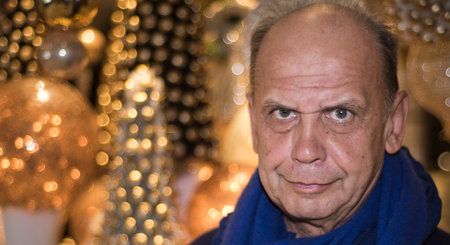
Vladimir Fédorovski (source: Le Temps)

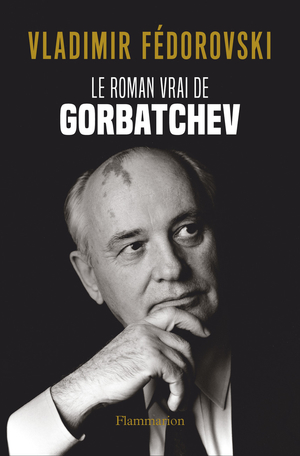
Je suis un grand amateur des livres de Vladimir Fédorovski. Par sa plume agréable et inspirée, cet auteur prolifique et ancien conseiller de Mikhaïl Gorbatchev fait pénétrer ses lectrices et ses lecteurs dans l’âme de l’histoire politique de la Russie. C’est d’ailleurs avec énormément de plaisir que j’ai lu et recensé l’éclairante biographie qu’il a récemment consacrée au dernier président de l’URSS – Le Roman vrai de Gorbatchev, publié chez Flammarion il y a quelques mois. Je m’attaquerai bientôt à sa biographie de Staline. Pour l’heure, voici le contenu de l’entretien téléphonique qu’il m’a accordé le 28 septembre dernier.

Monsieur Fédorovski, bonjour et merci infiniment de m’accorder un entretien. Je vous remercie pour votre œuvre et c’est toujours un très agréable plaisir de vous lire. Sans plus tarder, quelle est votre lecture des relations actuelles entre l’Occident et la Russie?

Il y a une affinité extraordinaire entre l’Occident et la Russie. Je n’accepte pas cette bêtise qu’est la diabolisation. Nous vivons dans un climat pire que celui de la Guerre froide. Sous la dictature du politiquement correct, les médias mentent et croient en leurs mensonges. Parce que nous avons besoin d’un adversaire. C’est inculte. Comme l’affirmait l’ancien ministre français des affaires étrangères, Hubert Védrine, c’est une fatigue intellectuelle. Par rapport à Vladimir Poutine, mon approche est gaullienne. Les chefs d’État comme Vladimir Poutine et Justin Trudeau passeront. Les intérêts nationaux et la paix, de leur côté, demeureront.

Continue reading “Les Occidentaux ont poussé la Russie dans les bras de la Chine – Entrevue exclusive avec Vladimir Fédorovski, ancien conseiller de Mikhaïl Gorbatchev”

« Je suis un mauvais tsar; un bon tsar, c’est celui qui tue » – Mikhaïl Gorbatchev

19 août 1991. Il y a trente ans aujourd’hui. Je me souviens de cette journée comme si c’était hier. Fan de Mikhaïl Gorbatchev, malgré mon jeune âge et les admonestations de mon père qui ne voulait pas me voir devenir communiste, j’apprends au bulletin de nouvelles qu’un putsch est ourdi en URSS. Les chars d’assaut ont fait déambuler leurs chenilles dans Moscou et tout peut arriver. Mon héros (avec Reagan et Thatcher) est assigné à résidence dans sa demeure estivale en Crimée. Rien ne va plus dans mon univers. Je resterai rivé aux bulletins de nouvelles, téléphonant – à peu près à toutes les heures – à la salle de rédaction de mon quotidien local pour m’enquérir de l’évolution de la situation.

Gorbatchev m’a toujours fasciné. Et en ces jours où des corollaires sont inévitablement établis entre le retrait américain d’Afghanistan ordonné par le président Joe Biden et celui effectué par l’Armée rouge entre mai 1988 et février 1989 sous la gouverne de « Gorby », le dernier livre de Vladimir Fédorovski permet de mieux comprendre ce personnage adulé en Occident, mais clivant (c’est le moins que l’on puisse dire) chez lui.

Pour tout dire, Le Roman vrai de Gorbatchev (Flammarion) brosse un portrait tout en nuance d’un politicien d’exception. Avant d’endosser les habits du réformateur, le futur chef d’État devait grimper au mât de cocagne de la politique soviétique, ce qu’il sut faire avec brio en annotant avec flatterie les projets de discours de Brejnev ou en dégustant poisson et gâteau au fromage sous la véranda avec le chef du KGB – et futur numéro un soviétique – le redoutable Iouri Andropov.

Continue reading “« Je suis un mauvais tsar; un bon tsar, c’est celui qui tue » – Mikhaïl Gorbatchev”

“Henry Kissinger is still listened to in China” – Exclusive interview with Prof. Kerry Brown

Dr. Kerry Brown, Director of the Lau China Institute and Professor of Chinese Studies (source: China Daily).

After the publication of my recent review of his insightful book about the history of China (Polity Books), Professor Kerry Brown kindly accepted to answer my questions about the relationship between the United States and China – an extremely timely subject. Without further introduction, here is the content of our exchange.

Chinese still admire some aspects of the western world, but not, anymore, its political figures.

On page 71 of your compelling book, you write that President Nixon was impressed “[…] witnessing Zhou Enlai redo the front page of the People’s Daily.” I often ask myself if any figure has a comparable influence in Xi Jinping’s entourage?

I imagine the figures from the outside world that most impress Chinese leaders today are more our business or technology leaders than our political ones. The excitement of new acquaintance from the Nixon era has long gone. Now, figures like Warren Buffett probably arouse more interest in China, or Bill Gates. I guess this is simply a sign that Chinese still admire some aspects of the western world, but not, anymore, its political figures.

I think we deceive ourselves if we do think individuals can magically find a way around the issue of the relationship between China and the US.

In the case where there would be no such influential figure, do you think it would help, notably in the relations with the US, and why?

Henry Kissinger is still listened to in China, and indeed, till recently, went there. I don’t know however whether intermediary figures are of much help now. This is not an issue of individual people being able to sort this out – the disagreements between China and the US are structurally too deep. There are maybe groups of people who might, over time, help – academics, perhaps, in trying to at least maintain some middle space. But I think we deceive ourselves if we do think individuals can magically find a way around this issue.

Continue reading ““Henry Kissinger is still listened to in China” – Exclusive interview with Prof. Kerry Brown”