Elizabeth II a rapproché la monarchie du peuple

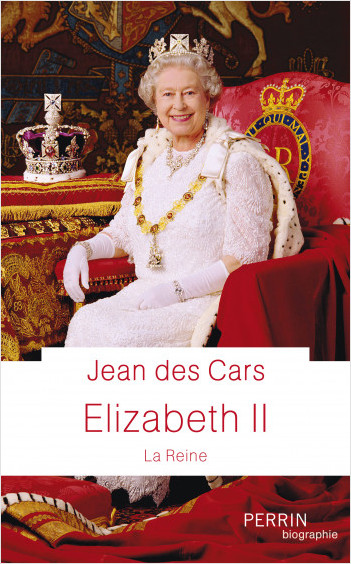
Le 10 décembre 1936 marque une date cruciale dans l’histoire de la monarchie britannique en général, mais aussi de la petite Elizabeth Windsor en particulier. Son oncle, le roi Édouard VIII abdique pour vivre pleinement son amour avec Wallis Simpson, une divorcée américaine. La jeune fille est alors âgée de 10 ans. Son monde, celui de sa famille immédiate également, vient de basculer radicalement. Son père, le duc d’York, lui succède de facto et prend le nom de George VI. Il s’agit de l’une des pires crises traversées par la monarchie britannique, un point tournant pendant lequel on s’interroge sérieusement sur l’avenir de la Couronne. Tout aurait pu basculer et les tenues d’apparat rangées dans les musées pour l’éternité. Ce ne fut pas le cas. Heureusement.

George VI, notamment en raison de son stoïcisme, de sa résilience et de son empathie, remet l’ouvrage sur le métier. Les nouveaux locataires de Buckingham Palace commencent à recoudre le blason de la famille royale dans le tissu social britannique et de l’Empire. Elizabeth n’est pas une enfant comme les autres. Le coup de crayon donné par son oncle en cette date fatidique fait en sorte qu’elle ne pourra plus jamais baisser la garde. Elle est l’héritière du trône et, 15 ans plus tard, elle relèvera le gant dans un règne déchaîné de tourments et ponctué de moments glorieux.

poursuivre la lecture
“Le vrai héros, c’est le peuple ukrainien”

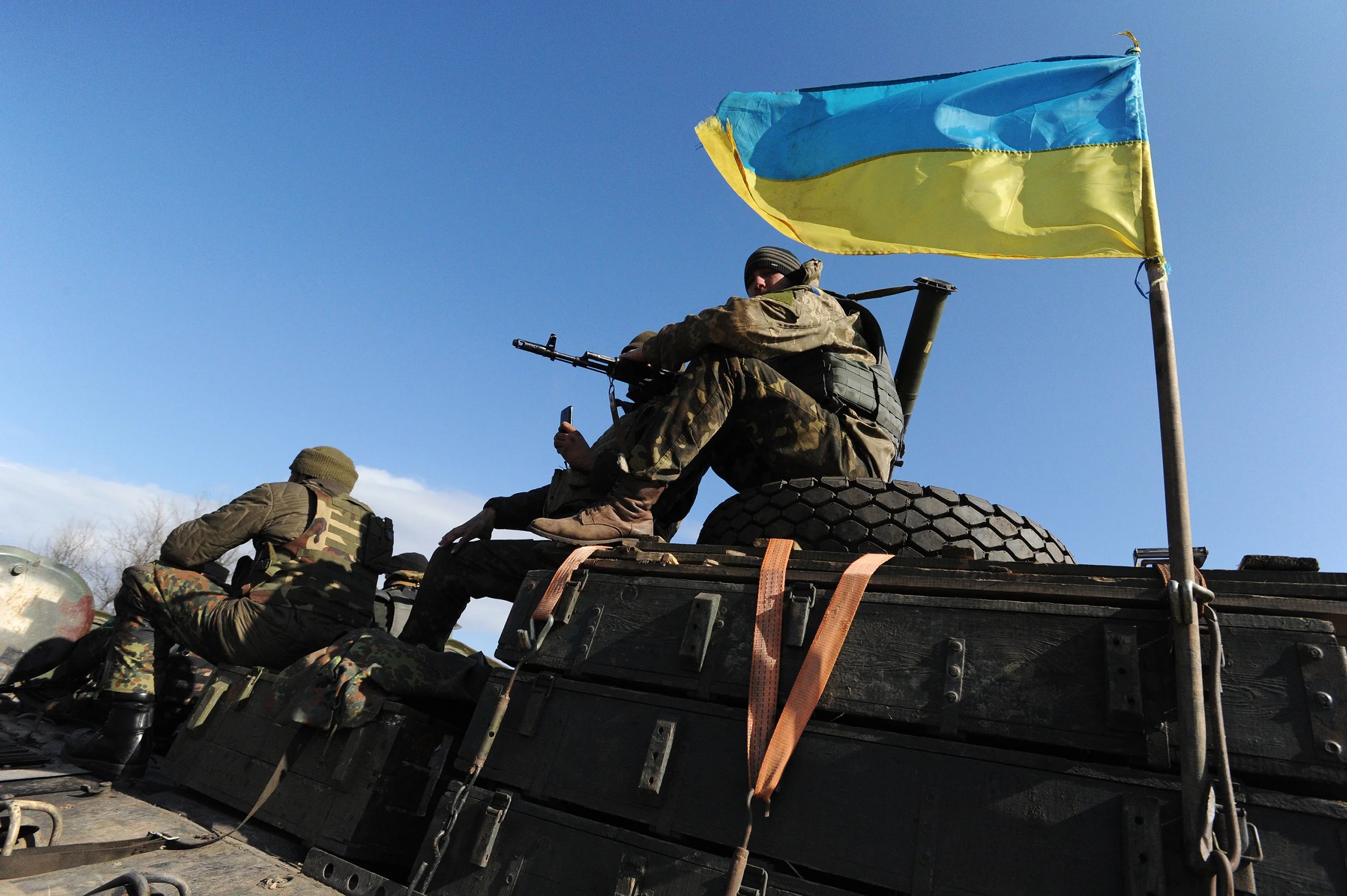
Soldats ukrainiens en action (source: Harvard Law School)

Régis Genté est spécialiste des cercles du pouvoir en Russie et en Ukraine et il est le coauteur d’une éclairante biographie du président Volodymyr Zelensky que je viens d’ailleurs de recenser. J’apprécie particulièrement son analyse, en raison du recul qu’il prend face au caractère souvent superficiel de l’actualité. Son propos repose sur une lecture renseignée de la situation. Il a aimablement accepté de répondre à mes questions pour cette entrevue dont l’objectif est largement de souligner le 31e anniversaire de l’indépendance de l’Ukraine. Voici donc le contenu de notre échange.

M. Genté, dans votre livre Zelensky : Dans la tête d’un héros, vous brossez le portrait étonnant d’un personnage impulsif, agressif et qui maîtrisait mal ses dossiers à certains moments, notamment devant les médias. Serait-il une bête de communications sans contenu ? Quel a été l’impact de la guerre dans son caractère?

Il y a un peu de cela à la base. Zelensky fait partie de cette génération d’hommes politiques pour qui la communication et l’image jouent un rôle clé. Qui croient qu’avec de la communication, de la production de messages, on peut diriger un pays. Il semble avoir été très longtemps, littéralement jusqu’à la veille de la guerre, déconnecté des réalités, de la réalité des forces qui font ce que la politique est ce qu’elle est en Ukraine.

poursuivre la lecture

“Putin is clearly trying to ignite a larger conflict” – Martin Dugard

Author Martin Dugard (source: MartinDugard.com)

After the publication of my review of his excellent book Taking Paris: The Epic Battle for the City of Lights (Caliber), Martin Dugard kindly accepted to answer some questions for this blog. I feel privileged for the interview with an excellent and engaging author, who is also the coauthor of Bill O’Reilly’s Killing Series.

Here is the content of our exchange.

____________

Mr. Dugard, where did the idea of writing Taking Paris originate from?

The book actually started as Taking Rome but as the research expanded it became obvious that the story of Rome worked more nicely as a small section in the larger context of the 1940 fall of Paris and 1944 liberation.

Continue reading ““Putin is clearly trying to ignite a larger conflict” – Martin Dugard”

A striking parallel between Zelensky and de Gaulle

I initially wanted to review Taking Paris: The Epic Battle for the City of Lights by Martin Dugard last February, but then Vladimir Putin launched his troops against Ukraine and I had to shuffle my publications calendar. As you will see, there are fascinating parallels between the fate of France in World War II and the current situation in Ukraine, if only at the leadership level.

After the invasion of France by the Germans in May 1940, the country is in disarray and its statesmen have given up. In the ashes of defeat, a temporary brigadier general will rise to the occasion. Fleeing his homeland on board an airplane provided by British Prime Minister Winston Churchill, Charles de Gaulle left with a “[…] hastily packed suitcase contain[ing] four shirts, one pair of pants, and a single photograph of Yvonne and the children, whose current whereabouts he does not know.” I couldn’t help but think of the same predicament in which Ukrainian President Volodymyr Zelensky found himself on February 24th. As did de Gaulle, he chose to fight, but from home.

Continue reading “A striking parallel between Zelensky and de Gaulle”

Putin’s Soviet Playbook

As I grow older, I realize that history is one of the surest guides to navigate the present. While many adhered to Francis Fukuyama’s theory that the demise of Soviet Union on December 26, 1991, represented the end of history, others lamented what they perceived as “the greatest geopolitical catastrophe of the century”.

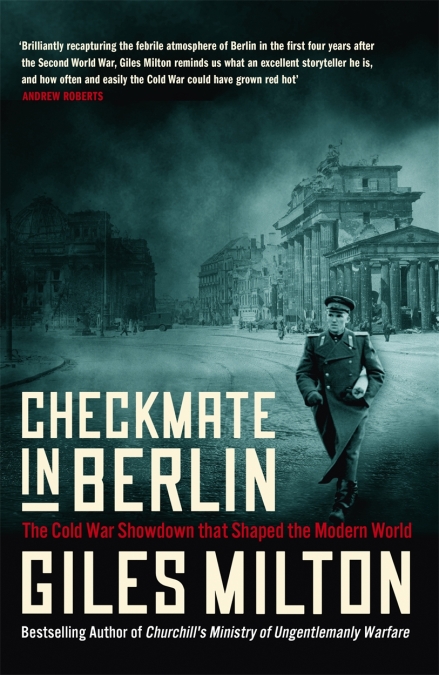
Old habits die hard and Giles Milton’s Checkmate in Berlin: The Cold War Showdown That Shaped the Modern World is an excellent representation of that idiom. “”America is now the primary enemy,” said one of Marshal’s Zhukov’s general at the time of the capture of Berlin. “We have destroyed the base of Fascism. Now we must destroy the base of Capitalism – America.”” Things haven’t changed much in the last 77 years.

Continue reading “Putin’s Soviet Playbook”

Zelensky is living up to what Churchill called “the level of events”

Source: Michael de Adder (@deAdder) / Twitter

Andrew Roberts is the contemporary authority on Winston Churchill. He gave an interview yesterday to Michael Crick for the Mail Online about the similarities between the Greatest Briton and Ukrainian President Volodymyr Zelensky, his contemporary disciple.

Here are a few lines from this insightful article:

“Not only has Zelenskyy stayed in Kyiv, as Churchill did in wartime London, but he is seen on the streets, rallying his people with speeches, and recognizes all the perils and risks.

‘It’s straight out of the Churchill playbook,’ Roberts tells Mail+. And Zelenskyy is showing extraordinary bravery when a team of Russian assassins dressed in Ukrainian army uniforms is said to be out to kill him. That’s not a hazard Churchill faced.”

Continue reading “Zelensky is living up to what Churchill called “the level of events””

Chefs d’État lecteurs et écrivains

Le général d’armée Henri Bentégeat (source: Alchetron)

Quelques jours avant Noël, le général d’armée Henri Bentégeat m’a fait un très beau cadeau pour mon blogue. Cet auteur est un ancien chef de l’état-major particulier du président de la République qui a ensuite servi en tant que chef d’état-major des armées (France). Plus récemment, il est l’auteur de deux excellents ouvrages Chefs d’État en guerre (2019) et Les ors de la République(2021) – tous deux publiés chez Perrin. Le général m’a donc offert un texte inédit pour publication sur ce blogue. Le thème, vous l’aurez deviné, porte sur les appétences littéraires des chefs d’État. Une lecture fascinante et inspirante, sous la plume d’un auteur que j’admire beaucoup et envers lequel je suis infiniment reconnaissant pour son amitié envers ce blogue.

C’est donc avec un immense plaisir que je partage ce texte avec vous aujourd’hui.

En France, le Prince, qu’il soit monarque ou président de la République, n’a pas le choix de ses goûts et de ses inclinations. Il se doit d’afficher une vaste culture littéraire et artistique, de peur de perdre l’estime de ses concitoyens, tant chez nous, depuis des siècles, la culture est attachée au pouvoir.

poursuivre la lecture

Napoléon, cet animal politique

Je ne pouvais laisser se terminer l’année 2021 sans recenser l’un des meilleurs livres consacrés à Napoléon qui me soit passé entre les mains pendant le bicentenaire de son décès. À cet égard, Les hommes de Bonaparte : La conquête du pouvoir 1793-1800 (Éditions Perrin) de l’historien Jean-Philippe Rey m’a permis de découvrir un aspect de l’Empereur dont ma connaissance était, je le constate bien aujourd’hui, très embryonnaire. Alors que les vertus de celui que Clausewitz appelait le « Dieu de la guerre » sont bien connues, son génie politique l’est beaucoup moins. Et c’est à ce niveau que l’auteur nous renseigne de manière convaincante.

Bonaparte, nous dit Jean-Philippe Rey était un animal politique, un ambitieux désireux de s’investir corps et âme pour grimper au sommet. En témoigne notamment son mariage avec Joséphine (un mariage dont les deux époux tirèrent avantage, malgré sa nature complexe) et une capacité consommée à tisser, entretenir et étendre ses réseaux. Le réseautage est d’ailleurs un – pour ne pas dire le – thème dominant du livre.

Poursuivre la lecture

When Khrushchev Helped JFK

Soviet leader Nikita Khrushchev and US President John F. Kennedy (source: Foreign Policy)

I recently read and reviewed an excellent biography of former Soviet leader Leonid Brejnev by Andreï Kozovoï. Even if I found it to be tragic, I was fascinated to read about Brejnev’s role in the toppling of his predecessor, Nikita Khrushchev, in October 1964. Khrushchev’s persona was light years away from the character portrayed in The Death of Stalin – it is a satire, after all – and his bombastic temper certainly played a role in his downfall.

Khrushchev always fascinated me, whether it is regarding his role during World War II, his succeeding Stalin in 1953 or his role with President John F. Kennedy (of whom we commemorate the assassination today) during the Cuban Missile Crisis in 1962. I recently came upon a very insightful article, “Nikita Khrushchev and the Compromise of Soviet Secret Intelligence Sources” in the International Journal of Intelligence and Counterintelligence by David Easter. In his research, the academic exposes several instances where the First Secretary of the Communist Party of the Soviet Union might have compromised Moscow’s intelligence work and capabilities.

Continue reading “When Khrushchev Helped JFK”

President Bush gave Afghans a taste of freedom

After the publication of my review of his enthralling and inspiring book Special Forces Interpreter, I had the privilege of being in touch Eddie Idrees. He agreed to answer a few questions and I am extremely grateful and happy to publish the content of this exchange today, as we commemorate Remembrance Day. I am sure you will appreciate this content as much as I liked conducting the interview.

President Biden’s decision to withdraw from Afghanistan was a betrayal.

Mr. Idrees, how did you feel about the Biden administration’s decision to withdraw all US troops from Afghanistan last summer?

In short, it was a betrayal. President Biden’s decision to withdraw from Afghanistan, was not only a betrayal to me and millions of other Afghans, but to the Americans, the families who lost loved ones, to the Canadians who lost their lives in Kandahar or the Brits in Helmand. It was a betrayal of the cause. I felt like Biden allowed a terrorist network to win and gave psychological victory to the rest of the terrorist networks in the West and the Middle East. I have so much to say, but this was a historic betrayal of American values.

Continue reading “President Bush gave Afghans a taste of freedom”