
 « Je ne suis ni meilleur ni plus intelligent qu’aucun de vous. Mais je ne me décourage pas et c’est pourquoi le rôle de chef me revient. » – Theodor Herzl
La terre d’Israël m’a toujours captivé. Jeune écolier, l’une de mes professeurs passait son temps à parler de la Palestine, gommant systématiquement le nom d’Israël de son vocabulaire puisque ce pays n’existait pas selon elle. Un certain lundi matin, elle nous demanda, fidèle à son habitude, ce que nous avions fait durant la fin de semaine qui venait de se terminer. Lorsque mon tour arriva, je lui mentionnai que mon père m’avait acheté un Atlas géographique et que cela m’avait permis de découvrir qu’elle nous mentait éhontément puisqu’aucun pays répondant au nom de Palestine figurait sur la carte du monde. Je fus quitte pour une petite visite chez le bureau de la directrice, une vieille religieuse souriante et bien compréhensive qui s’est beaucoup amusée de mon sens de l’argumentation.
Plusieurs années plus tard, il m’a été donné de fouler le sol de ce pays à plusieurs reprises. Je me suis toujours senti choyé de pouvoir visiter le kibboutz de David Ben Gourion à Sdé Boker ou encore le Menachem Begin Heritage Center à Jérusalem. J’aurais tellement aimé aller me recueillir sur la tombe de Theodor Herzl ou Yitzhak Rabin, mais je n’en ai pas eu l’occasion – du moins pas jusqu’à maintenant.
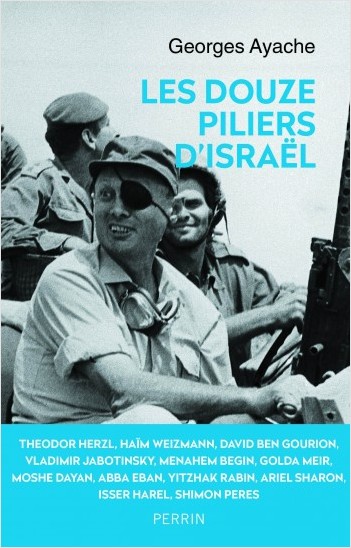
J’étais donc enchanté de parcourir – dévorer serait un qualificatif plus juste – le dernier ouvrage de Georges Ayache, Les douze piliers d’Israël : Theodor Herzl, Haïm Weizmann, David Ben Gourion, Vladimir Jabotinsky, Menahem Begin, Golda Meir, Moshe Dayan, Abba Eban, Yitzhak Rabin, Ariel Sharon, Isser Harel, Shimon Peres. Ces hommes et cette femme ont non seulement permis l’avènement de ce pays en 1948, mais ils et elle en ont assuré la survie, l’épanouissement au prix de sacrifices exceptionnels – l’un d’entre eux, Yitzhak Rabin, ayant même consenti au sacrifice ultime en 1995 en tombant sous les balles d’un extrémiste alimenté par la droite religieuse.
À plusieurs reprises, Georges Ayache revient sur une qualité ayant habité la plupart d’entre eux, soit le pragmatisme. Pensons notamment à un Begin faisant la paix avec Sadate ou à Sharon qui décrète un retrait israélien unilatéral de la bande Gaza. Ou encore à Shimon Peres revêtant les habits de la colombe après avoir consacré des décennies à construire les forces armées israéliennes.
Il met également en évidence le fait que, dès avant sa naissance, Israël doit composer avec le double-standard réservé à un pays qui « […] avait commis le péché de survivre. » C’est ainsi que, durant le mandat britannique, « peu soucieux d’interrompre les violences perpétrées par les Arabes, ils [les représentants de Sa Gracieuse Majesté] semblaient en revanche obsédés par la recherche d’armes chez les sionistes. » Des années plus tard, après la guerre des Six-Jours, « […] personne, à l’étranger, ne se souciait des violations permanentes du cessez-le-feu par les Égyptiens; en revanche, chacun scrutait à la loupe les réactions israéliennes, qualifiées mécaniquement d’« excessives » ou de « disproportionnées ». Comme quoi rien n’a vraiment changé…
Cela dit, le livre nous permet de constater à quel point l’esprit de plusieurs de ces figures fondatrices était empreint d’une anglophilie surprenante, si l’on prend en considération l’attitude de Londres par rapport au Yishouv. Que ce soit en apprenant que Jabotinsky s’est vu remettre la prestigieuse distinction de Member of the British Empire (MBE) « […] pour services rendus » for king and country, en lisant que Menachem Begin avait offert du thé aux policiers du NKVD venus l’arrêter chez lui à Wilno, en se régalant de lire que Abba Eban était accouru à la librairie Foyle’s sur la rue Charing Cross à Londres (un endroit mythique et légendaire pour tout bon féru de lecture qui se respecte) pour dénicher des livres à propos de l’ONU ou en s’étonnant de découvrir que Ben Gourion « […] préférait les méthodes classiques de l’armée anglaise ». Le britannophile en moi était très heureux de recueillir ces perles déposées à plusieurs endroits entre les couvertures.
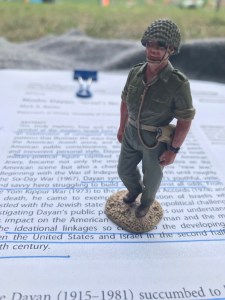
Inévitablement, la question se pose à savoir lequel de ces douze piliers retient ma faveur personnelle. Bien que je sois pris d’une affection historique pour plusieurs, pour ne pas dire presque tous, je dirais que Moshe Dayan est celui qui m’a le plus marqué.
Après qu’il eut perdu un œil en Syrie en juin 1941, à la tête d’une compagnie spéciale au service des forces britanniques, « sa mise à l’écart et, surtout, sa nouvelle apparence physique, défigurée par un bandeau noir de pirate lui barrant le visage, le démoralisèrent. » « Sa traversée du désert dura de 1941 à 1948 », mais il persévéra et parvint à surmonter son handicap pour devenir une véritable légende, transformant un point faible en une force redoutable. De quoi faire sourire Sun Tzu.
Au final, les éditions Perrin doivent être remerciées d’avoir publié ce livre, qui fait non seulement partie des meilleurs au sujet de l’histoire d’Israël selon moi, mais qui permet également de mieux comprendre ces onze hommes et cette femme qui ont posé les fondations de l’un des pays les plus fascinants – et résilient – du monde.
Je sais que l’actuel Premier ministre d’Israël ne correspond pas aux critères de Georges Ayache dans le portrait qu’il brosse des 12 piliers, parce qu’il n’est pas associé au moment charnière de 1948 (il est né en octobre 1949), mais je serais quand même curieux de savoir ce que Georges Ayache aurait à dire et écrire au sujet de Benjamin Netanyahou.
______________
Georges Ayache, Les douze piliers d’Israël : Theodor Herzl, Haïm Weizmann, David Ben Gourion, Vladimir Jabotinsky, Mehahem Begin, Golda Meir, Moshe Dayan, Abba Eban, Yitzhak Rabin, Ariel Sharon, Isser Harel, Shimon Peres, Paris, Perrin, 2019, 429 pages.
Je tiens à exprimer ma plus vive reconnaissance aux représentants de Interforum Canada qui m’ont généreusement offert un exemplaire de ce livre, ainsi qu’aux gens des éditions Perrin pour leur précieuse collaboration. Un blogueur ne pourrait espérer mieux.
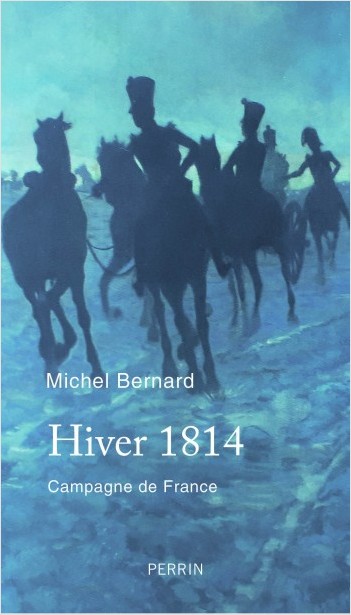
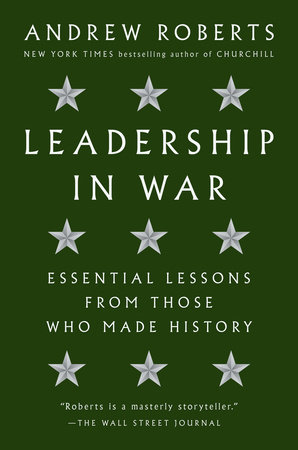
 « La guerre n’est jamais avare de nouvelles inventions », d’écrire l’historien Claude Quétel dans son dernier livre
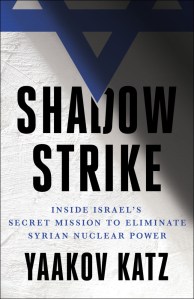 Reading Yaakov Katz’s book

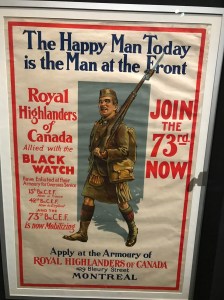 “This charge of Fraser’s 78th [during the battle of the Plains of Abraham in 1759] and the heroic performance of the 42nd at Ticonderoga, would transform the image of the Highlanders in the popular consciousness from that of dangerous savages who posed a threat to the security of the state to loyal and hardy shock troops of the empire. From this point on, the Highlanders joined the Guardsmen as the elite of the British Army, and both would win laurels in virtually every major conflict they fought, often – as was the case in Waterloo, the Alma, Tel-el-Kebir, Loos and Alamein – fighting almost side by side.” (


 Dans ma jeunesse, j’ai été choyé de connaître un grand homme – Mgr Jean-Marie Fortier – qui fut archevêque de Sherbrooke entre 1968 et 1996.
 “The bigger the challenge, the better we play.” – Lord Lovat
