Wellington was not an easy figure to build into a romantic hero

The Duke of Wellington (source: National Army Museum)
(Cliquez ici pour la version française)

I recently had the tremendous pleasure of exchanging with internationally renowned author and historian Alan Forrest about his book on the Battle of Waterloo. Here is the content of our discussion.

Professor Forrest, it’s been a real treat for me to read and review your amazing book on this blog. Many thanks for accepting to answer a few questions for our readers.

I have always nourished a deep interest and admiration about the Duke of Wellington (the first name of my blog was Wellington.World). But he clearly lacked the “romantic poignancy” of his French opponent in the battlefield. Do you feel he has been mistreated / misjudged by history?

I do not think there is any reason to feel that Wellington has been misjudged. He enjoys a high reputation as a military commander, careful in his preparations for battle and alert to the threat of enemy attack. His record in the Peninsular campaign – where he did not, of course, have to face Napoleon – is impressive; and at Waterloo his use of the terrain and his tactics in the face of repeated French attacks have been widely praised. He was, it is true, a more defensive tactician than Napoleon, but I don’t think that that has led to his military qualities being undervalued, and certainly not in Britain.  On the other hand, he was not an easy figure to build into a romantic hero, in contrast to Napoleon who did so much to create his own romantic narrative and who fascinated even those who had no reason to support his ambitions (Walter Scott, for instance, or Goethe, or Byron). 

What is your global appreciation of the Iron Duke? Has he been overrated?

Continue reading “Wellington was not an easy figure to build into a romantic hero”

Waterloo’s Band of Brothers

For about five hours on the fateful afternoon of July 18th, 1815, a band of brothers of 400 soldiers forming the 2nd Light Battalion of the King’s German Legion – a unit of the British Army – thwarted Napoleon’s plan of breaking up the center of the Duke of Wellington’s lines at Waterloo. Stoically, “these men, and their reinforcements, held off Napoleon for long enough to change the course of the battle.”

When I lived in Scotland and in the aftermath of my visit on the battlefield of Waterloo few months prior to these fantastic months, I was curious to read more about the iconic battle and those who took part in it. And I still am. I was therefore captivated by the publication of The Longest Afternoon: The Four Hundred Men who Decided the Battle of Waterloo (Penguin Books) by renowned Cambridge Professor and author Brendan Simms.

Even though the book was published 7 years ago, it remains one of my favorites. I am always lukewarm to embrace the notion that one specific battle definitively changed the course of a war or that a single event sealed victory or defeat. I came to understand that wars and battles are much more complex than that. But the story brough forward by Brendan Simms doesn’t fail to convince that a small group of men (400 out of more than 74 000 under the orders of the Iron Duke) could make a difference on the battlefield. When dusk fell after the battle, only 42 out of the initial 400 remained. That’s a survival rate of 10%.

Continue reading “Waterloo’s Band of Brothers”

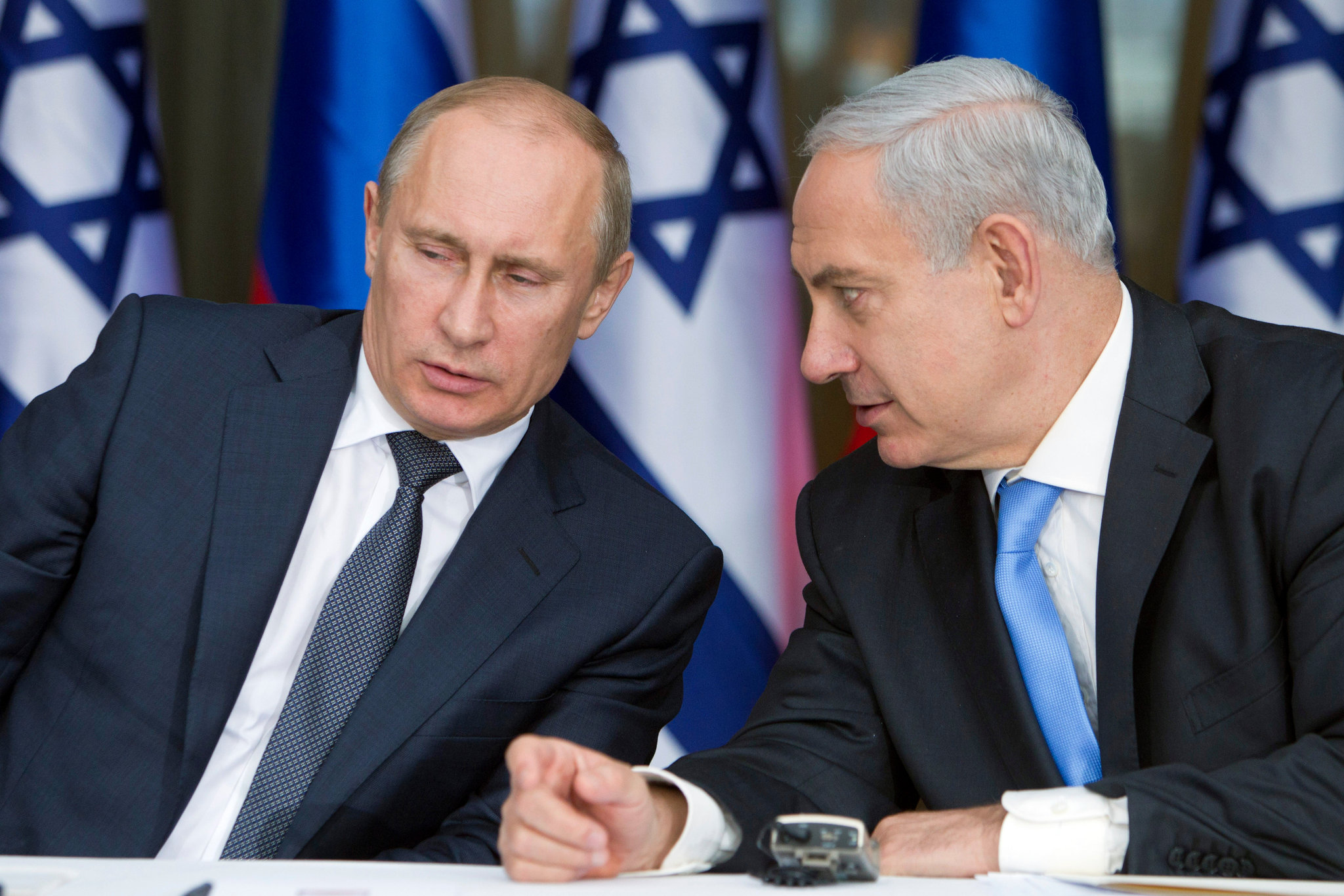
Putin was certainly quite pro-Netanyahu

Russian President Vladimir Putin and then-Prime Minister Benjamin Netanyahu (source: The New York Times)

In his last speech as Prime Minister of Israel last Sunday, Benjamin Netanyahu evoked his proximity with President Vladimir Putin the following way:

“We developed special relations with Russia, not just with Russia as a state, we also nurtured a direct close line with the president of Russia. And in so doing, we guaranteed the freedom of maneuver of the Israeli Air Force in the skies of Syria in order to prevent Iran entrenchment on our Northern border.”

A news outlet stressed the fact that the former Prime Minister of Israel “[…] boasted of his friendship with Putin and was a frequent guest in Russia.

I have always found the closeness between Putin and Netanyahu to be extremely interesting, not to say simply fascinating. Notably in the context of the increasing presence of Russia in the Middle East.

Continue reading “Putin was certainly quite pro-Netanyahu”

The Hero Code: “Find what you’re good at and give it to others”

Ever since I watched his famous speech “Make Your Bed”, I have been captivated by the career and thought of retired Admiral William H. McRaven, the former commander of the Navy SEALs. I was therefore excited to receive a copy of his most recent book The Hero Code: Lessons Learned from Lives Well Lived (Grand Central Publishing).

While I was reading it, an article from the Journal of Strategic Studies caught my attention. Written by National Security Affairs Professor James J. Wirtz, “The Abbottabad raid [during which Osama bin Laden was permanently neutralized by Navy SEALs] and the theory of special operations” elaborates about the theory of special operations, whose father was none other than Admiral McRaven. He theorized it in his master’s degree thesis in a period when, in the immediate aftermath of the Cold War, we lived in a “[…] new, unipolar world, [where] U.S. special forces would be relegated to tertiary missions within a Cold-War force structure that appeared bloated, obsolete and ripe for significant reductions.”

McRaven’s work sought “[…] to demonstrate that a tactic and unit deemed largely irrelevant by conventionally-minded officers and civilian strategists could actually achieve strategically and politically important effects, but only if planned and executed by special operators themselves against significant targets in proper ways.” And you can figure that the devil was – and still is – in the details.

Continue reading “The Hero Code: “Find what you’re good at and give it to others””

Every Man can be a Hero

Back in early September 2015, my family and I rented a car in Paris to spend a day in Normandy. I had always dreamt of visiting Juno Beach, where we fellow Canadians landed 77 years ago today. While strolling on the sand, I kept thinking about the level of bravery and heroism required to conduct such an unusual task. Because running to a possible and likely death is certainly not an ordinary action.

Ever since, I have tried to read as much as I can about the men of June 6, 1944. I reviewed Alex Kershaw’s and Giles Milton’s excellent books here. Late last night, I finished reading The Hero Code by retired Admiral William McRaven and Peter Caddick-Adams’ Sand and Steel is on my summer reading list.

Earlier this week, I finished reading the gripping D-Day memoir Every Man a Hero by Ray Lambert and Jim DeFelice (William Morrow). I don’t want to get too far ahead of myself with Admiral McRaven’s book, which I plan to review soon on this blog, but let’s just say that I found the answer to a lingering question between these covers.

Continue reading “Every Man can be a Hero”

Viscount Slim was the opposite of Field Marshal Montgomery

General Sir Peter Duffell (source: Nepali Times)

After the publication of my review of his excellent book Gurkha Odyssey: Campaigning for the Crown (Pen & sword), General Sir Peter Duffell generously accepted to answer my questions for this blog. Below is the content of this fascinating exchange.

But before you read any further, let me remind you that if you are a military history aficionado, this book is a must for your bookshelves.

In my time, we certainly adopted items of jungle equipment from the Australians and rifles from the Americans as they were deemed to be more effective and soldier friendly.

Whenever I attend the change of the guard at the Citadel in Quebec City (home of the Royal 22e Régiment, the legendary Vandoos), I am always impressed by the “Bearskin” hat worn by the soldiers, a tradition that comes from the French. At Waterloo, the red coats picked the hats from the dead bodies of their fallen opponents. Throughout its history, the British Army always knew how to integrate the best parts of other traditions. The Gurkhas are no exception, having been integrated to the British Order of Battle after the Nepal War of 1814-1816. Has the British Army kept this capacity for accepting other’s best capacities and features?

Continue reading “Viscount Slim was the opposite of Field Marshal Montgomery”

“When you know you are with the Gurkha, I think there is no safer place to be”

In themselves, these words from His Royal Highness Prince Harry encapsulate the ethos and history of those soldiers who are called the best in the world. Having completed two tours of Afghanistan, notably for two months in Helmand, the Duke of Sussex has seen for himself what those legendary fighters are made of.

In his amazing book, Gurkha Odyssey: Campaigning for the Crown (Pen & Sword), retired General Sir Peter Duffell took upon himself to explain what kind of mettle these exceptional fighters who first encountered the British red coats as enemies on the battlefield of the war on Nepal between 1814 and 1816 are made of. Few people could know the subject better, since the author was himself commissioned into the 2nd Gurkha Rifles at the beginning of his military career.

Having lived for several months in Edinburgh (Scotland), I visited the National War Museum on a few occasions. I was always impressed to read that, during World War I, Germans used to call Scottish soldiers “the ladies from hell” – a distinct reference to their kilt and warrior prowess.

I don’t know how Kaiser Wilhelm II’s troops (or other battlefield enemies throughout history) called the Gurkhas south of Ypres in the first months of the Great War, but I can easily imagine a similar fright must be instilled in whoever sees one of those Nepali soldiers advancing toward his / her position. Just to give you an idea of the kind of fighter we are talking about, the author recounts that, in the last stages of the Burma campaign:

Continue reading ““When you know you are with the Gurkha, I think there is no safer place to be””

Prince Philip at Matapan

HRH The Duke of Edinburgh (source: Town & Country Magazine)

During my interview with him about the Battle of Matapan, renowned author and professor Craig L. Symonds suggested that I get in touch with Dr. Richard Porter to get a better sense of what the Duke of Edinburgh accomplished during this fateful day on the sea. Dr. Porter is Curator of The Britannia Museum at the Britannia Royal Naval College in Dartmouth.

Being fascinated with Prince Philip in general and his role during World War II in particular, I was extremely happy to get in touch with Dr. Porter, who kindly replied to me despite a demanding schedule. Even though the Duke of Edinburgh is no longer front and center in the news media, I’m sure all the enthusiasts of military history will appreciate this text.

Without further introduction, here is the full content of his response.

A Midshipman was the lowest form of naval life.

Prince Philip was appointed to the WW1 Battleship HMS Valiant in January 1940. He was one of 20 Midshipmen out of a crew of 1200. As he put it, a Midshipman was the lowest form of naval life. He also makes the point that with a crew of 1200 information was not easily relayed to all crew members, even so even the Midshipmen were aware that the Italian Fleet was thought to be at sea. Prince Philip thought that there was definitely a ‘special atmosphere of anticipation as the Fleet put to sea from Alexandria during the night of 27 March’. The Prince’s Action Station was on the Bridge and at night he had control of the port searchlight. From that position he managed to gather roughly what was going on.

Continue reading “Prince Philip at Matapan”

The Peasant Emperor

A few years ago, media outlets reported that Chinese President Xi Jinping dined on steamed buns in a Beijing restaurant. Whether this venue was an orchestrated photo opportunity or the instantaneous desire of a world leader searching for a whiff of normalcy in the sometime claustrophobic alleys of power doesn’t really matter. Its true purpose was revelatory of who Xi is; a leader who is and wants to be close to the people.

I was reminded of that outing while reading Kerry Brown’s book The World According to Xi: Everything You Need to Know About the New China (I.B. Tauris), a pertinent and still timely book (2018) on the actual leader of the second most important economy on the planet.

“Of the recent leaders of China since Deng [Xiaoping], in many ways Xi is the one with the most authentic, best-known links to the countryside, and his use of this set of experiences aims to convey this.” Furthermore, and probably because he was a victim of the Cultural Revolution himself, Xi had to make no less than 10 attempts to become a member of the Party. In a nutshell, the General Secretary of the Party didn’t get an easy pass to power. And I’m certain this resonates with many ordinary people.

Continue reading “The Peasant Emperor”

Xi Jinping: micro-manager

Deng Xiaoping (left) and Xi Jinping (right). (sources: Wikipedia and CNN)

I have always been fascinated with anything related to Deng Xiaoping. It is thus not surprising that an article from the Journal of Contemporary China caught my attention a few days ago.

In the scope of a few pages, the late Ezra Vogel compares the stewardship of Deng to the one of the current leader of China, Xi Jinping. The Harvard University academic, who passed away a few days before last Christmas, was also the acclaimed biographer of Deng, who was at the helm of the People’s Republic of China between 1978 and 1989.

Xiaoping, in the author’s words, established “[…] the foundations for the most successful four decades in China’s history”. He rose to power at the age of 74, cumulating decades of experience, notably collaborating with Zhou Enlai and 13 years spent in the inner sanctum of power. This enviable track record prepared him well for supreme responsibility. Well versed in the discipline of power and most probably surrounded by people who were well acquainted with his methods and thinking, Deng could afford to be a macro-manager. To that end, the following anecdote told by Ezra Vogel is illuminating:

Continue reading “Xi Jinping: micro-manager”