The best books, their authors and the great people who inspire these stories / Les meilleurs livres, leurs auteurs et les grand.e.s de l'histoire qui les inspirent.
Cœur du pouvoir et des tractations de la plus grande puissance mondiale, la Maison-Blanche fascine. Tout comme le parcours de tous ceux qui l’ont occupée. On aime naturellement se souvenir de ces figures hors normes, de par leurs accomplissements et leurs idées. Mais l’histoire des coulisses de cet auguste Manoir n’est pas moins intéressante, pour ne pas dire fascinante.
Dans son dernier livre, Le Manoir : Histoire et histoires de la Maison-Blanche, l’historien Maurin Picard nous propose une visite guidée enlevante de l’épopée présidentielle. On y rencontre tour à tour l’inventeur Alexander Graham Bell qui y présente son invention, le militaire américain John Philip Sousa, le roi des marches militaires, compositeur de la célèbre Stars and Stripes Forever ou encore – pour les amateurs de Ghost Adventures – le fantôme d’un Andrew Jackson « jurant abondamment ».
Cela dit, j’ai également ressenti beaucoup de colère en lisant le correspondant du quotidien Le Figaro à Washington. Dans son chapitre consacré à l’assassinat de Abraham Lincoln pour être plus précis. Le 14 avril 1865 au soir, Abraham Lincoln se passerait bien d’aller au théâtre. Il est épuisé, mais il veut faire plaisir à son épouse Mary. Mal lui en prit. C’est le moment où l’assassin John Wilkes Booth frappe le destin de l’Amérique en plein cœur. Le président dispose de quatre policiers, recrutés parmi les meilleurs de la police métropolitaine de la capitale, mais celui qui l’accompagne ce soir-là est le moins professionnel du lot. Pour ne pas dire un incompétent. Je vous laisse juger par vous-même : « À l’intermission, au lieu de regagner son poste, il rejoint le cocher et le valet de pied d’Abraham Lincoln dans le bar situé à côté du théâtre. La voie est libre pour l’assassin. » Vous connaissez la suite…
Quel ne fut pas également mon étonnement de lire que, suite à la Première Guerre mondiale, « un compromis sur le vote ratifiant le traité de Versailles » aurait été envisageable entre le président démocrate Woodrow Wilson et le chef de file des Républicains au Sénat Henry Cabot Lodge. Le président n’y donne malheureusement pas suite et l’influence de son épouse Edith qui garde jalousement l’accès à son mari atteint par la maladie n’est certainement pas étrangère à ce scénario qui aurait pu influer sur le cours des affaires mondiales et, qui sait, permettre d’éviter le déclenchement de la Seconde Guerre mondiale.
Les gens de ma génération ont de la Maison-Blanche une image largement influencée par les personnages de la légendaire série télévisée TheWest Wing. Mais la réalité historique est beaucoup plus tragique. Un président a tragiquement perdu un fils juste avant d’y entrer (Franklin Pierce), deux pendant leur mandat (Abraham Lincoln et Calvin Coolidge) et un autre, Theodore Roosevelt, succombera moins de 6 mois après que son fils favori, Quentin, fut abattu par les Allemands dans le ciel français pendant la Première Guerre mondiale. Un dernier, Andrew Jackson, enterra sa douce Rachel, le 24 décembre 1828. Elle a succombé à une crise cardiaque deux jours plus tôt, suite à une campagne où les adversaires de son mari l’ont copieusement calomniée.
À l’instar de celle qui n’accompagnera jamais son mari à la Maison-Blanche, trois présidents – James Garfield, Warren Harding et Theodore Roosevelt – ont eux aussi été enlevés à ce monde de la même manière. Quant à Dwight D. Eisenhower, il subit une crise cardiaque en septembre 1955 et devra en encaisser 6 autres durant ses vieux jours. Pour tout dire, occuper le Manoir est tout sauf une sinécure. Nous pourrions également évoquer les insomnies de Lyndon B. Johnson ou encore les effets pernicieux des eaux saumâtres sur l’état de santé de quelques-uns de ses prédécesseurs pour appuyer cet état de fait.
Le livre de Maurin Picard brosse certes le tableau d’une résidence qui se veut en même temps une institution. Mais son mérite principal réside dans le fait qu’il humanise les individus qui ont souhaité et qui ont été appelés à l’occuper. Ces figures emblématiques de la vie politique américaine y ont souvent vécu des moments bien difficiles, comme nous venons de l’évoquer. Mais ils ont également connu de beaux moments. Le chapitre consacré à la vie familiale très dynamique de Theodore Roosevelt et de ses 5 petits monstres (« Les domestiques terrifiés voient les enfants Roosevelt se frayer un chemin en rampant jusque sous la table, harcelant les invités, nouant leurs lacets, tirant sur les robes des dames et quémandant à manger sans honte aucune ») verra inévitablement un sourire se manifester sur votre visage.
Personnellement, j’aurais certainement aimé lire quelques pages de cet auteur talentueux à propos de deux de mes présidents favoris – Reagan et George H. W. Bush – mais je comprends qu’il lui fallait faire des choix éditoriaux.
À l’aube d’un nouveau chapitre dans l’histoire de la Maison-Blanche, laquelle accueillera bientôt son résident le plus âgé mais certainement pas le moins sympathique, Maurin Picard offre aux férus d’histoire politique américaine un ouvrage captivant qui figure désormais parmi mes favoris. Et ça se lit d’une traite.
______
Maurin Picard, Le Manoir : Histoire et histoires de la Maison-Blanche, Paris, Perrin, 2020, 304 pages.
Je tiens à exprimer des remerciements particuliers à Marie Wodrascka des Éditions Perrin de m’avoir offert une version électronique de cet ouvrage.
Rumors of a meeting last weekend between Israeli Prime Minister Benjamin Netanyahu and Saudi Crown Prince Mohammed bin Salman (MBS) had the effect of a bombshell in diplomatic circles. I was not the least surprised, because I have been expecting developments of the sort for quite some time now. MBS is one the world’s shrewdest political operators and it would be quite logical to observe developing relations between him and the Israeli leadership – if only because they share a common enemy with Iran.
I was therefore very happy to put my hands on a copy of Blood and Oil: Mohammed bin Salman’s Ruthless Quest for Global Power, in which I learnt quite a lot about this young prince who, at 35 years old, has already made his way among world leaders in a fascinating – yet sometimes thin-skinned and abrasive – way.
Those interested about his financial dealings of secret operations allegedly launched in his name might want to stop reading right now, because these are not the angles that caught my attention. Inspired by Machiavelli, MBS is a keen student of history who is fascinated with Alexander the Great and consumes history books. I do not know if he likes to read about US political history, but from what I take from Bradley Hope and Justin Scheck’s book, he would be enthralled to read Robert A. Caro’s The Path to Power. The way he reached the position of Crown Prince is not alien to the young Lyndon B. Johnson’s capacities to pivot his youth and poverty into becoming an unavoidable and shrewd political actor. In MBS’s case, the Crown Prince not only took advantage of his youth, but also of being underestimated by his (and his father’s, King Salman) numerous rivals, in his quest to help his father reach the throne.
During King Abdhullah’s terminal hospital stay, the authors report that his main courtier tried to marginalize future King Salman. Upon learning that the Custodian of the Two Holy Mosques had died, MBS “[…] hurried his father into a convoy of cars and sped to the National Guard hospital” – ensuring that no shenanigans could be orchestrated to sideline the future king. Earlier, his father had become addicted to painkillers after back surgery. Mohammed helped him “[…] beating the addiction, staying up with his father around the clock and handing him pills identical to those he’s been taking for years. Only they were actually new ones specially ordered up by Mohammed with lower doses.” The dutiful son – who understand that his power stems “[…] from his family, not an electorate” – is also a canny practitioner of power and his round-the-clock work ethic would leave most of us dead tired after a few days.
For sure, MBS is in no lack of detractors. But anyone adopting a realistic perspective in international relations understands that 1) he is the heir to the throne of one of the most vital and strategic geopolitical actors in the world and 2) he will be around for several decades. Anyone counting on the support of Saudi Arabia to pursue any international agenda should remember that – notably to oppose Iran, whose current régime is an existential threat to the West.
I have to admit that the thing I disliked with this insightful book was its title. Labelling MBS solely as a ruthless and bloodthirsty prince fails to convey the bigger picture that, in a country like Saudi Arabia, the alleys of power are not comparable to the halls of a philosophical society. One does not need to be an expert at international politics to understand that several nemeses must eye the Crown Prince’s position with envy and would not hesitate to depose him if they were given the opportunity.
MBS has a vision for his country. He seeks its influence beyond the markets of oil and into the technological avenues of the future. Bringing a traditionalist and conservative country like Saudi Arabia in that direction must not be a small challenge. But, as a student of history, the Crown Prince understands that kingdoms of past, present and future must adapt to survive. In an unforgiving world, the future king of Saudi Arabia learnt “[…] from his time sitting in the majlis [a gathering room for advisors and petitioners] with his father, day after day […] the inner workings of power in Saudi Arabia.”
Like anyone, he will make mistakes. And those will fade with the passage of time. But long after Donald Trump, Vladimir Putin and Xi Jinping will have departed from public life, this fascinating character will be one of the main players in tomorrow’s world affairs. The fact that countries like (former adversary) Israel are now allegedly in discussions with him is an eloquent testimony that he already is. Like a true disciple of Machiavelli, MBS knows how to seize the moment.
As for Bradley Hope and Justin Scheck, they offer the readers an excellent biography of a world leader who knows how to navigate the treacherous waters of politics at its highest level, guided by an astute sense of history. Honestly, this is one of the best books I have read this year.
__________
Bradley Hope and Justin Scheck, Blood and Oil: Mohammed bin Salman’s Ruthless Quest for Global Power, New York, Hachette Books, 2020, 368 pages.
I would like to express my sincere gratitude to Stephanie Palumbo of Hachette Books Canada and Ryan E. Harding of Hachette Books for their invaluable assistance, notably in offering me a copy of this biography.
« La victoire a cent pères, mais la défaite est orpheline », affirmait le président John F. Kennedy. En prolongeant cette logique en attribuant une condition orpheline aux erreurs commises durant un conflit, une campagne, une entreprise ou un projet, on comprend un mieux pourquoi peu de livres sont mis en chantier pour explorer et détailler les échecs qui ont influencé le cours de l’histoire.
Dans un récent ouvrage regroupant 20 chapitres courts mais fascinants, les auteurs – des spécialistes en histoire militaire – expliquent les raisons ayant conduit à la rédaction des chapitres catalogués au rang des échecs que leurs planificateurs auraient sans doute voulu écrire autrement.
D’emblée, Les grandes erreurs de la Seconde Guerre mondiale(publié sous la direction des historiens chevronnés Jean Lopez et Olivier Wieviorka) a ravivé des souvenirs mémorables dans ma mémoire, puisque j’ai foulé le sol de plusieurs endroits décrits entre les couvertures. J’ai vu le hérisson tchèque indiquant l’endroit jusqu’où les troupes de la Wehrmacht ont avancé à Moscou, visité le domaine campagnard du Kent d’où Winston Churchill lançait des alertes relativement au péril de l’apaisement, été ébahi en sortant du train dans le bucolique village italien de Cassino de constater à quel point la prise du monastère portant le même nom avait dû relever d’une véritable mission impossible, déambulé dans les rues de Prague – capitale sacrifiée sur l’autel du manque de vision des dirigeants franco-britanniques en 1938, parcouru les couloirs souterrains où l’opération Dynamo fut orchestrée à Dover, marché sur le pont d’Arnhem – celui-là même que le maréchal Montgomery avait ordonné à ses troupes de capturer et vécu plusieurs mois à Varsovie en m’y imprégnant de la mémoire du soulèvement de 1944.
De manière frappante, les bévues détaillées sont souvent associées à une carence au niveau du renseignement. Dès le premier chapitre consacré à l’apaisement, sous la plume de la brillante historienne Raphaële Ulrich-Pier, on y apprend que:
« Avant Munich, par ailleurs, l’armée tchécoslovaque, bien organisée, avec un bon moral, disposait de solides fortifications dans la région des Sudètes : les Tchèques auraient pu fixer une partie non négligeable de la Wehrmacht, obligeant l’Allemagne à mener une guerre sur deux fronts si Paris puis Londres s’étaient portées au secours de Prague. »
Face à Hitler et sa horde brune, la partie était donc jouable avant que le monde ne s’embrase. Mais la volonté politique des décideurs en place était carencée par un aveuglement volontaire et le mirage de « la paix pour notre époque ». Si seulement Churchill avait été aux commandes… Mais il ne faut pas succomber aux sirènes de l’uchronie.
La cécité comporte aussi son lot d’adhérents et aura notamment causé la catastrophe (pour Moscou) de l’opération Barbarossa. Un autre épisode à ranger dans le même rayon fut l’insurrection de Varsovie à l’été 1944, puisque « la décision était fondée sur l’espérance hâtive que la Wehrmacht ne serait pas en mesure de contre-attaquer et d’arrêter l’offensive de l’Armée rouge. » Un calcul ne prenant aucunement en considération la capacité de rebondir des Allemands, du refus de Staline de secourir ses adversaires Polonais et l’incapacité des Alliés de forcer la main du maître du Kremlin. Autant de raison qui auraient conduit tout bon stratège à ne pas lancer les hostilités.
J’ai particulièrement apprécié le chapitre (il en a rédigé 3 pour ce livre) de Jean Lopez consacré au rembarquement de la British Expeditionary Force (BEF) à Dunkerque, à l’intérieur duquel le célèbre auteur nous apprend que, même s’il avait été un « coup dur, la perte d’une partie du BEF n’aurait pas été la catastrophe si complaisamment dépeinte. » De l’eau au moulin d’une réflexion à contre-courant de la trame de fond glorieuse associée au sauvetage des 338 000 soldats britanniques en français en mai-juin 1940 et entretenue avec respect et admiration dans les îles britanniques.
Mentionnons également qu’étant fasciné par le rôle de la Chine durant la Seconde Guerre mondiale – une contribution trop souvent ignorée – j’ai été captivé de lire Benoist Bihan à propos des erreurs commises par le Japon en envahissant la Chine à partir de 1937. Le régime de Tokyo et les dirigeants militaires n’avaient alors aucun buts de guerre précis, ni aucun « plan mûrement réfléchi ».
Les grandes erreurs de la Secondes Guerre mondiale se veut donc un ajout à la fois agréable et incontournable dans la bibliothèque de tout passionné d’histoire militaire, mais aussi de quiconque souhaite comprendre les ressorts de ces calculs qui peuvent souvent s’avérer tragiques. L’histoire militaire prodigue de nombreux enseignements applicables dans la vie de tous les jours, notamment dans la période difficile que l’humanité traverse actuellement.
J’oserais même dire que nous apprenons souvent plus des défaites (et des erreurs qui les engendrent) que des victoires. Elles ne sont jamais orphelines, parce qu’enfantées par des êtres humains dont les décisions sont orientées par leur tempérament, leur vision du monde, leurs expériences et les carences qui les accompagnent inévitablement. Nous en avons actuellement un exemple tristement nocif et tragique à la tête des États-Unis. Mais ça, c’est une autre histoire.
___________
Jean Lopez et Olivier Wieviorka (sous la direction de), Les grandes erreurs de la Seconde Guerre mondiale, Paris, Perrin, 2020,320 pages.
Je tiens à remercier vivement Mme Marie Wodrascka des Éditions Perrin de m’avoir fourni une version du livre aux fins de la présente recension.
Like millions of people around the world, I’m impatient to see the results of Tuesday’s US presidential elections. Full disclosure, I ardently root for a Joe Biden victory. Not because I’m a traditional Democrat supporter (I am not, I canvassed in New Hampshire for my favorite contemporary president George W. Bush and I attended the 2004 and 2008 Republican National Conventions), but because of my profound lack of affinities for his opponent.
If you’re a Trump supporter, you can stop right here (and I suspect you will), because you won’t like the rest of this review.
When I read Bob Woodward’s latest book, Rage, a few weeks ago, I was struck by the following passage from one of his discussions with the current president of the United States:
“When’s the last time you apologized?”, asked Woodward. “Oh, I don’t know, but I think over a period – I would apologize. Here’s the thing: I’m never wrong.”
To me, that exchange encapsulates the Trump problem. Like kings of the Middle Ages, he thinks he can do no wrong. And he believes he can do or say whatever he wants, to hell with the consequences.
You don’t expect a head of state or government to be perfect. You want him or her to abide by certain standards but also to be human – like the rest of us. In this day and age, that’s precisely Joe Biden’s main quality in this race.
I was therefore curious to read Evan Osnos’ Joe Biden: The Life, The Run, and What Matters Now, to see what more could I learn about the man who might be on his way to march on Pennsylvania street after his inauguration on January 20th, 2021. I did not seek a policy book. I wanted a full-rounded portrait of a man seeking the highest office in the US, detailing his qualities and shortcomings. By all means, the author did not disappoint. An avid reader, Biden is known for his loyalty and being humble, as well as being arrogant and sometimes sloppy. He’s human!
Evan Osnos writes that he is such a tactile politician that “When Biden and Obama worked a rope line, Biden sometimes took so long that aides had to restart the soundtrack.” Or when “Leon Panetta recalled listening to Biden work the phone at the White House: “You didn’t know whether he was talking to a world leader or the head of the political party in Delaware.””
In a nutshell, Biden is the kind of guy you’d like to sip a caramel macchiato with on a Saturday morning.
Thanks to the author, I learnt that Joe Biden – contrary to some political accusations – is not part of the establishment. He was, incidentally, “[…] among the least prosperous members of the United States Senate” and he planned to take a second mortgage to pay for his son’s cancer treatments (who passed away later). President Obama offered to help him financially, but his vice-president never came back to ask for it.
Biden suffered in his life. A lot. And one of his strongest traits (in my humble opinion) is that he is not afraid to share his humanity. A few days before Christmas 1972, he lost his first wife and daughter in a car accident. He went through serious health issues. The most touching part of the book for me is when the author writes about “Brayden Harrington, a thirteen-year-old from New Hampshire, [that] gave credit to Biden for telling him that they belonged to “the same club – we stutter.””
America is in a state of turmoil. Americans are suffering. Greatly. This mood won’t disappear at the touch of a magic wand nor at the turn of a blind eye. If he is elected this week, Joe Biden will probably never rank among the transformational presidents such as FDR, LBJ or Reagan. But he can be a gifted and consequential transitional one like Harry S. Truman or George H. W. Bush. The grandfather who looks like he’s just out of the gym (I borrow this formula from the author) would bring a healthy dose of much-needed humanity, sincerity, modesty, decency and, dare I say, sometimes vulnerability in the White House.
This electoral cycle, I suspect many people are voting against Donald Trump and not necessarily for Joe Biden. For those unfamiliar with who Joe Biden’s character, Evan Osnos opens a window on the personality of an attaching man whose challenges will be of Himalayan proportions depending on Tuesday’s electoral results.
Joe Biden most certainly won’t be able to transform US politics in a heartbeat, but at least Americans will have a good man at the helm of the ship of state.
Let us now hope that Evan Osnos will put his exceptional talents as a biographer at our service in writing about another political or historical figure in the near future. In his book about Joe Biden, he mentions the Democratic contender has read one of the tomes about LBJ by Robert A. Caro. Having myself tremendously enjoyed this four-volumes biography of JFK’s successor, I find Osnos talents to be comparable to those of the iconic writer.
__________
Evan Osnos, Joe Biden: The Life, The Run, and What Matters Now, New York, Scribner, 2020, 192 pages.
I would like to express my heartfelt gratitude to the always helpful Athena Reekers of Simon & Schuster Canada for providing me with a copy of this book.
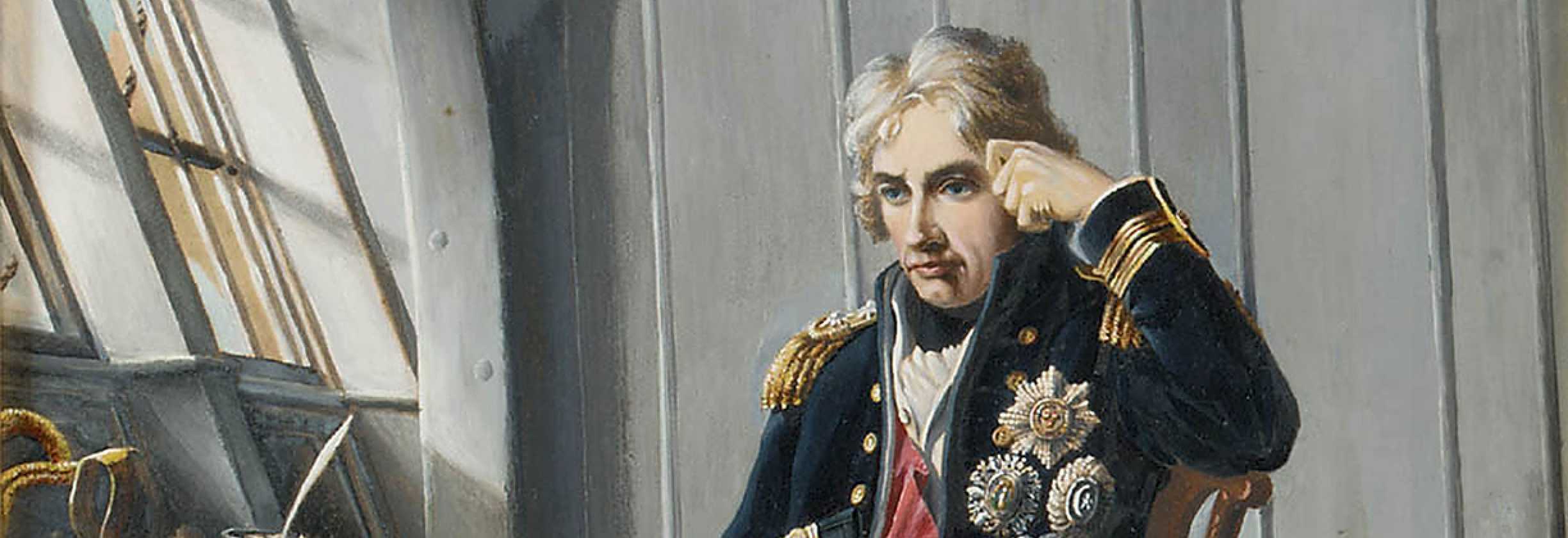
Admiral Lord Nelson (Source: Royal Museums Greenwich).
History remembers October 21st 1805 not only as Admiral Horatio Nelson’s last day on Earth, but also as the day he won the naval battle off Gibraltar (Cape Trafalgar), ensuring his name would forever live in posterity, history books and in our collective memory. A simple stroll on Trafalgar Square in London or a quick visit in the crypt of St. Paul’s Cathedral where he lies for eternity highlight how much this victory and the man who made it possible mean to British consciousness.
Standing at most five and a half feet and afflicted with seasickness and other illnesses, Horatio Nelson was hardly a giant among men […].
Admiral (ret.) James Stavridis
During last spring’s confinement, I obtained and reviewed a copy of one of the best books I read this year Sailing True North: Ten Admirals and the Voyage of Character (The Penguin Press) by Admiral (ret.) James Stavridis. This motivating author devoted one of his chapters to the famous son of Albion.
“Born weak and sickly, Horatio Nelson was hardly a giant among men […] he stood at most five and a half feet in his stockings. Slight of built, and eventually missing both an arm and an eye lost in combat, he was also afflicted with seasickness and other illnesses on and off throughout his life.” He furthermore suffered from a boyhood insecurity complex that made him seek and revel in public recognition. Traits that would certainly be mocked by the likes of Donald Trump where he be alive today.
Whatever physical impediment he suffered from was vastly compensated by his character. To that effect, the former Supreme Allied Commander of NATO reminds us that the famous sea warlord was an adept team-builder who also knew how to take care of his men, “[…] ensuring that his sailors received the best possible treatment.”
How can this role model of the past inspire us today?
Seasonal depression is upon us as the days grow shorter, influenza is about to rear its ugly head and we are in the midst of a worldwide and deadly pandemic. Much to be depressed about and wither in self-pity. But we must not. Despite his condition and preconditions, Horatio Nelson was never one to cower or shy away from his duties. Were he alive today, he would certainly be one of the staunchest fighters against the current somber context, displaying his values of determination, discipline and goodwill unto others. We can do the same today by wearing a mask, keeping our distances, helping local foodbanks, getting in touch with the elderly just to name a few examples.
It is not at all difficult to imagine Admiral Nelson wearing a mask himself and caring for people around him, as any true leader should, because he did in his times. “He worked hard to make to make sure that food was fresh [for his sailors], water plentiful and unpolluted, and each ship had a competent surgeon.”
Despite his handicaps, Nelson trusted his judgment to achieve his goal. At the battle of Copenhagen, in 1801, “[…] he famously deliberately pressed a telescope to the eye that had been blinded earlier in his career, thereby ignoring the signals of his superior, and ended up winning an important victory over the Danes. The phrase “turning a blind eye” was reportedly inspired by the incident.”
A powerful testimony that our liabilities can be pivoted to become our greatest assets.
Today, more than ever, the victor of Cape Trafalgar – who clipped Napoleon’s sails and guaranteed Britain’s safety – has a lot to teach us. And we would all be well advised to learn from his school of character.
Want to read more about inspiring figures like Horatio Nelson who rode the waves of adversity and led the ships home safely? I strongly suggest you grab a copy of Admiral Stavridis’ excellent book.
Trust me, you won’t regret it.
________
Admiral James Stavridis, Sailing True North: Ten Admirals and the Voyage of Character, New York, The Penguin Press, 2019,336 pages.
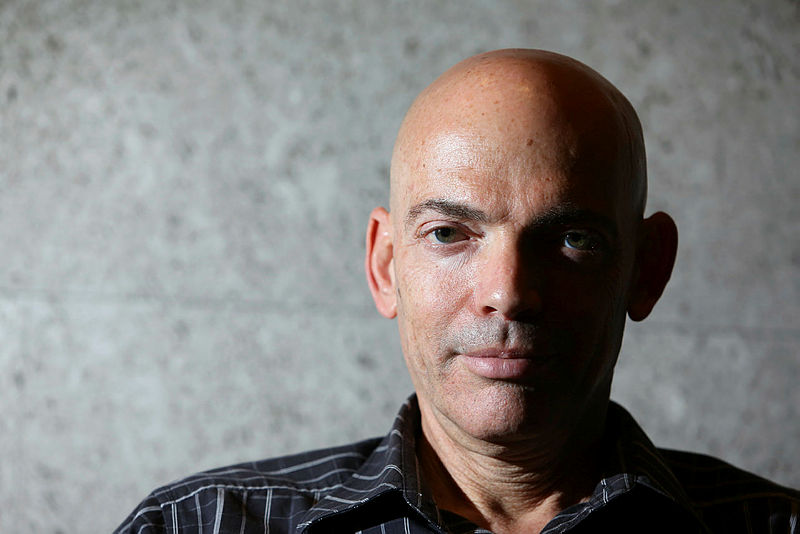
Few months ago, I reviewed Yaakov Katz and Amir Bohbot’s enthralling book The Weapons Wizards: How Israel Became a High-Tech Military Superpower (St. Martin’s Press). They expose the adaptive and innovative qualities so characteristic of Israel’s ethos – ethos that was essential to its birth, survival and evolution in the family of nations, markedly in the defense sector. I was particularly thrilled to read about Dr. Daniel Gold, current Head of the Directorate of Defense R&D for the Ministry of Defense of Israel and father of the legendary “Iron Dome”, which intercepts and destroys short-range rockets and artillery shells aimed at Israel.
Last June, I was invited by Mr. David Levy, Consul General of Israel in Montreal, to a Zoom conference with Dr. Gold. The theme of the discussion was Israel’s fight against COVID-19.
Apart from realizing the magnitude of Tsahal’s across-the-board involvement in the fight against the pandemic, one of the comments made by Brigadier-General (ret.) Dr. Gold struck me in a particular way. To paraphrase him, in Israel, when there is a crisis, the concerned actors get to work; budgetary concerns come after. This reminded me of a passage in The Weapon Wizards where Dr. Gold is quoted as saying that Israel “[…] didn’t have the luxury of waiting. It needed to survive.” It was then about the development of the Iron Dome, but this tenet now finds a very concrete application with the current pandemic with which we all have to cope.
Following the conference, I was eager to submit a few questions regarding Israel and the pandemic to Dr. Gold, a famous Israeli scientist. I am very grateful towards M. Levy who generously accepted to pass along my list of questions.
You will find below our insightful exchange about the fight against this worldwide pandemic and how Israel plans to prevail.
______
My main goal has been, and continues to be, the identification and adaptation of defense technologies, to provide diagnostic tools and clinical solutions in order to meet the urgent challenges of the ongoing events.
BGen (ret.) Dr. Daniel Gold
What role has been played by the Research and Development Department of the Israeli Ministry of Defense in fighting COVID-19?
Since the outbreak of the Corona epidemic, many different organizations have offered their help to the Ministry of Health.
As head of DDR&D at IMOD, my main goal has been, and continues to be, the identification and adaptation of defense technologies, to provide diagnostic tools and clinical solutions in order to meet the urgent challenges of the ongoing events.
I drafted my experts in all disciplines-from AI sensors, robotics to materials, and even some biologists, who are world leading experts in quick, efficient R&D to meet challenging and urgent needs, just like we did with the development of Iron Dome or with the counter-tunnel efforts.
We are leading the National Technology Center for the Combat against the Corona Epidemic to address various aspects of the coronavirus epidemic, and working together with the personnel of MoH, the lsraeli Innovation Authority, the National Security Council, defense industries and many others, to map the current and future needs and to provide quick solutions, prioritized to tackle the most urgent challenges.
After the publication of my post about his recent and excellent article about the relationship between Russia and the West in the immediate aftermath of Cold War, Professor Sergey Radchenko (University of Cardiff) kindly accepted to answer few questions to examine the matter further. Here is the content of our exchange.
Having met with former Deputy Foreign Minister Georgii Mamedov when he served as Ambassador of the Federation of Russia in Canada, I am wondering if you might have more information about his role during this pivotal period in the relations between Washington and Moscow?
Mamedov is a mystery to me. He seems to have played a crucial role in the relationship, and one that was very constructive. If I were to guess at his political orientation, I would say that comes across as someone who valued Russia’s cooperation with the West and worked to bring Moscow into a closer alignment with the West. On the other hand, unlike other key figures on both sides of Russia-US relations (e.g. Talbott, Albright, Kozyrev, Primakov and others), Mamedov has not been willing to go on record with his version of events. I hope he will change his mind and we’ll get to hear his side of the story.
In your article, you oftentimes refer to the Russian elites and their impact on the policymaking about the relationship with the West. What about the American and Western elites? Did their influence play a role in the attitude towards Moscow?
The article talks a lot about the “elites,” which I guess is the same thing as what is often referred to as the “foreign policy blob” in the American context. There has recently been much discussion in the US about the role of the “blob,” as well as its vested interests (for example, in the question of US global leadership). This discussion is immediately applicable to the Russian context (and vice versa), since foreign policy of a country is really what the elites (or the “blob”) make of it. I am not being critical of the “blob” here; I just argue that there are certain narratives that are shared by the elite. In Russia’s case, it’s the narrative of their country’s international “greatness.” In the US case, it’s a question of America’s global leadership. In both Russia and the US these narratives cut across partisan lines.
The Russians have always tended to overstate the Americans’ willingness to participate in some kind of a condominium with Moscow.
The Clinton administration clearly did not seem keen on engaging Russia in the perspective of offering that country a seat at the table. Your article depicts Anthony Lake and Secretary of State Warren Christopher as being in the opposing camp of such an outcome. But were there senior officials who diverged with that assessment and who might have been more inclined to convey Russia to a greater role?
Mary Sarotte has done much more work than I have on the US side; her research shows that, indeed, there were people in the Pentagon, for instance, who were abhorred by the idea of rapid NATO enlargement. They were worried about Russia’s negative reaction and were more interested in the strategic arms control dialogue with the Russia or in Ukraine’s denuclearization. Whether this means that they were willing to give Russia a seat at the table is another matter. The Russians have always tended to overstate the Americans’ willingness to participate in some kind of a condominium with Moscow.The resurgence of the adversarial narrative, which legitimizes Putin as protector of Russia’s ‘national interests’ (defined in adversarial terms) was something that both sides contributed to.
On the Western side, you refer to Americans – of course – and to a certain extent to the Germans. I was also very interested in reading your reference to a memorandum from British Ambassador Rodric Braithwaite to Anthony Lake. How would you resume the British attitude in regards with NATO enlargement and potential Russia membership?
I have spoken to Malcolm Rifkind who was the Defense Secretary and the Foreign Secretary in the UK while this debate was going on. His position then (and now) is that Russia could never be a part of NATO, as this would undermine the very purpose of the alliance. This of course suggests that the purpose of the alliance is to keep Russia at bay, and perhaps this is how the British policy-makers viewed the problem at the time. More often, they expressed their opposition with reference to practical concerns, e.g.: how could Russia be integrated in military terms? Would this not make the alliance into another version of the OSCE?
Fundamentally, of course it was not in the immediate British interest to dilute NATO by inviting a country like Russia into the alliance, especially that the Russians claimed at the time that they have a special kind of relationship with the United States (as a key partner). This would just diminish Great Britain’s status as a key player in the West. It is interesting that in the early 1990s, the British were trying to redefine Britain’s post-Cold War role. In one of the seminars that was convened by the Prime Minister to do that, it was proposed to strive towards maintaining Britain’s status as one of the three key European powers (the others being… Germany and France). Russia was not even on the radar.
The resurgence of the adversarial narrative, which legitimizes Putin as protector of Russia’s ‘national interests’ (defined in adversarial terms) was something that both sides contributed to.
After he arrived at the Kremlin in 2000, President Putin sent signals that he was well-disposed towards the West (notably his relationship with President Bush and a visit to the Bush family summer home in Kennebunkport) – a disposition that changed over time. In your opinion, could more have been accomplished at the beginning of the Putin reign to engage further Russia with the West? It seems clear that Putin was inclined to build closer relations with the West early on in his tenure. Like Yeltsin, he expressed interest in joining NATO. I do think that an opportunity was missed to tie Russia institutionally to the West. It does not mean that Putin can evade his share of responsibility for the worsening of the relationship. It just means that, just as the article argues, the resurgence of the adversarial narrative, which legitimizes Putin as protector of Russia’s ‘national interests’ (defined in adversarial terms) was something that both sides contributed to.
The notion that Russia is part of the West is still a mainstream political view.
Are there still pro-Western advocates in the entourage of President Putin?
Yes, the two narratives that were present in the 1990s are still present, although the narrative of engagement is much less pronounced now. Putin is deeply invested in the adversarial narrative and won’t easily shift back. But were he to step down, the elites can easily shift in the other direction. No one hold deeply ideological views about Europe; if anything, the notion that Russia is part of the West is still a mainstream political view.
What would it take for Russia and the West (NATO) to get back on a more cooperative trajectory? Would it even be beneficial?
It’s tricky now because there are structural impediments (primarily, Crimea). It would be completely unrealistic to imagine that Russia will return Crimea even after Putin is gone. Re-establishing good relations between Russia and the West would thus require the West to find a viable position for itself in the Russian-Ukrainian conflict. Perhaps this would mean offering incentives to both in the context of eventual membership in both NATO and the EU. This is a far-fetched idea at the moment but the alternative to creative thinking is to simply hunker down and wait until Russia melts down. This is not a policy.
Are you currently working on a book and, if so, would you agree to lees us know what it will be about?
The book is a history of Soviet/Russian foreign policy since 1945 to the present. It’s been years in writing, and I can’t wait to finally present it to the readers! I hope it will appear in print next year.
Many sincere thanks Professor!
_____________
(version française)
« Attendre que la Russie disparaisse n’est pas une option. » – Entrevue exclusive avec le Professeur Sergey Radchenko
Dans la foulée du billet que j’ai publié à propos de votre article très perspicace sur la relation entre la Russie et l’occident immédiatement après la fin de la Guerre froide, le Professeur Sergey Radchenko (Université de Cardiff) a généreusement accepté de répondre à mes questions pour approfondir le sujet.
Ayant rencontré l’ancien sous-ministre des Affaires étrangères Georgii Mamedov lorsqu’il était ambassadeur de la Fédération de Russie au Canada, je me demande si vous pourriez nous en dire plus à propos de son rôle au cours de cette période charnière dans les relations entre Washington et Moscou.
Mamedov est un mystère pour moi. Il semble avoir joué un rôle crucial dans la relation, et un rôle très constructif. Si je devais deviner son orientation politique, je dirais qu’il s’agit d’une personne pour qui la coopération de la Russie et l’Occident était importante et qui a déployé des efforts pour rapprocher Moscou de l’Occident. D’un autre côté et contrairement à d’autres personnalités clés des deux côtés des relations russo-américaines (par exemple Talbott, Albright, Kozyrev, Primakov et autres), Mamedov n’a pas été disposé à donner officiellement sa version des événements. J’espère qu’il changera d’avis et que nous aurons accès à sa version de l’histoire.
Dans votre article, vous faites souvent référence aux élites russes et à leur impact sur l’élaboration des orientations politiques concernant les relations avec l’Occident. Qu’en est-il des élites américaines et occidentales? Leur influence a-t-elle joué un rôle dans l’attitude envers Moscou?
L’article parle beaucoup des « élites », ce qui, je suppose, est la même chose que ce que l’on appelle souvent le « blob » (la communauté washingtonienne d’experts en politique internationale selon Ben Rhodes, ancien conseiller du président Barack Obama)[1] dans le contexte américain. Il y a eu récemment beaucoup de discussions aux États-Unis sur le rôle du « blob », ainsi que sur ses intérêts particuliers (par exemple, dans la question du leadership mondial des États-Unis). Cette discussion est immédiatement applicable au contexte russe (et vice versa), puisque la politique étrangère d’un pays est vraiment ce que les élites (ou le blob) en font. Je ne critique pas ici le « blob »; Je soutiens simplement que certains discours sont partagés par l’élite. Dans le cas de la Russie, c’est celui de la « grandeur » internationale de leur pays. Dans le cas des États-Unis, il s’agit du leadership mondial. En Russie et aux États-Unis, ces discours transcendent les axes partisans.
Les Russes ont toujours eu tendance à exagérer la volonté des Américains de participer à une forme de direction à deux avec Moscou.
L’administration Clinton ne semblait manifestement pas désireuse d’engager la Russie dans la perspective d’offrir à ce pays un siège à la table. Votre article dépeint Anthony Lake et le Secrétaire d’État Warren Christopher comme étant dans le camp opposé à un tel scénario. Mais y avait-il des hauts fonctionnaires qui ont divergé de cette option et qui auraient pu être plus enclins à amener la Russie à jouer un plus grand rôle?
Mary Sarotte a travaillé le côté américain beaucoup plus que moi; ses recherches illustrent que, en effet, il se trouvait des gens au Pentagone, par exemple, qui avaient en horreur l’idée d’un élargissement rapide de l’OTAN. Ils étaient inquiets de la réaction négative de la Russie et étaient plus intéressés par le dialogue sur le contrôle des armements stratégiques avec la Russie ou par la dénucléarisation de l’Ukraine. Est-ce que cela signifie qu’ils étaient disposés à accorder une place à la Russie à la table est une autre question. Les Russes ont toujours eu tendance à exagérer la volonté des Américains de participer à une forme de direction à deux avec Moscou.
Du côté occidental, vous faites référence aux Américains – bien sûr – et, dans une certaine mesure, aux Allemands. J’ai également été très intéressé de lire votre référence à un mémorandum de l’ambassadeur britannique Rodric Braithwaite destiné à Anthony Lake. Comment résumeriez-vous l’attitude britannique en ce qui a trait à l’élargissement de l’OTAN et l’adhésion potentielle de la Russie?
Je me suis entretenu avec Malcolm Rifkind, qui était ministre la Défense et des Affaires étrangères de la Grande-Bretagne pendant que ce débat avait cours. Sa position à l’époque (et maintenant) est à l’effet que la Russie ne pourrait jamais faire partie de l’OTAN, car cela minerait la nature même de l’alliance. Cela suppose naturellement que le but de l’alliance est de tenir la Russie à distance, et c’est peut-être ainsi que les décideurs politiques britanniques percevaient la question à l’époque. Plus souvent, ils ont exprimé leur opposition relativement à des préoccupations pratiques, par exemple: comment la Russie pourrait-elle être intégrée sur le plan militaire? Est-ce que l’effet d’une telle mesure n’aurait pour effet de transformer l’alliance en une autre version de l’OSCE?
Fondamentalement, bien sûr, il n’était pas dans l’intérêt britannique immédiat de diluer l’OTAN en y invitant un pays comme la Russie, et ce, d’autant plus que les Russes affirmaient à l’époque qu’ils entretenaient un type particulier de relation avec les États-Unis (en tant que partenaire-clé). Cela ne ferait que diminuer le statut de la Grande-Bretagne en tant qu’acteur de premier plan en Occident. Il est intéressant de noter qu’au début des années 1990, les Britanniques tentaient de redéfinir le rôle de la Grande-Bretagne après la Guerre froide. Dans l’un des séminaires qui a été organisé par le Premier ministre à cette fin, il a été proposé de s’efforcer de maintenir le statut de la Grande-Bretagne en tant que l’une des trois principales puissances européennes (les autres étant… l’Allemagne et la France). La Russie n’était même pas sur les écrans radar.
La résurgence du discours antagoniste, qui légitime Poutine en tant que protecteur des « intérêts nationaux » de la Russie (définis en termes antagonistes), est un phénomène auquel les deux parties ont contribué.
Après son arrivée au Kremlin en 2000, le président Poutine a envoyé des signaux indiquant qu’il était bien disposé envers l’Occident (notamment sa relation avec le président Bush et une visite à la résidence d’été de la famille Bush à Kennebunkport) – une disposition qui a changé avec le temps. À votre avis, aurait-on pu faire plus au début du règne de Poutine pour renforcer les liens entre la Russie et l’Occident?
Il semble manifeste que Poutine était enclin à établir des relations plus étroites avec l’Occident au début de son mandat. À l’instar de Eltsine, il a manifesté son intérêt à joindre l’OTAN. Je pense qu’une occasion a été manquée de lier institutionnellement la Russie à l’Occident. Cela ne signifie pas que Poutine peut être dédouané de toute responsabilité dans l’aggravation de la relation. Cela signifie simplement que, comme l’indique l’article, la résurgence du discours antagoniste, qui légitime Poutine en tant que protecteur des « intérêts nationaux » de la Russie (définis en termes antagonistes), est un phénomène auquel les deux parties ont contribué.
L’idée selon laquelle la Russie fait partie de l’Occident est toujours une vision politique dominante.
Y a-t-il encore des partisans du discours pro-occidental dans l’entourage du président Poutine?
Oui, les deux discours qui étaient présents dans les années 1990 sont toujours présents, même si celui des tenants du rapprochement est beaucoup moins prononcé maintenant. Poutine est profondément investi dans le discours antagoniste et ne reviendra pas facilement en arrière. Mais s’il devait quitter ses fonctions, les élites peuvent facilement changer de direction. Personne n’a une vision profondément idéologique de l’Europe. Pour tout dire, l’idée selon laquelle la Russie fait partie de l’Occident est toujours une vision politique dominante.
Que faudrait-il pour que la Russie et l’Occident (OTAN) reviennent dans une trajectoire davantage axée sur la coopération? Serait-ce même bénéfique?
C’est délicat, car il y a maintenant des obstacles structurels (principalement la Crimée). Il serait totalement irréaliste d’imaginer que la Russie retournera la Crimée, même après le départ de Poutine. Le rétablissement de bonnes relations entre la Russie et l’Occident exigerait donc que l’Occident trouve une position avec laquelle elle serait à l’aise dans le conflit russo-ukrainien. Cela signifierait peut-être offrir des incitatifs aux deux dans le contexte d’une éventuelle adhésion à l’OTAN et à l’UE. C’est un scénario tiré par les cheveux pour le moment, mais l’alternative à la pensée créative est simplement de se recroqueviller et d’attendre que la Russie s’effondre. Il ne s’agit pas d’une politique viable.
Travaillez-vous actuellement sur un livre et, si oui, seriez-vous disposé à nous dire à quel sujet?
Ce livre sera une histoire de la politique étrangère soviétique / russe depuis 1945 jusqu’à maintenant. J’y travaille depuis des années et je suis impatient de l’offrir aux lecteurs! J’espère qu’il sera disponible l’année prochaine.
Merci beaucoup Professeur!
[1] Sylvie Kauffmann, « 2021, avec ou sans Donald Trump », Le Monde, jeudi 8 octobre 2020, p. 32.
Dans son Dictionnaire amoureux du Général (que j’ai l’intention de recenser ici prochainement), le regretté Denis Tillinac citait De Gaulle qui affirmait : « L’homme d’action ne se conçoit guère sans une forte dose d’égoïsme, d’orgueil, de dureté, de ruse. » Cette citation m’a beaucoup tracassé, parce qu’on a souvent tendance à idéaliser les grands personnages. On les imagine au-dessus des défauts affligeant le commun des mortels. Après tout, le souvenir de leurs accomplissements ne permet-il pas à leur mémoire de prendre place dans l’Olympe des consciences?
J’affirme que cette citation m’a tracassé, parce que la lecture du dernier livre de Pierre Servent, De Gaulle et Pétain (Éditions Perrin) a répondu au questionnement qui m’habitait à propos de l’homme du 18 juin.
Figure d’inspiration de nos jours, De Gaulle a néanmoins cumulé une feuille de route parsemée d’animosité. « Détesté par une bonne partie de l’élite de l’armée », « il n’a guère d’amis dans l’armée ». Il peut cependant, au début de son parcours, compter sur le soutien indéfectible d’un père spirituel hors norme – le Maréchal Pétain – qui lui apprend tous les trucs du métier, dont celui d’être un bon comédien. Une excellente école pour le protégé.
L’auteur nous rappelle qu’au sortir de l’École de guerre en 1924, « Son attitude arrogante, ses contre-performances dans l’exécution de certains exercices qu’il juge au-dessous de son talent naturel, sa difficulté à accepter la critique font que la majorité du corps enseignant souhaite le classer en queue de peloton de la promotion de l’École de guerre, dans le troisième tiers, avec la mention « assez bien ». C’est une catastrophe qui ne se remonte jamais dans une carrière militaire déjà mal engagée. »
J’étais pourtant sous l’impression que De Gaulle était un premier de classe…
Trois ans plus tard, le Maréchal l’impose comme conférencier extraordinaire. De quoi faire rager les détracteurs – et on devine qu’ils sont nombreux – du Connétable. La mauvaise réputation de De Gaulle était notamment assortie du fait qu’il était connu pour être un chef très dur et distant envers ses subalternes.
À priori, on serait porté à croire qu’un tel patronage s’accompagnerait d’une loyauté sans faille. Pas pour De Gaulle, dont la boussole personnelle est orientée par son destin et celui de la France. S’il faut trahir une vieille amitié pour y arriver, qu’il en soit ainsi.
En 1938, De Gaulle fait accepter le manuscrit de La France et son armée par un éditeur, Plon, lequel ignore « […] que son nouvel auteur publie un texte qui, d’une certaine façon, appartient à un autre […] ». Le livre résultant d’une commande passée du maréchal sera publié et la rupture entre les deux hommes sera irrémédiablement consommée. Le vin est tiré… Et la table est mise pour la scène légendaire qui se jouera quelques mois plus tard.
De Gaulle n’a pas hésité à grimper sur les épaules de son protecteur pour se hisser au faîte de la gloire, une gloire néanmoins chèrement acquise dans les sacrifices encaissés sur la route de l’exil pendant la Seconde Guerre mondiale.
Lorsqu’il aborde le thème de l’orgueil – une caractéristique arborée fièrement par les deux protagonistes de son récit – Pierre Servent se déploie à multiplier les qualificatifs : cosmique, incommensurable, sans bornes, immense, puissant, d’airain, himalayen… Mais aussi bafoué et blessé. Comme pour nous rappeler que le destin des grands personnages est forgé au feu des épreuves et que les orgueils surdimensionnés constituent un rempart protégeant une sensibilité ne voulant pas s’exposer. Des épreuves que tout un chacun peu à peine imaginer. Je repense, en écrivant ces mots, à la séquence du film mettant en vedette Wilson Lambert et Isabelle Carré – que j’ai eu le privilège de visionner avant son retrait des salles de cinéma du Québec à cause de la COVID-19 – au cours de laquelle on voit le personnage principal quitter fin seul la France en juin 1940.
Pour devenir un artisan de l’histoire, De Gaulle avait compris qu’il ne faut pas être aimable et docile, mais qu’il fallait savoir ramer à contre-courant, contrairement à son ancien mentor qui profitait de la vie bonne dans la thermale Vichy.
Le maréchal Pétain fut certes le professeur généreux du Général de Gaulle dans la période formatrice de sa vie. La capacité de l’élève à se démarquer – certains diront à tuer la figure – du maître, lui aura permis de se détacher de tout en juin 1940 pour mieux attacher son wagon à la locomotive de l’histoire.
Sous la plume animée de cet éminent spécialiste en histoire militaire – qui nous a réservé d’autres bons livres comme une excellente biographie du Feld-maréchal Erich von Manstein et L’extension du domaine de la guerre que j’avais beaucoup apprécié – on apprend que le destin a un prix, celui de ne croire qu’en soi. Contre vents et marées. Une leçon puissante, surtout en cette période difficile.
_____________
Pierre Servent, De Gaulle et Pétain, Paris, Éditions Perrin, 2020, 224 pages.
Je remercie Mme Marie Wodrascka, des Éditions Perrin, qui m’a aimablement fourni un exemplaire de cet excellent livre.
Russian President Boris Yeltsin and US President Bill Clinton (Source: The Telegraph)
Russia is fascinating, Russia is dangerous. It is nevertheless important to question ourselves as to the sources of its current pugilistic conduct. Was it predestined by its history, its political DNA or could this reality have been avoided by a more efficient engagement in the past?
The Cardiff University Professor argues that in the immediate aftermath of the Cold War, the “adversarial relationship [between Washington and Moscow] was replaced with the idea of a partnership between Russia and the West but would that partnership carry enough weight to satisfy the Russian elites’ pretensions to global importance? The proof was in the pudding, and the baker was in Washington.”
In a nutshell, Russia wanted to be seated “[…] at the head of the table, right next to America’s” But Washington “[…] did not need Russia’s help in running the world, neither during the Cold War, nor, especially, in its aftermath.” After all, “[…] the world was a jungle, where the mightiest had the power of persuasion and no one listened to the counsel of the weak.”
Fast forward, Vladimir Putin has learnt that lesson and applies it in the implementation of his vision of international relations.
But let’s go back to Boris Yeltsin and Bill Clinton. There were talks about Moscow joining NATO, but no one in the West was much interested in that prospect, even though American officials dangled the possibility as bait. During that period, the embers of war inflamed former Yugoslavia and the world witnessed a vicious and murderous civil war begin in 1991. President Yeltsin “tried to make Bosnia a showcase of Russian-American cooperation.” But Washington was not interested, and Russia was “left on the sidelines”, the pride associated to her self-declared status humiliated. Much the same happened when Moscow sought to collaborate in the negotiations with North Korea’s nuclear program.
In a word, Moscow was not to be seated at the head of the table with Washington.
But by embracing enlargement without finding an appropriate role for Russia, the same [Western] policy makers overlooked the possibility that it might actually contribute to the latter’s nationalistic resurgence or, indeed, externally legitimize it. This is exactly what happened.
Pr. Sergey Radchenko
At that stage, one can sympathize with Russia’s frustration and feeling of abandonment.
Since nature abhors vacuum, “Russia’s own ontological security as a part of the West depended in large part on whether it was being recognized as such. If it wasn’t – that, too, was legitimating, because it helped the Russian political elites find their ground in an uncertain world, if not as friends, then at least as adversaries of the West.”
Professor Radchenko brings some nuances to that point of view, when he writes that “[…] one can of course lament Russia’s exclusion from Europe as a deliberate act of policy but it is hard to deny that such exclusion was partly justifiable in view of Russia’s own policies [like, for example, the war in Chechnya] […].”
Russia sought “legitimation through an adversarial relationship”, while the United States refused to offer “[…] enough leeway for legitimation through a genuine and inclusive partnership.” The seeds of confrontation had been planted by efficient gardeners. “It is hard to blame the White House”, writes the author. “They were the realists. But by being too realistic and not sufficiently idealistic at a time when they could have made a difference, they helped make Russia’s imperialist resurgence a self-fulfilling prophecy.”
As a student of history, I would bet that a discreet apparatchik named Vladimir Putin took careful notes and vowed not to fall into the idealist trap if his time came. And it came.
Russia certainly is not faultless in the current international context. But one can wonder what could have happened if the Clinton administration had adopted a different posture. In the land of “what ifs”, anything is possible, and I am not fond of revisionism. But one can easily assume that humiliating someone is never a good insurance policy for future good relations.
You can’t change the past, but there is always hope for the future. Russia is not immune to good relations with the United States. Vladimir Putin was the first international leader to call and offer assistance to President George W. Bush after the horrendous terrorist attacks on 9/11 and he was among the first ones to wish a speedy recovery to Donald Trump after news broke that the US President had tested positive to Covid-19.
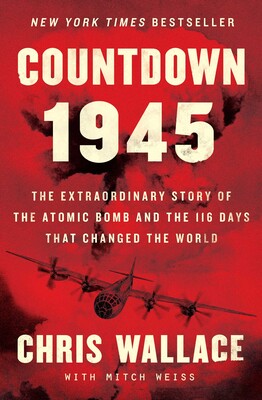
In just a few hours, veteran news anchor Chris Wallace will moderate the first presidential debate between Donald Trump and Joe Biden, an exercise that will shine a bright light on the character of these individuals vying to occupy the Oval Office starting next January 20th.
As a seasoned journalist, Chris Wallace has a unique perspective of those who are called to occupy the seats of power. He has recently put this quality to good use in offering a better understanding of Harry S. Truman, one of the most consequential President in American history.
On April 12, 1945, President Roosevelt’s Veep left behind the bourbon and branch water drink he was enjoying on Capitol Hill to reach the White House urgently. Notoriously sick, the news of the death of the United States Commander in chief nevertheless sent shock waves throughout the country and the world. Clearly unprepared, Truman was de facto constitutionally called to replace the beloved leader.
Approximately two weeks after becoming the new White House resident, Secretary of War Henry Stimson broke the news to President Truman that he was about to possess a new superweapon, the atomic bomb, which could play a determining role in the end of the hostilities with Japan. Only two months after being sworn in, Truman travelled to Potsdam for a summit with seasoned leaders Churchill and Stalin. His education as a warlord must have been quite brutal.
Confronted with a seemingly war with no end, the President juggled many different scenarios over several weeks. At first, he considered a ground invasion, a scenario that entailed “[…] a long and bloody conflict.” Another option was “[…] a nonmilitary demonstration [of their new weapon], so the Japanese would see the futility of continuing the war.” But the possibility that the bomb might not work disqualified that option. Furthermore, Secretary of War Stimson, Chief of Staff Leahy, General Marshall and General Eisenhower were all against going for the atomic avenue. And they were no peaceniks. According to the author, “Truman spent more and more time on the question of how to deliver a final ultimatum to Japan”. After several weeks of “long and careful thought”, of agonizing, losing sleep and suffering from headaches, the new President “[…] felt it was inescapable that if the weapon worked, he must be willing to use it.” Even if he didn’t like it.
Even though I will always feel that the bombings of Hiroshima and Nagasaki have been one of the greatest human tragedies of history, I am nevertheless of the opinion that the Americans were blessed to have a thoughtful and considerate man like Harry S. Truman to end the war.
Throughout his book, Chris Wallace depicts him as a decent, loyal and straightforward man whose favorite expression was “Jesus Christ and General Jackson!” (I might adopt it myself!). The kind of person you would like to have breakfast with at your favorite eatery. To that effect, my favorite passage from the book is worth quoting at length:
One evening, after another frustrating day at the conference, Truman’s motorcade was leaving the palace when an Army public relations officer asked if he could get in the president’s car. Once the two men were by themselves in the backseat, the colonel said, “Listen, I know you’re alone over here. If you need anything like, you know, I’ll be glad to arrange it for you.”
“Hold it, don’t say anything more,” the president interrupted. “I love my wife, my wife is my sweetheart. I don’t want to do that kind of stuff. I don’t want you ever to say that again to me.” Truman and the colonel rode the rest of the way back to the Little White House in silence.
Chockfull of interesting details that entertain the reader, I was captivated to read about the creation of the Underwater Demolition Teams – the ancestors of the American Navy SEALs – who had to endure “Hell Week”. I also enjoyed learning about Sergeant Bob Caron – a tail gunner from New York – who wrote to the Brooklyn Dodgers to ask for a baseball cap of his favorite team, which he wore during the fateful mission on August 7th, 1945. These are the type of eccentricities that give life to history.
Countdown 1945 deserves a place in the gallery of great books about past US Presidents. Chris Wallace has an engaging pen and a knack for evoking the kind of details that humanizes the characters of his story – even though I would never be fond of being invited to a liver and bacon meal like the one Truman and Stalin liked so much to share at Potsdam.
Hopefully, Chris Wallace’s questions and interventions in tonight’s presidential debate will highlight the qualities required for the highest office in the United States.
___________
Chris Wallace (with Mitch Weiss), Countdown 1945: The Extraordinary Story of the Atomic Bomb and the 116 Days That Changed the World, New York, Avid Reader Press, 2020, 313 pages.
I would like to express my sincere gratitude to Allie Lawrence from Avid Reader Press (Simon & Schuster), who has been extremely kind in helping me obtaining a copy of this enthralling book.




 BookMarc