Napoléon, cet animal politique

Je ne pouvais laisser se terminer l’année 2021 sans recenser l’un des meilleurs livres consacrés à Napoléon qui me soit passé entre les mains pendant le bicentenaire de son décès. À cet égard, Les hommes de Bonaparte : La conquête du pouvoir 1793-1800 (Éditions Perrin) de l’historien Jean-Philippe Rey m’a permis de découvrir un aspect de l’Empereur dont ma connaissance était, je le constate bien aujourd’hui, très embryonnaire. Alors que les vertus de celui que Clausewitz appelait le « Dieu de la guerre » sont bien connues, son génie politique l’est beaucoup moins. Et c’est à ce niveau que l’auteur nous renseigne de manière convaincante.

Bonaparte, nous dit Jean-Philippe Rey était un animal politique, un ambitieux désireux de s’investir corps et âme pour grimper au sommet. En témoigne notamment son mariage avec Joséphine (un mariage dont les deux époux tirèrent avantage, malgré sa nature complexe) et une capacité consommée à tisser, entretenir et étendre ses réseaux. Le réseautage est d’ailleurs un – pour ne pas dire le – thème dominant du livre.

Poursuivre la lecture
“My subordinates took time to reach out and let me learn how to lead” – Exclusive interview with Vice-Admiral Mark Norman (ret.)

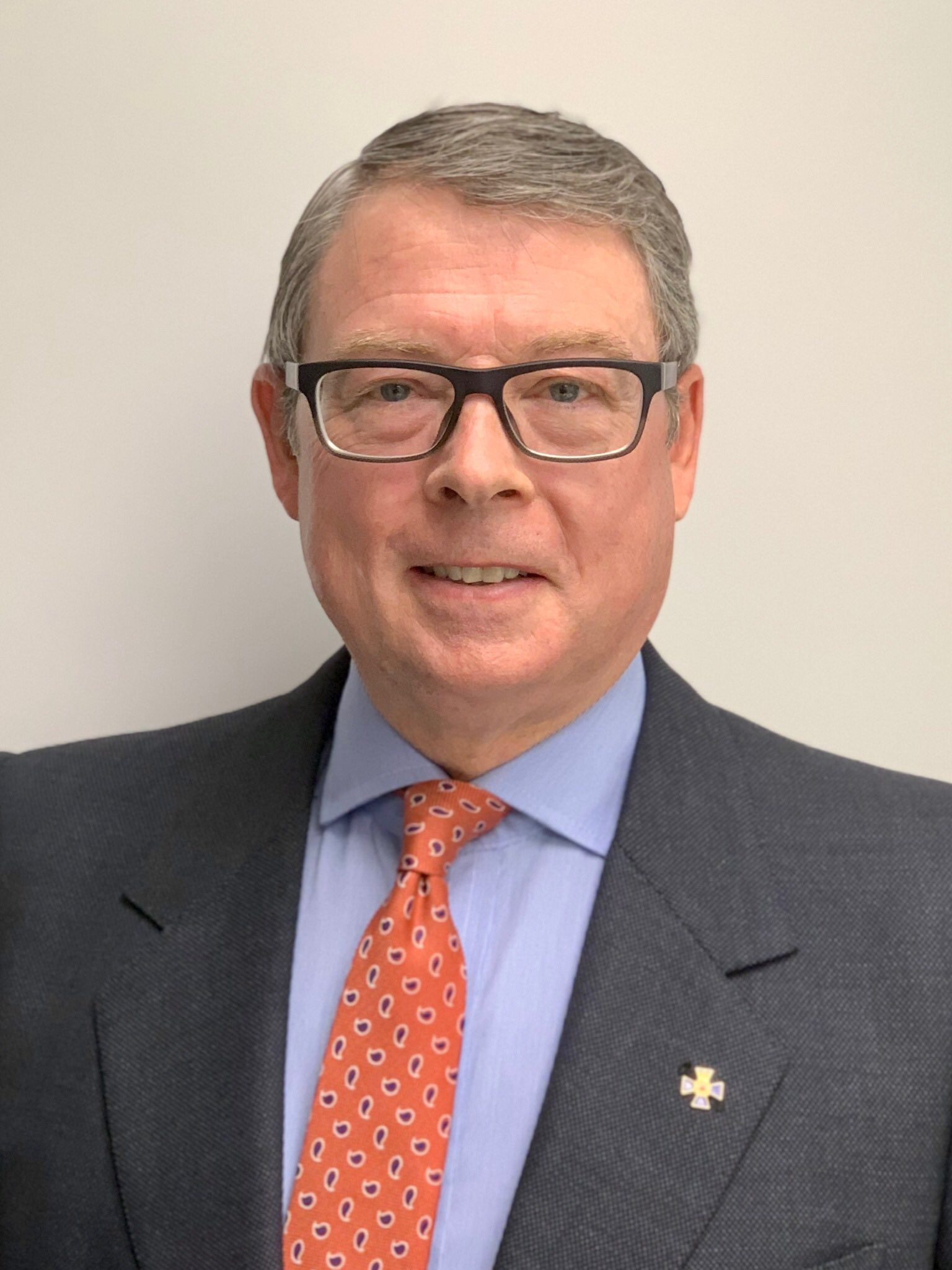
Vice-Admiral Mark Norman (ret.)

A few weeks ago, I was privileged to be in touch with Vice-Admiral (ret.) Mark Norman, former Vice Chief of the Defence Staff of Canada. A man for whom I have tons of respect and admiration. He gladly accepted to respond to a few questions for my blog. To that end, we had an extremely pleasant discussion on the phone. Here is the content of our exchange.

Vice-Admiral Norman, as you can see with the name of my blog, books about history (mainly military) are among my main subjects of interest. Are you an avid reader? If so, what are your favorite subjects?

Compared to others, I am not an avid reader. Surprisingly, I don’t read military history directly. I do however enjoy three broad areas of books. 1) believable fiction – often based in an imaginary world. For example, I was recently absorbed by the Dune trilogy. This is a brilliant story. 2) the pseudo-realist genre, whose stories are based on reality. I’m a big fan of James Bond, the Jason Bourne series, Jack Ryan and Dan Brown for example. And 3) non-fiction. I like more analytical pieces and variations of military history. In that regard, I have recently read Destined for War by Graham Allison, books about leadership by retired generals like Colin Powell and Rick Hillier. I’m a big fan of Malcolm Gladwell. I will occasionally dive into naval history, and I have read different translations of Sun Tzu. This said, I am less active in that last category than I am in the two others.

Continue reading ““My subordinates took time to reach out and let me learn how to lead” – Exclusive interview with Vice-Admiral Mark Norman (ret.)”

2034: The War With China?

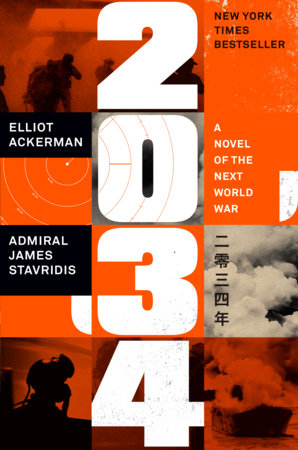
I am not a person who enjoys novels. My youngest daughter was therefore astonished when she saw me reading 2034: A Novel of the Next World War. “Yes, but it’s about a potential war between the United States and China. Plus, it’s written by an author I really like and admire, Admiral Stavridis [and Elliot Ackerman]”, I said. I admit that this was an exceptional experience and not only because of the genre, but mainly because this is one of the most thoughtful books anyone interested in geopolitics and the fate of the world should read now.

2034. About 12 years from now. Might as well say tomorrow. Russian President Vladimir Putin still occupies the highest office in the Kremlin – a scenario that made me smile – and the Israelis have lost the Golan after a military confrontation with Syria – an outcome that makes me cringe, since I have seen with my own eyes how vital this territory is to Israel’s security. The Chinese are still vying for “[…] uncontested control of the South China Sea.” Equipped with superior cyber capabilities, the Chinese People’s Liberation Army neutralizes the weapons and communications system of a flotilla of three American warships. Only one of them will remain afloat at the end of the confrontation. A military operation that was supposed to serve as a message turned into a World War.

Continue reading “2034: The War With China?”

When Khrushchev Helped JFK

Soviet leader Nikita Khrushchev and US President John F. Kennedy (source: Foreign Policy)

I recently read and reviewed an excellent biography of former Soviet leader Leonid Brejnev by Andreï Kozovoï. Even if I found it to be tragic, I was fascinated to read about Brejnev’s role in the toppling of his predecessor, Nikita Khrushchev, in October 1964. Khrushchev’s persona was light years away from the character portrayed in The Death of Stalin – it is a satire, after all – and his bombastic temper certainly played a role in his downfall.

Khrushchev always fascinated me, whether it is regarding his role during World War II, his succeeding Stalin in 1953 or his role with President John F. Kennedy (of whom we commemorate the assassination today) during the Cuban Missile Crisis in 1962. I recently came upon a very insightful article, “Nikita Khrushchev and the Compromise of Soviet Secret Intelligence Sources” in the International Journal of Intelligence and Counterintelligence by David Easter. In his research, the academic exposes several instances where the First Secretary of the Communist Party of the Soviet Union might have compromised Moscow’s intelligence work and capabilities.

Continue reading “When Khrushchev Helped JFK”

The Day Zhukov Danced

After German Field Marshal Wilhelm Keitel signed the articles of surrender on May 9th, 1945, “Soviet officers shook hands with their allies from the west.” World War II was officially over, and a festive spirit descended upon the victors. “Vodka and champagne flowed, freely, and buoyed by the joyous atmosphere, [Soviet Marshal] Zhukov even performed a Russian folk dance on the parquet floor of the officers’ mess.”

Passages like those abound in Volker Ullrich’s most recent book Eight Days in May: The Final Collapse of the Third Reich (Liveright). Between the covers of this absorbing and sometimes revolting book, the reader is immersed in the tragic hours when the grandees of the Nazi horde maneuver to cling to power under the leadership of Admiral Karl Dönitz, while trying to save as many German soldiers as possible from the advancing Russian soldiers who are – legitimately, one could say – thirsty for “revenge and retribution”.

Continue reading “The Day Zhukov Danced”

President Bush gave Afghans a taste of freedom

After the publication of my review of his enthralling and inspiring book Special Forces Interpreter, I had the privilege of being in touch Eddie Idrees. He agreed to answer a few questions and I am extremely grateful and happy to publish the content of this exchange today, as we commemorate Remembrance Day. I am sure you will appreciate this content as much as I liked conducting the interview.

President Biden’s decision to withdraw from Afghanistan was a betrayal.

Mr. Idrees, how did you feel about the Biden administration’s decision to withdraw all US troops from Afghanistan last summer?

In short, it was a betrayal. President Biden’s decision to withdraw from Afghanistan, was not only a betrayal to me and millions of other Afghans, but to the Americans, the families who lost loved ones, to the Canadians who lost their lives in Kandahar or the Brits in Helmand. It was a betrayal of the cause. I felt like Biden allowed a terrorist network to win and gave psychological victory to the rest of the terrorist networks in the West and the Middle East. I have so much to say, but this was a historic betrayal of American values.

Continue reading “President Bush gave Afghans a taste of freedom”

Pour Brejnev, « la meilleure façon de survivre [en politique, c’était] de s’entendre avec tout le monde »

Leonid Brejnev n’a jamais vraiment eu bonne presse dans l’opinion nord-américaine. C’est du moins l’impression que j’ai retiré des discussions que j’entendais dans ma tendre jeunesse. Lorsque les adultes commentaient l’actualité relativement à la Guerre froide, le numéro un soviétique faisait figure d’« imbécile en chef » pour reprendre la formule citée par Andreï Kozovoï dans la récente biographie qu’il consacre à Brejnev. Son successeur, Mikhaïl Gorbatchev, n’a pas beaucoup aidé en le diabolisant. Et comme le père de la Perestroïka était adulé en Occident, il n’y a qu’un pas à franchir pour comprendre que les chances de Brejnev d’être apprécié à sa juste valeur étaient bien minces.

Cela dit, Brejnev est un personnage fascinant à découvrir. Sous une plume agréable et accessible qui évite la confusion avec autant de noms qui peuvent être méconnus pour un.e néophyte, Andreï Kozovoi relate avec brio l’ascension au pouvoir d’un personnage trop facile à sous-estimer. Au fait, ça ne vous rappelle pas un autre opérateur docile qui s’est tranquillement placé dans les bonnes grâces de la famille Eltsine avant de déménager ses pénates au Kremlin le 31 décembre 1999? Mais je digresse…

Continue reading “Pour Brejnev, « la meilleure façon de survivre [en politique, c’était] de s’entendre avec tout le monde »”

“Good strategy might just be staying out of trouble” – Exclusive interview with Sir Lawrence Freedman

Sir Lawrence Freedman (credit: Boston Consulting Group)

Sir Lawrence Freedman is not only an internationally acclaimed author, but he is also the dean of British strategic studies and Emeritus Professor of War Studies at King’s College London. I have a boundless admiration for this institution and I hope to enlist in the near future to the online Master’s Degree in War Studies it offers.

Sir Lawrence generously accepted to answer a few questions for this blog and I am extremely grateful for that. Here is the content of our exchange.

Russia is a constant challenge because it feels itself at threat from the West and has taken a tough stance that creates an edginess.

My point was then that the withdrawal from Afghanistan, chaotic though it was, was unfortunately expected and the lesson (not to put substantial ground forces into a civil war) had been learned a decade earlier. Russia is a constant challenge because it feels itself at threat from the West and has taken a tough stance that creates an edginess, especially as it plays a disruptive role in European affairs. It poses a challenge that is serious but should be manageable as its underlying position if weak. China has been getting stronger for the past three decades year on year, although that growth may be stuttering now. It has turned itself into a great power, militarily as well as economically, and under Xi has taken a much more assertive stance on a whole range of issues. I believe this stance will turn out to be counter-productive, but it creates a risky and dynamic situation which could spark a wider confrontation (see answer to next question).

Continue reading ““Good strategy might just be staying out of trouble” – Exclusive interview with Sir Lawrence Freedman”

“The chance to put the terrorists in their holes”

“Interpreters are the forgotten heroes who played a significant role in the war against terrorism.” Reading these words in Special Forces Interpreter: An Afghan on Operations with the Coalition (Pen & Sword) by Eddie Idrees reminded me of the frustration I felt late last summer when I heard that those Afghans who sacrificed so much to help the coalition forces involved in the International Security Assistance Force (ISAF) during so many years were threatened by the withdrawal from Afghanistan decided by the Biden administration and followed by other countries like my own, Canada.

While I was keeping abreast of all developments happening in Kabul airport at the time, social media algorithms suggested I read a memoir from a courageous young man who took the fight to the enemy alongside American and British soldiers. In that moment, there was no doubt in my mind that I would review this book, if only to better understand the crucial role played by the interpreters in the “forever war”.

The author – who writes under a pseudonym for understandable reasons – summarizes that “it was the Afghan interpreters who provided information on cultural issues to avoid misunderstandings between the village, tribal leaders, Afghan forces and US forces. In this way they ultimately reduced casualties.”

Continue reading ““The chance to put the terrorists in their holes””

« Vladimir Poutine n’est pas un ennemi mortel pour l’Occident » – Entrevue exclusive avec Antoine Mariotti

Antoine Mariotti (source: France 24)

À la suite de ma recension de son livre La Honte de l’Occident – un exposé qui fait réfléchir, de par les nombreuses révélations qu’il contient et qui permettant de mieux comprendre l’état actuel de la politique internationale le journaliste de France 24 Antoine Mariotti a aimablement accepté de répondre à quelques questions pour ce blogue. C’est un livre qui se dévore avec une bonne tasse de thé, sous la plume d’un auteur de talent dont on souhaite qu’il nous offre d’autres plaisirs littéraires. Voici donc le contenu de notre échange.

_____________

Monsieur Mariotti, l’un des aspects qui m’a le plus marqué dans La Honte de l’Occident est à l’effet que Moscou et Téhéran pourraient devenir des rivaux à moyen et long terme. Pourriez-vous nous en dire davantage à propos des sujets et intérêts sur les récifs desquels cette relation pourrait se détériorer?

Ce sont les deux parrains du pouvoir syrien. Ils ont endossé ce rôle parce qu’ils estiment qu’ils ont aussi à y gagner. Il va être intéressant de voir le partage des marchés économiques… certains auraient été promis aux deux. Par ailleurs, sur un sujet comme Israël (voisin de la Syrie), les positions russe et iraniennes sont radicalement opposées. Moscou est allié au pouvoir israélien alors que Téhéran est son ennemi juré. Tsahal intervient militairement régulièrement en Syrie contre des intérêts iraniens et avec le feu vert, actif ou passif, de la Russie qui gère une grande partie de l’espace aérien syrien.

Poursuivre la lecture