
Ike. He’s literally everywhere. Last month, Pete Hegseth’s movers dropped his globe while transporting it to the War Secretary’s office, where he wanted to showcase it. Both his painting and the one depicting Sir Winston Churchill adorn the office of the US Ambassador in London in the gripping miniseries The Diplomat. On the big screen, Pressure revisits the nerve-racking dilemma facing the Supreme Commander of Allied forces in Europe – portrayed by Canadian-American actor Brendan Fraser – over whether weather conditions would allow the D-Day invasion to proceed.
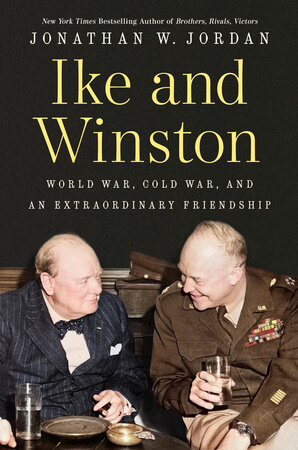
Bookstores, too, are riding the wave of this trend, with Jonathan W. Jordan offering a compelling new account of the long and tortuous partnership between two great statesmen in Ike and Winston: World War, Cold War, and an Extraordinary Friendship (Dutton). The military historian makes a persuasive case that the intriguing bond between these two giants still has much to teach us.
I take exception, however, to the book’s subtitle, which refers to an “extraordinary friendship”, because the two men espoused markedly different worldviews. In what is arguably the most striking passage in the book, the award-winning historian writes: “Churchill saw governments as extensions of men—their courage, their cowardice, their wisdom, follies, and perfidy. Ike saw governments as machines with human parts. When a part wore out, it was replaced, and the engine chugged away as before—whether the replacement part was an army private or a head of state”.
To be sure, Eisenhower and Churchill’s relationship spanned more than three decades. They first met at the White House on Christmas Eve 1941 and continued to interact through the various stages of their careers until the greatest Briton of all time departed this world in January 1965. From military headquarters to dinner tables, the author brilliantly portrays the ups and downs of a unique rapport, punctuated by Ike’s volcanic temper and Winston’s more moderate smoking and drinking habits than the public had been led to believe.
Through thick and thin, the British Prime Minister went to great lengths to support his subordinate as he navigated the turbulent waters of wartime leadership. As the war progressed, however, the tide turned against Churchill’s dominance within the Alliance. Britain was increasingly relegated to the back seat, and the adjustment was anything but easy.
Churchill, the romantic – of whom the historian writes that “history flowed through Winston’s veins like whisky, art, and politics” – had to contend with Eisenhower, the homespun realist, who never felt that gratitude or friendship should stand in the way of necessity. Even though he must have recognized the debt he owed to many individuals, the soldier-president had a track record of not being keen to repay them. He had no qualms about dispensing with anyone who had outlived his or her usefulness. As hard as it may be to accept, ingratitude comes with the territory.
For all his romanticism about the special relationship, the British leader was under no illusions about Ike, his temperament, or the company he kept. Although I have been a keen student of both statesmen for many years, I was astonished to read that Churchill “secretly hoped it would be Stevenson, not Eisenhower, who won the White House”. Having closed the book, however, this revelation comes as little surprise. If he were to be chosen to occupy 10 Downing Street once again—which he was in 1955—the Tory leader expected that “he would have another shot at making peace by means of a meeting of the Big Three”, echoing the victorious trio that vanquished the Axis in 1945.
The view from the Potomac was quite different, and this divergence would put considerable strain on the relationship between London and Washington. In a nutshell, Ike would keep his friend “at arm’s length”, which certainly didn’t please the occupant of 10 Downing Street. Those differences were part of a broader trend that would eventually come to a head under Churchill’s successor, Anthony Eden. The ill-fated new Prime Minister had to contend with two major setbacks: a botched gallbladder operation and a disastrous military expedition. The latter culminated in the 1956 Suez Crisis, bringing relations with the Eisenhower administration to the brink and ultimately ending his political career.
“Never be separated from the Americans” had been the lodestar of Churchill’s political philosophy. But this commitment came at a price, one that his successors would have to pay at various turning points over the ensuing decades. As sentimental as Churchill’s vision of a fraternity among English-speaking peoples may have been in nurturing the relationship with the Americans, world affairs are seldom guided by generosity. In the words of Lord Palmerston, “We have no eternal allies, and we have no perpetual enemies. Our interests are eternal and perpetual, and those interests it is our duty to follow.” Ike would have found little to disagree with Palmerston’s observation.
Whether you wish to delve into, or rediscover, one of the most consequential relationships in modern history, or draw enduring lessons about the art of statecraft, Ike and Winston offers a compelling testament to how world affairs, much like a marriage, depend on the sometimes uneasy but ultimately complementary union of romanticism and realism. An essential addition to the library of anyone with a keen interest in statesmanship.
_____
Jonathan W. Jordan, Ike and Winston: World War, Cold War, and an Extraordinary Friendship, New York, Dutton, 2026, 576 pages.

