Heeding Wellington’s Advice

Dr. Seth G. Jones (source: CSIS)

In the aftermath of my review of his excellent book, Three Dangerous Men: Russia, China, Iran and the Rise of Irregular Warfare, its author Dr. Seth G. Jones accepted to answer my questions. Our exchange occurred before the start of the invasion of Ukraine. With cyber warfare at the disposal of current armies – like the crashing of the Kremlin website today – the content of this insightful book is ever more pertinent. And Dr. Jones is the best specialist to better understand this new way of conducting war.

Here is the content of this fascinating exchange.

Valery Gerasimov has been an avid student of U.S. military campaigns.

Dr. Jones, in Three Dangerous Men, one of the things I found most interesting was the reading habits of Russian General Valery Gerasimov. Apart from devouring tomes about Russian military doctrine and history, do you know if he is also interested in learning about Western figures and military episodes?

Valery Gerasimov has been an avid student of U.S. military campaigns. He closely studied U.S. operations in Bosnia, Kosovo, Afghanistan, Iraq, Libya, and other countries. Gerasimov concluded that the United States had moved away from what he called the “traditional” approach to warfare and toward a “new,” more clandestine approach, which he termed a “concealed use of force.” Gerasimov’s study of the United States was instrumental in evolving Russia’s own military doctrine, strategy, and tactics—including its use of irregular warfare.

Continue reading “Heeding Wellington’s Advice”

Les risques calculés de Pékin

La Chine dérange. Elle inquiète. Parce qu’on la méconnaît. C’est un réflexe naturel. Sa montée en puissance, notamment sur le plan militaire où elle occupe dorénavant la première place au niveau des forces navales, fait en sorte qu’on lui impute des desseins guerriers en mer de Chine méridionale ou même à Taïwan. Ce discours est notamment alimenté par un discours manichéen omniprésent dans des interventions médiatiques fréquemment réductrices et souvent alimentées par des observateurs nageant dans une superficialité nocive. 

Dans Guerres invisibles, Thomas Gomart écrit, et il vaut la peine de le citer, que « la guerre froide a donné naissance à plusieurs générations de kremlinologues qui cherchèrent à analyser les jeux politiques en URSS et dans le bloc communiste. Rares, très rares, sont aujourd’hui les spécialistes capables de saisir les rapports de force au sein du Parti communiste chinois (PCC). » À mesure que l’Empire du Milieu prend de l’ascendant sur l’échiquier international, force est de reconnaître qu’il importe de prêter l’oreille à ceux et celles qui ont pour vocation professionnelle de bien et mieux connaître ce pays.

poursuivre la lecture

« Car ce qui donne un sens à la vie, donne un sens à la mort » – Saint-Exupéry

L’Occident, c’est regrettable et néfaste, a voulu effacer la guerre de son horizon psychologique. Dans les années 1990, j’étudiais au baccalauréat en histoire et j’avais invité le chargé d’affaires de la République fédérale de Yougoslavie à Ottawa à venir prononcer une conférence devant mes collègues et moi. Certains avaient critiqué cette activité, au prétexte que la polémologie appartenait aux oubliettes des champs historiques surannés. À la manière d’un Francis Fukuyama, l’avenir leur donnerait tort.

Mais cette disposition à gommer la res militaris prive nos sociétés d’une véritable compréhension du métier des armes et de sa finalité fréquente. « Préserver son armée de pertes devenues inacceptables d’une part et en donner une image d’invulnérabilité aux yeux de l’ennemi d’autre part sont des avantages indéniables de cette nouvelle forme de conflictualité : la guerre à distance, la guerre « zéro mort », écrit Nicolas Zeller dans Corps et âme (Tallandier). Dans ce témoignage percutant de vérités, ce médecin des Forces spéciales françaises rappelle pourtant que « […] la guerre tuera toujours des hommes. »

poursuivre la lecture

L’histoire comme arme géopolitique

Lors d’une récente discussion, un ancien haut-gradé des Forces armées canadiennes me faisait prendre conscience à quel point la géopolitique nous affecte. Quotidiennement. Par exemple, au niveau des chaînes d’approvisionnement, lesquelles dépendent largement du transport maritime. Quand on sait que la principale route commerciale est celle qui relie la Chine à l’Europe par le canal de Suez, il y a tout lieu de s’intéresser de beaucoup plus près à ce qui se passe en mer de Chine. Mais comme c’est moins visible et criant que le bruit de bottes qui se font entendre actuellement aux frontières de l’Ukraine ou de l’exaspération découlant des négociations corsées avec l’Iran, on y prête moins attention.

C’est justement cet aspect inaudible des relations internationales que l’historien et spécialiste en géopolitique Thomas Gomart s’emploie à illustrer dans son dernier livre, Guerres invisibles : Nos prochains défis géopolitiques (Tallandier) dont je viens de terminer la passionnante lecture.

Poursuivre la lecture

Boris Johnson’s Thatcher Moment?

British Prime Minister Boris Johnson (source: The Telegraph)

British Prime Minister Boris Johnson is embroiled in a “Partygate” which might provoke the end of his premiership. For all we know and depending on the circumstances and the conclusions of the Sue Gray report, he might be living his last days at 10 Downing Street. Professor Tim Bale of Queen Mary University of London is one of the best specialists on the Conservative Party. Despite a busy schedule, he kindly accepted to answer a few questions for this blog.

Professor Bale, considering Mr. Johnson’s persona and past, do you think the organization of parties at 10 Downing Street while the rest of the UK was in lockdown was predictable?

Johnson has never considered rules as something that should constrain him, so it’s all too easy to believe that those parties took place and that he didn’t care.

Continue reading “Boris Johnson’s Thatcher Moment?”

Vladimir Poutine est un pur produit de l’histoire de la Russie

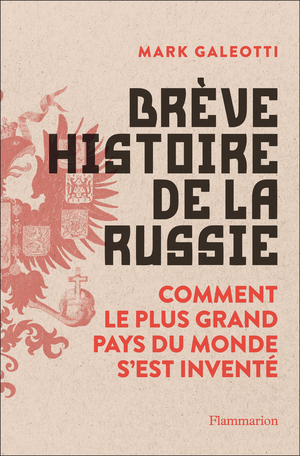
Si je vous demandais de me dire quel dirigeant russe a prononcé les paroles suivantes: « Pour défendre mes frontières, je n’ai d’autre choix que de les étendre », il y a fort à parier que vous penseriez qu’il s’agit de Vladimir Poutine. Après tout, ne lui impute-t-on pas actuellement – et peut-être à bon droit – des desseins guerriers en Ukraine? Mais cette citation provient de Catherine II, dite la Grande (1729-1796), celle-là même qui « […] prit le sud de l’Ukraine et annexa à la Russie la dépendance ottomane de Crimée en 1783, ce qui aura des répercussions historiques jusqu’au XXIe siècle. » Qui a dit que l’histoire ne se répète pas?

Extraites de la Brève histoire de la Russie : Comment le plus grand pays du monde s’est inventé de l’historien britannique Mark Galeotti, ces citations permettent de comprendre les principaux ressorts de l’histoire politique de ce pays aussi captivant que mystérieux.

poursuivre la lecture

The bookworm, the martyr, and Xi’s longtime friend

War adapts itself and evolves. While some may take comfort in the fact that conventional battles are most likely a phenomenon of the past, the wisdom that guided those who won them is crucial to inform us about how to efficiently carry the fight from now on.

I recently reviewed the insightful novel 2034 by Admiral James Stavridis about a potential future war between China and the United States, during which China’s People’s Liberation Army takes advantage of technology to defeat the US Navy. Anyone watching the news can grasp that the rivalry between Beijing and Washington could lead to a hot war in the future, even if the author of the novel – a man who forgot more about polemology than any of us will ever learn – evaluates that the risks are feeble, the need to be prepared is nevertheless crucial.

Continue reading “The bookworm, the martyr, and Xi’s longtime friend”

“Overall, 2021 has been a difficult year for the Biden team” – Admiral James Stavridis

Admiral James Stavridis USN (Ret.) (source: US Naval Institute)

Before the Holidays, Admiral James Stavridis USN (Ret.), one of my favorite authors, granted me an end of year interview about issues related to his amazing novel 2034 about a war between China and the United States. These geopolitical issues are unlikely to disappear from the radar in the coming months and years. The Admiral’s insights are therefore not only very informative, but also crucial to grasp the state of the world.

Admiral Stavridis, I’ve read and reviewed 2034: A Novel of the Next World War (Penguin Random House) with tremendous interest. Before we head into more serious stuff, a question burns my tongue. Since there are lots of mention of the delicious M&Ms throughout the novel, I was wondering if you are a fan of that candy yourself and if that’s the reason why it is mentioned in the book?

While I am not personally a fan of M&M candies, I have known many sea-going naval officers who are. I liked the idea of Lin Bao [one of the main characters of 2034] enjoying an American candy, essentially a nod to the duality of his upbringing.

Continue reading ““Overall, 2021 has been a difficult year for the Biden team” – Admiral James Stavridis”

Is Putin a Weak Strongman?

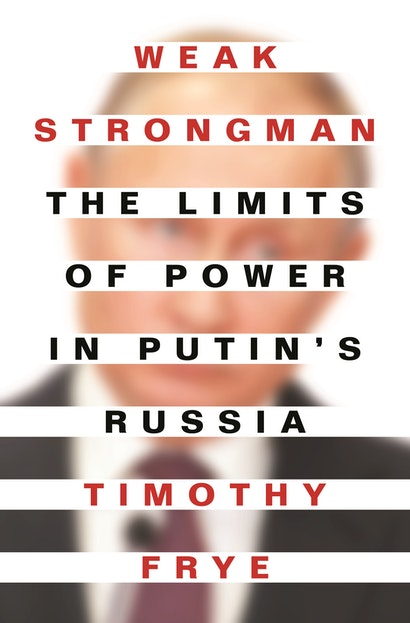
22 years ago, tonight, Vladimir Putin ambled in history and became President of Russia after Boris Yeltsin retired. Since then, many have spent countless years scrutinizing his every moves. In a sense, the new master of the game largely contributed to Kremlinology’s survival as a discipline. And the prospect of him seeking another term in two years means that Putinology still has bright days ahead. His exercise of power remains one of the most fascinating questions to any student of Russian politics.

I just finished reading a most excellent book about the Russian President, Weak Strongman: The Limits of Power in Putin’s Russia by renowned Columbia University Professor Timothy Frye. In a documented, clear, and eloquent style, the main conclusion of the author is that Vladimir Putin’s main political quality is his ability to navigate the stormy seas of Russian politics.

Continue reading “Is Putin a Weak Strongman?”

Chefs d’État lecteurs et écrivains

Le général d’armée Henri Bentégeat (source: Alchetron)

Quelques jours avant Noël, le général d’armée Henri Bentégeat m’a fait un très beau cadeau pour mon blogue. Cet auteur est un ancien chef de l’état-major particulier du président de la République qui a ensuite servi en tant que chef d’état-major des armées (France). Plus récemment, il est l’auteur de deux excellents ouvrages Chefs d’État en guerre (2019) et Les ors de la République(2021) – tous deux publiés chez Perrin. Le général m’a donc offert un texte inédit pour publication sur ce blogue. Le thème, vous l’aurez deviné, porte sur les appétences littéraires des chefs d’État. Une lecture fascinante et inspirante, sous la plume d’un auteur que j’admire beaucoup et envers lequel je suis infiniment reconnaissant pour son amitié envers ce blogue.

C’est donc avec un immense plaisir que je partage ce texte avec vous aujourd’hui.

En France, le Prince, qu’il soit monarque ou président de la République, n’a pas le choix de ses goûts et de ses inclinations. Il se doit d’afficher une vaste culture littéraire et artistique, de peur de perdre l’estime de ses concitoyens, tant chez nous, depuis des siècles, la culture est attachée au pouvoir.

poursuivre la lecture