Boris Johnson’s Thatcher Moment?

British Prime Minister Boris Johnson (source: The Telegraph)

British Prime Minister Boris Johnson is embroiled in a “Partygate” which might provoke the end of his premiership. For all we know and depending on the circumstances and the conclusions of the Sue Gray report, he might be living his last days at 10 Downing Street. Professor Tim Bale of Queen Mary University of London is one of the best specialists on the Conservative Party. Despite a busy schedule, he kindly accepted to answer a few questions for this blog.

Professor Bale, considering Mr. Johnson’s persona and past, do you think the organization of parties at 10 Downing Street while the rest of the UK was in lockdown was predictable?

Johnson has never considered rules as something that should constrain him, so it’s all too easy to believe that those parties took place and that he didn’t care.

Continue reading “Boris Johnson’s Thatcher Moment?”

Vladimir Poutine est un pur produit de l’histoire de la Russie

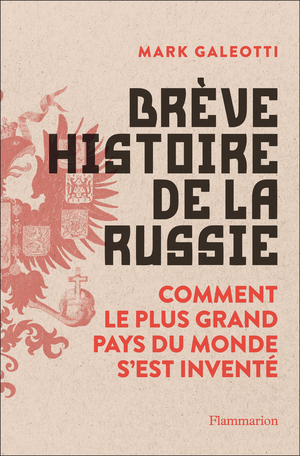
Si je vous demandais de me dire quel dirigeant russe a prononcé les paroles suivantes: « Pour défendre mes frontières, je n’ai d’autre choix que de les étendre », il y a fort à parier que vous penseriez qu’il s’agit de Vladimir Poutine. Après tout, ne lui impute-t-on pas actuellement – et peut-être à bon droit – des desseins guerriers en Ukraine? Mais cette citation provient de Catherine II, dite la Grande (1729-1796), celle-là même qui « […] prit le sud de l’Ukraine et annexa à la Russie la dépendance ottomane de Crimée en 1783, ce qui aura des répercussions historiques jusqu’au XXIe siècle. » Qui a dit que l’histoire ne se répète pas?

Extraites de la Brève histoire de la Russie : Comment le plus grand pays du monde s’est inventé de l’historien britannique Mark Galeotti, ces citations permettent de comprendre les principaux ressorts de l’histoire politique de ce pays aussi captivant que mystérieux.

poursuivre la lecture

The bookworm, the martyr, and Xi’s longtime friend

War adapts itself and evolves. While some may take comfort in the fact that conventional battles are most likely a phenomenon of the past, the wisdom that guided those who won them is crucial to inform us about how to efficiently carry the fight from now on.

I recently reviewed the insightful novel 2034 by Admiral James Stavridis about a potential future war between China and the United States, during which China’s People’s Liberation Army takes advantage of technology to defeat the US Navy. Anyone watching the news can grasp that the rivalry between Beijing and Washington could lead to a hot war in the future, even if the author of the novel – a man who forgot more about polemology than any of us will ever learn – evaluates that the risks are feeble, the need to be prepared is nevertheless crucial.

Continue reading “The bookworm, the martyr, and Xi’s longtime friend”

“Overall, 2021 has been a difficult year for the Biden team” – Admiral James Stavridis

Admiral James Stavridis USN (Ret.) (source: US Naval Institute)

Before the Holidays, Admiral James Stavridis USN (Ret.), one of my favorite authors, granted me an end of year interview about issues related to his amazing novel 2034 about a war between China and the United States. These geopolitical issues are unlikely to disappear from the radar in the coming months and years. The Admiral’s insights are therefore not only very informative, but also crucial to grasp the state of the world.

Admiral Stavridis, I’ve read and reviewed 2034: A Novel of the Next World War (Penguin Random House) with tremendous interest. Before we head into more serious stuff, a question burns my tongue. Since there are lots of mention of the delicious M&Ms throughout the novel, I was wondering if you are a fan of that candy yourself and if that’s the reason why it is mentioned in the book?

While I am not personally a fan of M&M candies, I have known many sea-going naval officers who are. I liked the idea of Lin Bao [one of the main characters of 2034] enjoying an American candy, essentially a nod to the duality of his upbringing.

Continue reading ““Overall, 2021 has been a difficult year for the Biden team” – Admiral James Stavridis”

Is Putin a Weak Strongman?

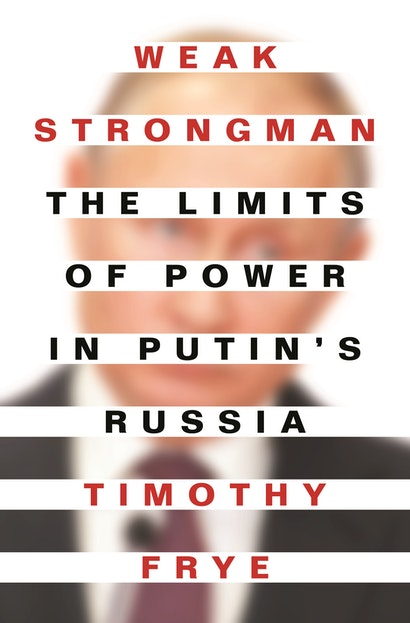
22 years ago, tonight, Vladimir Putin ambled in history and became President of Russia after Boris Yeltsin retired. Since then, many have spent countless years scrutinizing his every moves. In a sense, the new master of the game largely contributed to Kremlinology’s survival as a discipline. And the prospect of him seeking another term in two years means that Putinology still has bright days ahead. His exercise of power remains one of the most fascinating questions to any student of Russian politics.

I just finished reading a most excellent book about the Russian President, Weak Strongman: The Limits of Power in Putin’s Russia by renowned Columbia University Professor Timothy Frye. In a documented, clear, and eloquent style, the main conclusion of the author is that Vladimir Putin’s main political quality is his ability to navigate the stormy seas of Russian politics.

Continue reading “Is Putin a Weak Strongman?”

Chefs d’État lecteurs et écrivains

Le général d’armée Henri Bentégeat (source: Alchetron)

Quelques jours avant Noël, le général d’armée Henri Bentégeat m’a fait un très beau cadeau pour mon blogue. Cet auteur est un ancien chef de l’état-major particulier du président de la République qui a ensuite servi en tant que chef d’état-major des armées (France). Plus récemment, il est l’auteur de deux excellents ouvrages Chefs d’État en guerre (2019) et Les ors de la République(2021) – tous deux publiés chez Perrin. Le général m’a donc offert un texte inédit pour publication sur ce blogue. Le thème, vous l’aurez deviné, porte sur les appétences littéraires des chefs d’État. Une lecture fascinante et inspirante, sous la plume d’un auteur que j’admire beaucoup et envers lequel je suis infiniment reconnaissant pour son amitié envers ce blogue.

C’est donc avec un immense plaisir que je partage ce texte avec vous aujourd’hui.

En France, le Prince, qu’il soit monarque ou président de la République, n’a pas le choix de ses goûts et de ses inclinations. Il se doit d’afficher une vaste culture littéraire et artistique, de peur de perdre l’estime de ses concitoyens, tant chez nous, depuis des siècles, la culture est attachée au pouvoir.

poursuivre la lecture

Napoléon, cet animal politique

Je ne pouvais laisser se terminer l’année 2021 sans recenser l’un des meilleurs livres consacrés à Napoléon qui me soit passé entre les mains pendant le bicentenaire de son décès. À cet égard, Les hommes de Bonaparte : La conquête du pouvoir 1793-1800 (Éditions Perrin) de l’historien Jean-Philippe Rey m’a permis de découvrir un aspect de l’Empereur dont ma connaissance était, je le constate bien aujourd’hui, très embryonnaire. Alors que les vertus de celui que Clausewitz appelait le « Dieu de la guerre » sont bien connues, son génie politique l’est beaucoup moins. Et c’est à ce niveau que l’auteur nous renseigne de manière convaincante.

Bonaparte, nous dit Jean-Philippe Rey était un animal politique, un ambitieux désireux de s’investir corps et âme pour grimper au sommet. En témoigne notamment son mariage avec Joséphine (un mariage dont les deux époux tirèrent avantage, malgré sa nature complexe) et une capacité consommée à tisser, entretenir et étendre ses réseaux. Le réseautage est d’ailleurs un – pour ne pas dire le – thème dominant du livre.

Poursuivre la lecture

“My subordinates took time to reach out and let me learn how to lead” – Exclusive interview with Vice-Admiral Mark Norman (ret.)

Vice-Admiral Mark Norman (ret.)

A few weeks ago, I was privileged to be in touch with Vice-Admiral (ret.) Mark Norman, former Vice Chief of the Defence Staff of Canada. A man for whom I have tons of respect and admiration. He gladly accepted to respond to a few questions for my blog. To that end, we had an extremely pleasant discussion on the phone. Here is the content of our exchange.

Vice-Admiral Norman, as you can see with the name of my blog, books about history (mainly military) are among my main subjects of interest. Are you an avid reader? If so, what are your favorite subjects?

Compared to others, I am not an avid reader. Surprisingly, I don’t read military history directly. I do however enjoy three broad areas of books. 1) believable fiction – often based in an imaginary world. For example, I was recently absorbed by the Dune trilogy. This is a brilliant story. 2) the pseudo-realist genre, whose stories are based on reality. I’m a big fan of James Bond, the Jason Bourne series, Jack Ryan and Dan Brown for example. And 3) non-fiction. I like more analytical pieces and variations of military history. In that regard, I have recently read Destined for War by Graham Allison, books about leadership by retired generals like Colin Powell and Rick Hillier. I’m a big fan of Malcolm Gladwell. I will occasionally dive into naval history, and I have read different translations of Sun Tzu. This said, I am less active in that last category than I am in the two others.

Continue reading ““My subordinates took time to reach out and let me learn how to lead” – Exclusive interview with Vice-Admiral Mark Norman (ret.)”

2034: The War With China?

I am not a person who enjoys novels. My youngest daughter was therefore astonished when she saw me reading 2034: A Novel of the Next World War. “Yes, but it’s about a potential war between the United States and China. Plus, it’s written by an author I really like and admire, Admiral Stavridis [and Elliot Ackerman]”, I said. I admit that this was an exceptional experience and not only because of the genre, but mainly because this is one of the most thoughtful books anyone interested in geopolitics and the fate of the world should read now.

2034. About 12 years from now. Might as well say tomorrow. Russian President Vladimir Putin still occupies the highest office in the Kremlin – a scenario that made me smile – and the Israelis have lost the Golan after a military confrontation with Syria – an outcome that makes me cringe, since I have seen with my own eyes how vital this territory is to Israel’s security. The Chinese are still vying for “[…] uncontested control of the South China Sea.” Equipped with superior cyber capabilities, the Chinese People’s Liberation Army neutralizes the weapons and communications system of a flotilla of three American warships. Only one of them will remain afloat at the end of the confrontation. A military operation that was supposed to serve as a message turned into a World War.

Continue reading “2034: The War With China?”

When Khrushchev Helped JFK

Soviet leader Nikita Khrushchev and US President John F. Kennedy (source: Foreign Policy)

I recently read and reviewed an excellent biography of former Soviet leader Leonid Brejnev by Andreï Kozovoï. Even if I found it to be tragic, I was fascinated to read about Brejnev’s role in the toppling of his predecessor, Nikita Khrushchev, in October 1964. Khrushchev’s persona was light years away from the character portrayed in The Death of Stalin – it is a satire, after all – and his bombastic temper certainly played a role in his downfall.

Khrushchev always fascinated me, whether it is regarding his role during World War II, his succeeding Stalin in 1953 or his role with President John F. Kennedy (of whom we commemorate the assassination today) during the Cuban Missile Crisis in 1962. I recently came upon a very insightful article, “Nikita Khrushchev and the Compromise of Soviet Secret Intelligence Sources” in the International Journal of Intelligence and Counterintelligence by David Easter. In his research, the academic exposes several instances where the First Secretary of the Communist Party of the Soviet Union might have compromised Moscow’s intelligence work and capabilities.

Continue reading “When Khrushchev Helped JFK”