The best books, their authors and the great people who inspire these stories / Les meilleurs livres, leurs auteurs et les grand.e.s de l'histoire qui les inspirent.
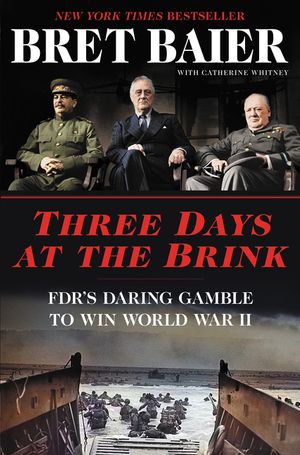
I have always loved to read about FDR, one of my favorite Presidents. Being a fan of presidential libraries and having done some research in a few in the past, I have vivid memories of the time I spent at his inspiring Presidential Library at Hyde Park. I was therefore very interested in Bret Baier’s latest book, not only because it covers a period of contemporary history – World War II – for which I have an unquenchable intellectual thirst, but also because he dove into the presidential archives, a real treasure trove for anyone eager to fully understand the magnitude of the accomplishments of those larger than life Commanders in chief who lead America at crucial times.
The title of Bret Baier’s book Three Days at the Brink: FDR’s Daring Gamble to Win World War II refers to the Tehran Conference (1943), where the Big Three (FDR, Churchill and Stalin) agreed on the necessity to open a second front on the West – with Operation Overlord – to relieve some pressure on the Soviet troops, which occurred on June 6, 1944. But only a quarter of the book is devoted to the historic conference.
The blogosphere is a jungle in which the blogger has to make his or her way. We depend on the interest we generate, beneficiaries of our readership.
For my part, I am constantly looking for subjects to discuss, books to devour and review and authors or historical figures to interview.
Upon closer examination of this blog, you will notice I am very interested in Russia, its history and its political life, especially its president.
A few weeks ago, I made a crazy bet, arousing the doubtful gaze of my loved ones. I got in touch with the Kremlin Press Office, asking if they would be willing to answer a few questions for this blog. To my surprise and delight, this request was met favourably, a privilege bestowed on few people I am sure.
The importance of this interview is not so much based on its content – one would have to be disconnected from reality to think that the assistants of the Russian President who work behind the mythical walls of the Kremlin will entrust secrets to a modest blogger – but rather on the fact that I got a response.
I am therefor very grateful toward the Press and Information Office of the President of the Russian Federation. Here is the Q&A about President Putin, followed by the French version of this exchange.
Who are President Putin’s favorite historical figures and why?
Generally the President is seriously interested in Russian history, although he has deep knowledge in world history, especially the history of the European continent. Vladimir Putin has sympathy for many statesmen in the history of our country, but perhaps most often in this regard he mentions Peter I. The role of Peter the Great can hardly be overestimated, it was him who laid the foundation of Russian Eurasianism [Editor’s note: a political ideology positioning Russia’s re-emergence as a conservative world power in opposition to the hegemony of the west and its values], which became the forerunner of the modern Russian state.
Sea Power has always fascinated me. I will forever cherish the memories of walking in the footsteps of Admiral Chester Nimitz in Pearl Harbor and Admiral Horatio Nelson at Gibraltar. Back in 2011, I spent a night on the Rock and had trouble sleeping. Heat certainly had something to do with it, but I was also pondering how the British legend spent his days here, defending the interests of King and Country at the entrance of the Mediterranean Sea. I like to think that I might have crossed his spirit while walking in the beautiful streets of this British Overseas Territory.
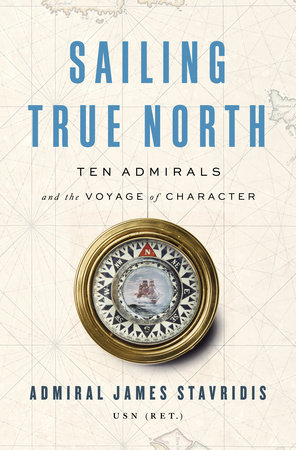
These men and women who ruled the waves were gifted with exceptional and inspirational values. And I’m very grateful to retired Admiral James Stavridis for writing Sailing True North: Ten Admirals and the Voyage of Character, where he details how these larger than life figures not only mastered what are certainly some of the most demanding jobs in the world, but also their character in front of adversity, whether it is the threat of invasion, war, bureaucracy, sexism or racism just to quote these examples. The best lessons are seldom learnt in easy circumstances.
Naturally, I will not talk about each of the fascinating personas that are presented between the covers, but I will write a few words about my Top 3.
In light of the current crisis about Covid-19, Professor Kerry Brown, one of the world’s most renowned specialist on China who is also a biographer of Xi Jinping and who serves as Director of the Lau China Institute at King’s College London has accepted to respond to a few questions. Here is the content of this written interview.
Professor Brown: many sincere thanks for accepting to receive the following questions for my blog.
One thing we have learned in this current chaotic situation: we all have to become much more attuned and knowledgeable about each other before we end up simply shouting past each other and making things even worse.
In the article, you write that China’s image is damaged in the West. Just today (May 13th), a Canadian poll was released detailing that “More than four-in-five (85%) Canadians say the Chinese government has not been honest about what has happened in its own country.” Since China wants to be considered and respected as a world power, it cannot tolerate that its prestige be tarnished. What will Beijing do to correct that situation? Do you think they might try to mount a PR campaign or any sort of outreach operation to reverse that trend?
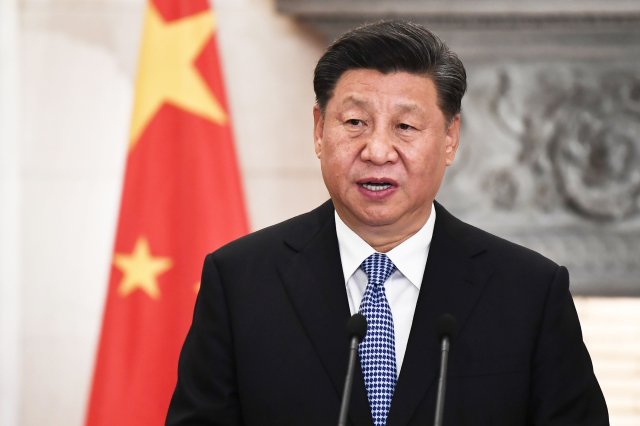
Chinese President Xi Jinping (source: CNBC)
It was always going to be hard for a country with China’s political system, its cultural, social and historical differences with the outside world, and its quite specific world view informed by its own complex, often fragmented history to be able to speak easily to the world at a time when its economy is growing more and more important. COVID19 has just made this challenge even harder. It has deepened some of the issues that were already there, and showed that in the US, Canada, etc, a combination of unfamiliarity towards China along with the speed with which China has come to people’s attention has at the very least proved disorientating. This is exacerbated by the ways in which China itself undertakes messaging – something which is often heavy handed, and ill adapted to the sort of audiences in the West it is aimed at. Everyone has to have a rethink about where things are going. Beijing’s messaging needs to fundamentally change – probably the reason behind the government accepting an investigation at some point of the spread of the pandemic, and the stress at the late May National People’s Congress on the need for co-operation. But as the world moves into addressing the massive economic impact of the virus, rhetoric needs to move to actions, and to seeing what sort of collaboration and co-operation is going to be possible. One thing we have learned in this current chaotic situation: we all have to become much more attuned and knowledgeable about each other before we end up simply shouting past each other and making things even worse.
Few years ago, while visiting in Italy, I booked a talented guide to visit Monte Cassino and its vicinity. As I left the train, upon arriving in the bucolic town whose name is associated to one of the most famous battles of World War II, I was struck by the breathtaking landscape. Up above a steep mountain, the famous Benedictine Abbey lays towering over the surrounding valley.
I immediately wondered what kind of soldiers could conquer such a hostile environment and dislodge the Germans, ferociously guarding the impregnable summits forming the Winter Line set up to block the Allies on their way up North to the Eternal City, Rome.
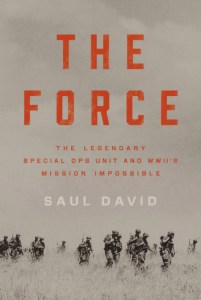
Some years later and thanks to renowned military historian Saul David, I finally found the answer between the covers of the book The Force: The Legendary Special Ops Unit and WWII’s Mission Impossible. Assembled from scratch with Canadian and American soldiers in the summer of 1942 “for a top mission behind enemy lines”, the First Special Service Force was initially trained to operate in winter conditions with a new snow vehicle.
The mission of the unit soon became the object of turf wars and power plays between British and American top brass and politicians. While Churchill – who had a “”particular interest” in the Force” jealously fought toe and nails to reserve these exceptional warriors for an eventual foray in Norway (operation Jupiter), US Army chief of staff George Marshall considered such a venture to be a sideshow. The American warlord was certainly frustrated to exclude such a powerful tool from a vital theater of operations.
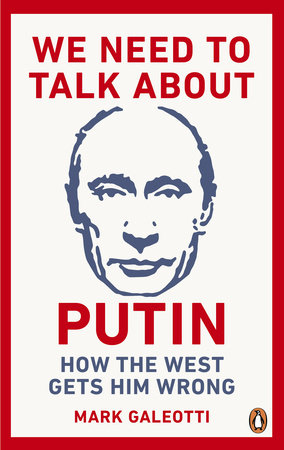
After reading his insightful, well-written and gripping book about President Vladimir Putin, I asked Professor Mark Galeotti if he would accept to answer a few questions for this blog. He swiftly agreed and I’m very grateful for the generosity of his time. Here is the content of our exchange.
Many sincere thanks Pr. Galeotti for accepting to respond to a few questions for my blog.
His very privacy means we all get to imagine our own personal Putin…
On page 22 of your excellent book about President Putin, you write “If people think you are powerful, you are powerful.” On page 53, you refer to “purposeful theatricality”. In your book, Putin doesn’t come across as a bad person. Is there an important difference between the public and private persona of the Russian President? How is Mr. Putin different in private than what he shows in public?
The thing is that we really have very little sense of the true private self of Vladimir Putin: he absolutely protects that side of his life, and instead what we see is a guarded and carefully managed public persona. I think that for all the opulence of his lifestyle – the palaces, the personal staff, the thousand-dollar tracksuits – he is actually something of a lonely and distant figure, now almost trapped within the public persona, but this is very much my own imagining. In a way, that’s the point: his very privacy means we all get to imagine our own personal Putin…
On page 75, you debunk the notion that Vladimir Putin is some kind of social conservative (he notably upholds abortion rights), arguing that he is a pragmatist first. This notion is unfortunately not widely known in the West. Why do you think observers and commentators still hold to the notion that he is some kind of conservative ideologue?
Russian President Vladimir Poutine carrying his father’s picture during the March of Immortal Regiment that is held every year on the occasion of Victory Day (source: TASS News Agency).
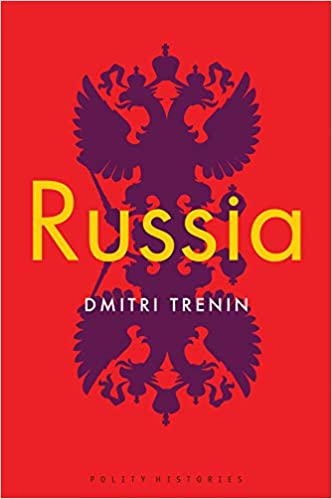
“Russia is like a phoenix: it repeatedly turns to ashes only to be reborn in some new guise”. In itself, this quote from Dmitri Trenin’s recent book encapsulates why we need to continually learn more about the history of this country, which is, whether we like it or not, one of the great powers jockeying for influence in today’s world.
There has been a tendency, after the dismantling of the USSR in the early 1990s, to assume that the Soviet régime has been a failure and that its architects had failed, automatically sending their statecraft experiment to the dustbin of history. Dmitri Trenin gives plenty of material to those who do not subscribe to that school of thought.
I will always be amazed at how Lenin succeeded in carrying the day in the Fall of 1917, with only a handful of followers. But one of the main characteristics of the first Soviet leader, according to the author, who is also Director of the Carnegie Moscow Center, was that “Lenin’s political genius lay in his uncanny ability to adapt to fast-changing circumstances.” In a nutshell, he was a pragmatist who knew how to fill the void of leadership at a crucial time. The same could be said about his successor, Stalin, who “[…] reversed his stance on the Russian Orthodox Church” during the Great Patriotic War, when he realized that religion was a glue that could mobilize the people behind the war effort.
As a fan of Mikhail Gorbachev since my youth, I therefore found it hard to read Dmitri Trenin’s assessment of the last leader of the USSR. Between the lines, one can understand that the chief proponent of Perestroika was not a pragmatist and a student of Realpolitik because the country “[…] was by no means doomed, but it required a leader who could act decisively, albeit thoughtfully, professionally, and very carefully. What it got instead was a dreamer.” Ouch.
In the darkest hours of its history, Russia needs “strong leadership and discipline [to keep] the country together.”
Yaakov Katz, rédacteur en chef du grand quotidien The Jerusalem Postet auteur de deux livres à succès consacrés aux affaires militaires israéliennes a récemment accepté de répondre à quelques questions exclusives pour ce blogue. Voici donc le contenu de notre échange, pour lequel je lui suis d’ailleurs très reconnaissant.
Je suis d’avis que les bons auteurs s’inspirent de grands livres. Accepteriez-vous de partager avec mes lecteurs quel est le meilleur livre que vous ayez lu?
J’ai lu plusieurs excellents livres. Celui qui a vraiment influencé mon style d’écriture et de narration s’intitule Thirteen Days in September(13 jours en septembre) par Lawrence Wright. C’est un livre fantastique au sujet des pourparlers de paix de Camp David entre Israël et l’Égypte, mais ce que Wright fait d’étonnant, c’est de donner aux lecteurs le sentiment qu’ils sont dans la pièce avec Begin, Sadate et Carter. Je le recommande vivement.
À l’heure actuelle, l’un des grands objectifs est la technologie laser pouvant intercepter potentiellement des missiles et des tirs de mortiers ennemis en approche. Imaginez ce que cela signifierait pour Israël.
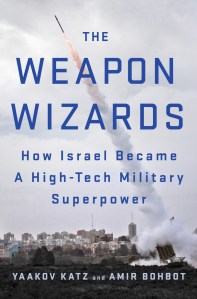
Après avoir lu votre excellent livre The Weapon Wizards (écrit avec Amir Bohbot), je me demandais si vous pouviez me dire quelle nouvelle innovation / invention israélienne pourrait faire son apparition dans un avenir prochain – si vous êtes autorisé à en parler?
Le secteur de la défense et les Forces de défense israéliennes (IDF) sont constamment à la recherche de nouvelles capacités et technologies. À l’heure actuelle, l’un des grands objectifs est la technologie laser pouvant être utilisée à différentes fins, mais avant tout pour intercepter potentiellement des missiles et des tirs de mortiers ennemis en approche. Imaginez ce que cela signifierait pour Israël. Quelques systèmes laser déployés le long de ses frontières pourraient potentiellement libérer le pays de ces missiles qui représentent une menace. Pensez aussi à l’aspect économique de cela – si un intercepteur de type Iron Dome coûte environ 100 000 dollars, un tir laser ne coûterait presque rien.
Dans The Weapon Wizards, on retrouve un chapitre fascinant intitulé « Les armes diplomatiques », à l’intérieur duquel vous faites référence au développement des relations d’Israël avec la Chine. Que diriez-vous sur l’état de cette relation aujourd’hui (où elle en est actuellement)?
Les relations entre Israël et la Chine ont commencé par des ventes d’armes. C’est l’histoire fantastique d’un petit pays qui s’est servi de sa technologie d’armement pour nouer des relations diplomatiques avec plusieurs pays, dont certains plus grands, à travers le monde. Israël entretient aujourd’hui de vastes liens économiques et commerciaux avec la Chine, mais rien dans le domaine de la défense. Cette décision a été prise il y a une quinzaine d’années, pour éviter toute tension avec les États-Unis.
Même si Vladimir Poutine a accepté qu’Israël mène des opérations en Syrie, cette position pourrait changer demain.
Comment envisagez-vous les relations d’Israël avec la Russie dans un avenir proche?
L’auteur photographié en compagnie de l’ancien président Mikhaïl Gorbatchev en 2011.
À quelques jours de mes 17 ans, en août 1991, j’apprenais que le dirigeant soviétique Mikhail Gorbatchev était victime d’un coup d’État. Fasciné que j’étais par tout ce qui concernait ce pays et son histoire, il n’en fallait guère plus pour m’inquiéter au sujet de ce leader admiré, mais aussi de me fasciner de ce que cet événement signifiait dans la grande trame de l’histoire du pays des tsars. À l’époque, nous ne disposions pas de toutes les plateformes médiatiques permettant de suivre l’évolution du putsch en temps réel – mis à part les bulletins de nouvelles à la radio. Je m’étais donc employé à téléphoner, plusieurs fois par jour, à la salle de rédaction du quotidien local pour m’enquérir des développements à Moscou et en Crimée, là où Gorbatchev était retenu contre son gré. Fort probablement au grand désespoir du directeur de l’information qui me répondait toujours généreusement.
Le Kremlin et ses locataires m’ont toujours fasciné. Je raffole depuis mon jeune âge de lectures détaillant les intrigues ourdies au sommet du pouvoir rouge et permettant de mieux connaître les grandes figures qui en étaient la cause.
C’est avec un peu de retard, mais ô combien de plaisir que j’ai dévoré Les secrets du Kremlin 1917-2017sous la plume avertie de l’historien et journaliste Bernard Lecomte. Les 16 chapitres de ce livre agrémenté par l’une des plumes les plus agréables qu’il m’ait été donné d’apprécier permettent de franchir les murs de cette enceinte dont l’aura de mystère fait non seulement sa réputation historique, mais lui confère également son influence.
L’idée principale que j’en retiens est que, pour arriver au pouvoir en Russie et y demeurer, il faut savoir jouer de ruse et ne jamais baisser la garde. Bernard Lecomte nous permet à cet égard de marcher sur les pas d’un Lénine prenant le pouvoir à force d’obstination et malgré une révolution mal préparée. Et d’un Nikita Khrouchtchev qui prend les commandes de l’État en 1953, mais « […] en qui personne ne voit encore un leader de premier plan. » Pour revenir au putsch de 1991, ce moment charnière aura permis à un Boris Eltsine sous-estimé par les comploteurs de devenir une figure incontournable en se hissant sur un char d’assaut. Et que dire de ce Vladimir Poutine relativement inconnu qui devient maître des lieux en exhibant la jeunesse et la vigueur devant un Eltsine malade et au bout de ses forces, alors les 12 coups de minuit sonnent l’arrivée de l’an 2000 sur la Place Rouge? Dans ce registre, force est d’admettre que le meilleur chapitre est celui (tout simplement savoureux) où l’historien relate la partie d’échecs entre Staline et De Gaulle.
En ce 199e anniversaire de la disparition de Napoléon du monde terrestre, il est approprié de publier un billet au sujet de l’Empereur aujourd’hui.
Thierry Lentz (source: Fondation Napoléon)
Je suis abonné à la Lettre hebdomadaire de la Fondation Napoléon, dont la lecture me procure toujours énormément de plaisir. Depuis aussi loin que je me souvienne, j’aime l’hymne national français, La Marseillaise. Ses accents militaristes rejoignent toujours mes dispositions favorables envers la Res Militaris. Vendredi dernier, le directeur de la Fondation et éminent historien Thierry Lentz y publiait un excellent article portant justement sur les origines de l’hymne composé par Rouget de l’Isle, lesquelles m’étaient jusqu’alors inconnues. Je sais, c’est scandaleux.
Thierry Lentz publiera un Dictionnaire historique sur Napoléon en septembre prochain chez Perrin.
Inutile de vous confier que suis déjà impatient de mettre la main sur un exemplaire.
D’ici là et parce que Bonaparte, en son temps, a, lui aussi passé un printemps difficile, je crois que je vais relire Les vingt jours de Fontainebleau : La première abdication de Napoléon 31 mars – 20 avril 1814. Un autre excellent livre sous la plume de cet auteur fort sympathique.

 I have always loved to read about FDR, one of my favorite Presidents. Being a fan of presidential libraries and having done some research in a few in the past, I have vivid memories of the time I spent at his inspiring Presidential Library at Hyde Park. I was therefore very interested in Bret Baier’s latest book, not only because it covers a period of contemporary history – World War II – for which I have an unquenchable intellectual thirst, but also because he dove into the presidential archives, a real treasure trove for anyone eager to fully understand the magnitude of the accomplishments of those larger than life Commanders in chief who lead America at crucial times.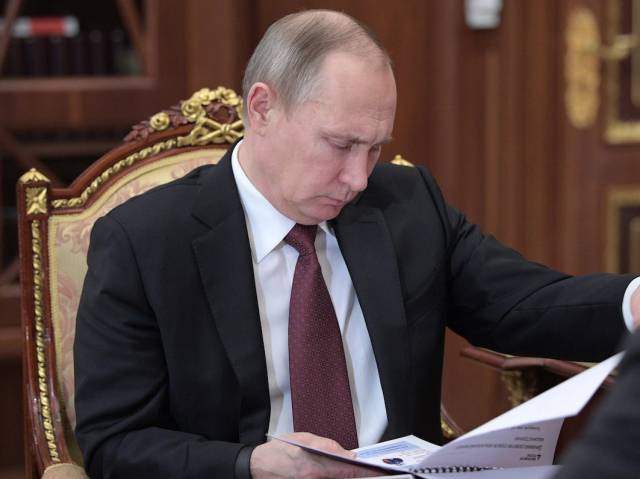
 Sea Power has always fascinated me. I will forever cherish the memories of walking in the footsteps of Admiral Chester Nimitz in Pearl Harbor and Admiral Horatio Nelson at Gibraltar. Back in 2011, I spent a night on the Rock and had trouble sleeping. Heat certainly had something to do with it, but I was also pondering how the British legend spent his days here, defending the interests of King and Country at the entrance of the Mediterranean Sea. I like to think that I might have crossed his spirit while walking in the beautiful streets of this British Overseas Territory.
 Few years ago, while visiting in Italy, I booked a talented guide to visit Monte Cassino and its vicinity. As I left the train, upon arriving in the bucolic town whose name is associated to one of the most famous battles of World War II, I was struck by the breathtaking landscape. Up above a steep mountain, the famous Benedictine Abbey lays towering over the surrounding valley.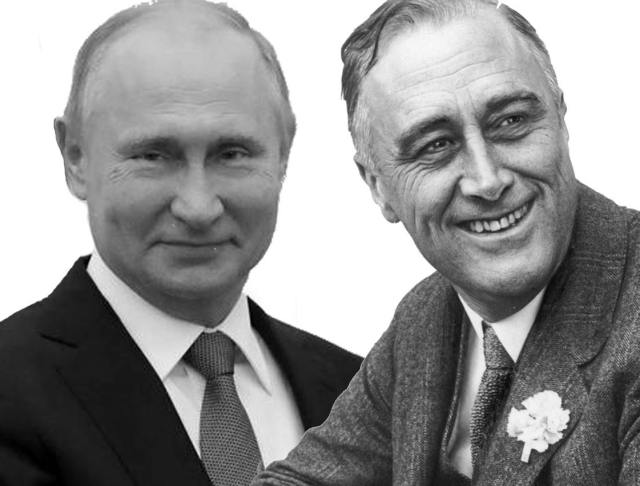
 On page 22 of your excellent book about President Putin, you write “If people think you are powerful, you are powerful.” On page 53, you refer to “purposeful theatricality”. In your book, Putin doesn’t come across as a bad person. Is there an important difference between the public and private persona of the Russian President? How is Mr. Putin different in private than what he shows in public?
 I will always be amazed at how Lenin succeeded in carrying the day in the Fall of 1917, with only a handful of followers. But one of the main characteristics of the first Soviet leader, according to the author, who is also Director of the
 Dans The Weapon Wizards, on retrouve un chapitre fascinant intitulé « Les armes diplomatiques », à l’intérieur duquel vous faites référence au développement des relations d’Israël avec la Chine. Que diriez-vous sur l’état de cette relation aujourd’hui (où elle en est actuellement)?
 C’est avec un peu de retard, mais ô combien de plaisir que j’ai dévoré
 BookMarc